Weather Act Reauthorization Act of 2025
USA119th CongressHR-3816| House
| Updated: 6/6/2025
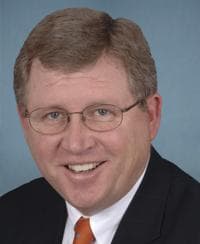
Frank D. Lucas
Republican Representative
Oklahoma
Cosponsors (17)
Eric A. "Rick" Crawford (Republican)Scott Franklin (Republican)Stephanie I. Bice (Republican)Claudia Tenney (Republican)Maxwell Frost (Democratic)Haley M. Stevens (Democratic)Thomas H. Kean (Republican)Mike Flood (Republican)Charles J. "Chuck" Fleischmann (Republican)Summer L. Lee (Democratic)Max L. Miller (Republican)Deborah K. Ross (Democratic)Randy Feenstra (Republican)Suzanne Bonamici (Democratic)Randy K. Sr. Weber (Republican)Zoe Lofgren (Democratic)Tim Moore (Republican)
Foreign Affairs Committee, Science, Space, and Technology Committee, Energy and Commerce Committee, Natural Resources Committee
- Introduced
- In Committee
- On Floor
- Passed Chamber
- Enacted
The bill, titled the "Weather Research and Forecasting Innovation Reauthorization Act of 2025," aims to significantly improve the National Oceanic and Atmospheric Administration's (NOAA) weather research, forecasting, and prediction capabilities. It reauthorizes and expands upon the Weather Research and Forecasting Innovation Act of 2017, emphasizing public safety and economic enhancement. The legislation seeks to achieve these goals through various initiatives, including advanced technology adoption, enhanced data utilization, and improved communication strategies. Key provisions include strengthening programs for **tornado forecasts** (VORTEX-USA), **hurricane prediction** (Hurricane Forecast Improvement Program), and **precipitation forecasting**, including atmospheric rivers and coastal flooding. The bill mandates the prioritization of research to improve weather data, modeling, computing, and warnings for life and property protection. It also focuses on improving **observing systems**, including satellite architecture planning and the use of uncrewed systems for data collection. The legislation directs NOAA to leverage **artificial intelligence and machine learning** for advanced computing in weather forecasting and to establish centers of excellence for these technologies. It also outlines a strategic plan for high-performance computing and data management needs. Furthermore, the bill addresses the **National Weather Service workforce**, including hiring practices, health assessments, and the designation of service hydrologists to enhance impact-based decision support. A significant focus is placed on expanding **commercial opportunities for weather data** through a Commercial Data Program and a Pilot Program. These programs aim to acquire satellite, ground-based, airborne, and marine-based data from private sector entities, ensuring data quality and compatibility with NOAA's modeling capabilities. The bill also mandates the establishment of consistent and open **data and metadata standards** and improved data infrastructure, including cloud technologies, for efficient sharing and long-term archiving. The bill seeks to improve how **hazardous weather and water event risks are communicated to the public**, aiming for clearer, more actionable information. This includes modernizing NOAA Weather Radio, improving the NWS instant messaging service, and conducting post-storm surveys and assessments. Research into social, behavioral, and economic sciences is emphasized to understand and improve public response to warnings, with pilot programs for tornado and hurricane hazard communication. Improvements to weather information for **agriculture and water management** are addressed through enhanced subseasonal-to-seasonal forecasting, strengthening the National Integrated Drought Information System (NIDIS), and expanding the National Mesonet Program. The bill also reauthorizes and amends the **Harmful Algal Bloom and Hypoxia Research and Control Act**, focusing on assessments, monitoring networks, and incubator programs for mitigation technologies. New provisions establish the **National Integrated Heat Health Information System (NIHHIS)** and an interagency committee to coordinate federal efforts in reducing heat-related health impacts. The **National Landslide Preparedness Act is reauthorized**, with updates to program activities, the national strategy, and early warning systems, including consideration of atmospheric rivers and extreme precipitation events. The bill includes provisions for an **unfunded priorities list** for NOAA, a capital investment plan, and various other authorities such as meteorological observations in the Arctic region, technical assistance to Pacific Island parties, and international collaboration. These measures aim to ensure NOAA's continued leadership and effectiveness in meteorological services.
View Full TextSuggested Questions
Get AI-generated questions to help you understand this bill better
Timeline
Introduced in House
Referred to the Committee on Science, Space, and Technology, and in addition to the Committees on Natural Resources, Energy and Commerce, and Foreign Affairs, for a period to be subsequently determined by the Speaker, in each case for consideration of such provisions as fall within the jurisdiction of the committee concerned.
Public Lands and Natural Resources
Weather Act Reauthorization Act of 2025
USA119th CongressHR-3816| House
| Updated: 6/6/2025
The bill, titled the "Weather Research and Forecasting Innovation Reauthorization Act of 2025," aims to significantly improve the National Oceanic and Atmospheric Administration's (NOAA) weather research, forecasting, and prediction capabilities. It reauthorizes and expands upon the Weather Research and Forecasting Innovation Act of 2017, emphasizing public safety and economic enhancement. The legislation seeks to achieve these goals through various initiatives, including advanced technology adoption, enhanced data utilization, and improved communication strategies. Key provisions include strengthening programs for **tornado forecasts** (VORTEX-USA), **hurricane prediction** (Hurricane Forecast Improvement Program), and **precipitation forecasting**, including atmospheric rivers and coastal flooding. The bill mandates the prioritization of research to improve weather data, modeling, computing, and warnings for life and property protection. It also focuses on improving **observing systems**, including satellite architecture planning and the use of uncrewed systems for data collection. The legislation directs NOAA to leverage **artificial intelligence and machine learning** for advanced computing in weather forecasting and to establish centers of excellence for these technologies. It also outlines a strategic plan for high-performance computing and data management needs. Furthermore, the bill addresses the **National Weather Service workforce**, including hiring practices, health assessments, and the designation of service hydrologists to enhance impact-based decision support. A significant focus is placed on expanding **commercial opportunities for weather data** through a Commercial Data Program and a Pilot Program. These programs aim to acquire satellite, ground-based, airborne, and marine-based data from private sector entities, ensuring data quality and compatibility with NOAA's modeling capabilities. The bill also mandates the establishment of consistent and open **data and metadata standards** and improved data infrastructure, including cloud technologies, for efficient sharing and long-term archiving. The bill seeks to improve how **hazardous weather and water event risks are communicated to the public**, aiming for clearer, more actionable information. This includes modernizing NOAA Weather Radio, improving the NWS instant messaging service, and conducting post-storm surveys and assessments. Research into social, behavioral, and economic sciences is emphasized to understand and improve public response to warnings, with pilot programs for tornado and hurricane hazard communication. Improvements to weather information for **agriculture and water management** are addressed through enhanced subseasonal-to-seasonal forecasting, strengthening the National Integrated Drought Information System (NIDIS), and expanding the National Mesonet Program. The bill also reauthorizes and amends the **Harmful Algal Bloom and Hypoxia Research and Control Act**, focusing on assessments, monitoring networks, and incubator programs for mitigation technologies. New provisions establish the **National Integrated Heat Health Information System (NIHHIS)** and an interagency committee to coordinate federal efforts in reducing heat-related health impacts. The **National Landslide Preparedness Act is reauthorized**, with updates to program activities, the national strategy, and early warning systems, including consideration of atmospheric rivers and extreme precipitation events. The bill includes provisions for an **unfunded priorities list** for NOAA, a capital investment plan, and various other authorities such as meteorological observations in the Arctic region, technical assistance to Pacific Island parties, and international collaboration. These measures aim to ensure NOAA's continued leadership and effectiveness in meteorological services.
View Full TextSuggested Questions
Get AI-generated questions to help you understand this bill better
Timeline
Introduced in House
Referred to the Committee on Science, Space, and Technology, and in addition to the Committees on Natural Resources, Energy and Commerce, and Foreign Affairs, for a period to be subsequently determined by the Speaker, in each case for consideration of such provisions as fall within the jurisdiction of the committee concerned.
Frank D. Lucas
Republican Representative
Oklahoma
Cosponsors (17)
Eric A. "Rick" Crawford (Republican)Scott Franklin (Republican)Stephanie I. Bice (Republican)Claudia Tenney (Republican)Maxwell Frost (Democratic)Haley M. Stevens (Democratic)Thomas H. Kean (Republican)Mike Flood (Republican)Charles J. "Chuck" Fleischmann (Republican)Summer L. Lee (Democratic)Max L. Miller (Republican)Deborah K. Ross (Democratic)Randy Feenstra (Republican)Suzanne Bonamici (Democratic)Randy K. Sr. Weber (Republican)Zoe Lofgren (Democratic)Tim Moore (Republican)
Foreign Affairs Committee, Science, Space, and Technology Committee, Energy and Commerce Committee, Natural Resources Committee
Public Lands and Natural Resources
Related Bills
- HR 119-4073: Tsunami Warning, Research, and Education Act of 2025
- S 119-3795: Radar Next Program Act of 2026
- HR 119-2250: National Landslide Preparedness Act Reauthorization Act of 2025
- HR 119-3704: Coordinated Federal Response to Extreme Heat Act of 2025
- S 119-325: Coordinated Federal Response to Extreme Heat Act of 2025
- S 119-1626: National Landslide Preparedness Act Reauthorization Act of 2025
- Introduced
- In Committee
- On Floor
- Passed Chamber
- Enacted