Protecting Pharmacies in Medicaid Act
USA119th CongressS-927| Senate
| Updated: 3/11/2025
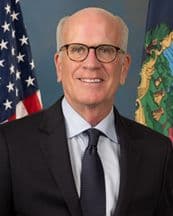
Peter Welch
Democratic Senator
Vermont
Finance Committee
- Introduced
- In Committee
- On Floor
- Passed Chamber
- Enacted
The "Protecting Pharmacies in Medicaid Act" seeks to reform Medicaid drug payment practices by enhancing transparency and accuracy in pharmacy reimbursement and curbing abusive spread pricing by pharmacy benefit managers (PBMs). The bill amends the Social Security Act to require the Secretary of Health and Human Services to conduct monthly surveys of retail community pharmacy and applicable non-retail pharmacy drug prices. These surveys will determine national average drug acquisition cost benchmarks, accounting for all discounts, rebates, and price concessions. Pharmacies receiving Medicaid payments will be required to respond to these surveys, with civil monetary penalties of up to $100,000 per violation for non-compliance or providing false information. The collected pricing information will be made publicly available, including survey response rates and details on price concessions. To ensure oversight, the Inspector General of the Department of Health and Human Services will conduct periodic studies of the survey data, particularly examining variations in acquisition costs and the influence of internal transfer prices or related party transactions for affiliated pharmacies. An appropriation of $5,000,000 for fiscal year 2026 is provided to the Inspector General for this purpose. The bill defines "applicable non-retail pharmacy" to include mail-order and specialty pharmacies, excluding certain types like hospital or long-term care pharmacies, and clarifies that pricing data from non-retail pharmacies cannot be used to set payment methodologies for retail pharmacies. A key provision targets abusive spread pricing by mandating a transparent prescription drug pass-through pricing model for contracts between states and PBMs or managed care entities. Under this model, payments to pharmacies must be limited to the ingredient cost and a professional dispensing fee, which must be passed through in its entirety. Any amount charged by a PBM or entity that exceeds the amount paid to pharmacies, after allowing for an administrative fee, will not be eligible for federal matching payments. PBMs and managed care entities will be required to provide states and the Secretary with full transparency on all costs and payments related to covered outpatient drugs and administrative services, including ingredient costs, dispensing fees, administrative fees, and any post-sale or post-invoice fees, discounts, or other remuneration. This ensures that states have a clear understanding of the actual costs and fees involved in drug dispensing, preventing hidden profits from spread pricing. The amendments will apply to contracts with an effective date beginning 18 months after the bill's enactment.
Suggested Questions
Get AI-generated questions to help you understand this bill better
Timeline
Introduced in Senate
Read twice and referred to the Committee on Finance.
Health
Protecting Pharmacies in Medicaid Act
USA119th CongressS-927| Senate
| Updated: 3/11/2025
The "Protecting Pharmacies in Medicaid Act" seeks to reform Medicaid drug payment practices by enhancing transparency and accuracy in pharmacy reimbursement and curbing abusive spread pricing by pharmacy benefit managers (PBMs). The bill amends the Social Security Act to require the Secretary of Health and Human Services to conduct monthly surveys of retail community pharmacy and applicable non-retail pharmacy drug prices. These surveys will determine national average drug acquisition cost benchmarks, accounting for all discounts, rebates, and price concessions. Pharmacies receiving Medicaid payments will be required to respond to these surveys, with civil monetary penalties of up to $100,000 per violation for non-compliance or providing false information. The collected pricing information will be made publicly available, including survey response rates and details on price concessions. To ensure oversight, the Inspector General of the Department of Health and Human Services will conduct periodic studies of the survey data, particularly examining variations in acquisition costs and the influence of internal transfer prices or related party transactions for affiliated pharmacies. An appropriation of $5,000,000 for fiscal year 2026 is provided to the Inspector General for this purpose. The bill defines "applicable non-retail pharmacy" to include mail-order and specialty pharmacies, excluding certain types like hospital or long-term care pharmacies, and clarifies that pricing data from non-retail pharmacies cannot be used to set payment methodologies for retail pharmacies. A key provision targets abusive spread pricing by mandating a transparent prescription drug pass-through pricing model for contracts between states and PBMs or managed care entities. Under this model, payments to pharmacies must be limited to the ingredient cost and a professional dispensing fee, which must be passed through in its entirety. Any amount charged by a PBM or entity that exceeds the amount paid to pharmacies, after allowing for an administrative fee, will not be eligible for federal matching payments. PBMs and managed care entities will be required to provide states and the Secretary with full transparency on all costs and payments related to covered outpatient drugs and administrative services, including ingredient costs, dispensing fees, administrative fees, and any post-sale or post-invoice fees, discounts, or other remuneration. This ensures that states have a clear understanding of the actual costs and fees involved in drug dispensing, preventing hidden profits from spread pricing. The amendments will apply to contracts with an effective date beginning 18 months after the bill's enactment.
Suggested Questions
Get AI-generated questions to help you understand this bill better
Timeline
Introduced in Senate
Read twice and referred to the Committee on Finance.
Peter Welch
Democratic Senator
Vermont
Finance Committee
Health
Related Bills
- Introduced
- In Committee
- On Floor
- Passed Chamber
- Enacted