America’s Living Library Act
USA119th CongressS-4023| Senate
| Updated: 3/5/2026
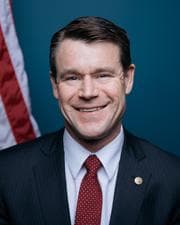
Todd Young
Republican Senator
Indiana
Cosponsors (12)
Ben Ray Luján (Democratic)Alex Padilla (Democratic)Christopher A. Coons (Democratic)Tom Cotton (Republican)John W. Hickenlooper (Democratic)Tim Sheehy (Republican)Kevin Cramer (Republican)Cory A. Booker (Democratic)Susan M. Collins (Republican)Steve Daines (Republican)Ron Wyden (Democratic)Mark Kelly (Democratic)
Energy and Natural Resources Committee
- Introduced
- In Committee
- On Floor
- Passed Chamber
- Enacted
The America's Living Library Act establishes a pilot program, known as the America's Living Library Project , within the Department of the Interior, specifically through the United States Geological Survey. The primary purpose of this program is to facilitate the collection of new genomic data from various species, including animals, plants, fungi, and microbes, found within units of the National Park System. The Secretary of the Interior is tasked with coordinating the collection, cataloging, and whole-genome sequencing of these samples, adhering to applicable permitting and consultation requirements under various environmental acts. A key provision is the establishment of a publicly available genomic database for the collected data, which will include long-read sequence data, genome assemblies, and associated metadata. This database will implement safeguards to withhold personally identifiable information and sensitive collection locality details to protect resources and personnel. An office within the United States Geological Survey will administer the program, with authority to enter into contracts and receive in-kind contributions from biotechnology companies, provided they are vetted for conflicts of interest and limited to resources like materials or sequencing capabilities. The bill mandates the initial selection of 5 National Park System units within 180 days, followed by an additional 20 units within two years, based on objective criteria such as biological landscape, operational readiness, and research value. The program emphasizes robust data standards to ensure high-quality, usable, and interoperable data, with appropriate cybersecurity and access safeguards in place, consistent with NIST publications. For long-term storage, the Secretary will consult with the Department of Agriculture and the Smithsonian Institution, evaluating species to identify high-priority ones for collection and storage in both natural history collections and germplasm repositories. Crucially, physical samples collected under the program cannot be transferred, exported, or loaned outside the United States, and all physical storage, curation, and laboratory processing must occur within U.S. facilities. An implementation plan is required within 180 days, outlining expansion to other federally managed lands and facilities, and facilitating expedited, non-public access pathways for U.S.-based artificial intelligence model development, explicitly excluding foreign entities of concern. The bill authorizes significant appropriations across multiple federal agencies from fiscal years 2027 through 2031 to fund program oversight, genome sequencing, and sample and data storage. The authority to carry out the program is set to terminate 10 years after the date of enactment.
View Full TextSuggested Questions
Get AI-generated questions to help you understand this bill better
Timeline
Introduced in Senate
Read twice and referred to the Committee on Energy and Natural Resources.
Public Lands and Natural Resources
America’s Living Library Act
USA119th CongressS-4023| Senate
| Updated: 3/5/2026
The America's Living Library Act establishes a pilot program, known as the America's Living Library Project , within the Department of the Interior, specifically through the United States Geological Survey. The primary purpose of this program is to facilitate the collection of new genomic data from various species, including animals, plants, fungi, and microbes, found within units of the National Park System. The Secretary of the Interior is tasked with coordinating the collection, cataloging, and whole-genome sequencing of these samples, adhering to applicable permitting and consultation requirements under various environmental acts. A key provision is the establishment of a publicly available genomic database for the collected data, which will include long-read sequence data, genome assemblies, and associated metadata. This database will implement safeguards to withhold personally identifiable information and sensitive collection locality details to protect resources and personnel. An office within the United States Geological Survey will administer the program, with authority to enter into contracts and receive in-kind contributions from biotechnology companies, provided they are vetted for conflicts of interest and limited to resources like materials or sequencing capabilities. The bill mandates the initial selection of 5 National Park System units within 180 days, followed by an additional 20 units within two years, based on objective criteria such as biological landscape, operational readiness, and research value. The program emphasizes robust data standards to ensure high-quality, usable, and interoperable data, with appropriate cybersecurity and access safeguards in place, consistent with NIST publications. For long-term storage, the Secretary will consult with the Department of Agriculture and the Smithsonian Institution, evaluating species to identify high-priority ones for collection and storage in both natural history collections and germplasm repositories. Crucially, physical samples collected under the program cannot be transferred, exported, or loaned outside the United States, and all physical storage, curation, and laboratory processing must occur within U.S. facilities. An implementation plan is required within 180 days, outlining expansion to other federally managed lands and facilities, and facilitating expedited, non-public access pathways for U.S.-based artificial intelligence model development, explicitly excluding foreign entities of concern. The bill authorizes significant appropriations across multiple federal agencies from fiscal years 2027 through 2031 to fund program oversight, genome sequencing, and sample and data storage. The authority to carry out the program is set to terminate 10 years after the date of enactment.
View Full TextSuggested Questions
Get AI-generated questions to help you understand this bill better
Timeline
Introduced in Senate
Read twice and referred to the Committee on Energy and Natural Resources.
Todd Young
Republican Senator
Indiana
Cosponsors (12)
Ben Ray Luján (Democratic)Alex Padilla (Democratic)Christopher A. Coons (Democratic)Tom Cotton (Republican)John W. Hickenlooper (Democratic)Tim Sheehy (Republican)Kevin Cramer (Republican)Cory A. Booker (Democratic)Susan M. Collins (Republican)Steve Daines (Republican)Ron Wyden (Democratic)Mark Kelly (Democratic)
Energy and Natural Resources Committee
Public Lands and Natural Resources
Related Bills
- Introduced
- In Committee
- On Floor
- Passed Chamber
- Enacted