Restoring Justice for Workers Act
USA119th CongressHR-9995| House
| Updated: 7/30/2026
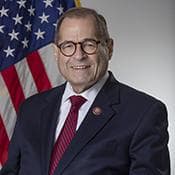
Jerrold Nadler
Democratic Representative
New York
Cosponsors (7)
Judiciary Committee, Education and Workforce Committee
- Introduced
- In Committee
- On Floor
- Passed Chamber
- Enacted
This bill aims to prevent employers from forcing workers into arbitration or waiving their right to collective action for work-related disputes. It addresses concerns that millions of workers are currently compelled, as a condition of employment, to accept contractual provisions that block their access to courts or prohibit them from joining together with other workers to seek relief for violations of their rights. The legislation asserts that the Federal Arbitration Act has been misinterpreted by the Supreme Court to extend to work disputes, contrary to its original intent for commercial entities. The core provisions of the bill prohibit all predispute arbitration agreements and predispute joint-action waivers related to work disputes, rendering them invalid and unenforceable. For any postdispute arbitration agreements or joint-action waivers to be valid, they must be truly voluntary, not coerced, and not a condition of employment. Workers must be informed in writing of their rights, including the right to refuse without retaliation, and be given a 45-day waiting period before affirmatively consenting in writing. Furthermore, the bill amends the National Labor Relations Act to make it an unfair labor practice for employers to enter into or enforce agreements that prevent employees from pursuing joint, class, or collective claims, or to retaliate against them for refusing such agreements. The applicability and validity of arbitration agreements under this new chapter will be determined by a court, not an arbitrator, and the bill applies broadly to workers, including independent contractors, in activities affecting commerce.
View Full TextSuggested Questions
Get AI-generated questions to help you understand this bill better
Timeline
Introduced in House
Referred to the Committee on the Judiciary, and in addition to the Committee on Education and Workforce, for a period to be subsequently determined by the Speaker, in each case for consideration of such provisions as fall within the jurisdiction of the committee concerned.
Labor and Employment
Restoring Justice for Workers Act
USA119th CongressHR-9995| House
| Updated: 7/30/2026
This bill aims to prevent employers from forcing workers into arbitration or waiving their right to collective action for work-related disputes. It addresses concerns that millions of workers are currently compelled, as a condition of employment, to accept contractual provisions that block their access to courts or prohibit them from joining together with other workers to seek relief for violations of their rights. The legislation asserts that the Federal Arbitration Act has been misinterpreted by the Supreme Court to extend to work disputes, contrary to its original intent for commercial entities. The core provisions of the bill prohibit all predispute arbitration agreements and predispute joint-action waivers related to work disputes, rendering them invalid and unenforceable. For any postdispute arbitration agreements or joint-action waivers to be valid, they must be truly voluntary, not coerced, and not a condition of employment. Workers must be informed in writing of their rights, including the right to refuse without retaliation, and be given a 45-day waiting period before affirmatively consenting in writing. Furthermore, the bill amends the National Labor Relations Act to make it an unfair labor practice for employers to enter into or enforce agreements that prevent employees from pursuing joint, class, or collective claims, or to retaliate against them for refusing such agreements. The applicability and validity of arbitration agreements under this new chapter will be determined by a court, not an arbitrator, and the bill applies broadly to workers, including independent contractors, in activities affecting commerce.
View Full TextSuggested Questions
Get AI-generated questions to help you understand this bill better
Timeline
Introduced in House
Referred to the Committee on the Judiciary, and in addition to the Committee on Education and Workforce, for a period to be subsequently determined by the Speaker, in each case for consideration of such provisions as fall within the jurisdiction of the committee concerned.
Jerrold Nadler
Democratic Representative
New York
Cosponsors (7)
Judiciary Committee, Education and Workforce Committee
Labor and Employment
Related Bills
- Introduced
- In Committee
- On Floor
- Passed Chamber
- Enacted