Stop Insider Trading Act
USA119th CongressHR-7008| House
| Updated: 8/6/2026
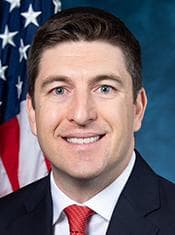
Bryan Steil
Republican Representative
Wisconsin
Cosponsors (93)
Dusty Johnson (Republican)Paul A. Gosar (Republican)Chip Roy (Republican)Richard McCormick (Republican)Ashley Hinson (Republican)Jeff Crank (Republican)Andy Harris (Republican)Ed Case (Democratic)Gregory F. Murphy (Republican)David J. Taylor (Republican)Scott Franklin (Republican)Elijah Crane (Republican)Mark Alford (Republican)Thomas P. Tiffany (Republican)Darin LaHood (Republican)Zachary Nunn (Republican)Mike Collins (Republican)Vince Fong (Republican)Keith Self (Republican)Michael Baumgartner (Republican)Mike Carey (Republican)Stephanie I. Bice (Republican)Claudia Tenney (Republican)Mariannette Miller-Meeks (Republican)Aaron Bean (Republican)Andrew Ogles (Republican)Derek Schmidt (Republican)Young Kim (Republican)William R. Timmons (Republican)Andy Biggs (Republican)John James (Republican)Earl L. "Buddy" Carter (Republican)Jeff Hurd (Republican)Scott Perry (Republican)Rudy Yakym (Republican)Lloyd Smucker (Republican)Anna Paulina Luna (Republican)Matt Van Epps (Republican)H. Morgan Griffith (Republican)Don Bacon (Republican)Christopher H. Smith (Republican)Mike Flood (Republican)Jodey C. Arrington (Republican)Pat Fallon (Republican)Jake Ellzey (Republican)Ann Wagner (Republican)Mike D. Rogers (Republican)Richard Hudson (Republican)Mike Kennedy (Republican)Kat Cammack (Republican)John Joyce (Republican)Cliff Bentz (Republican)Glenn Grothman (Republican)Brian J. Mast (Republican)Nicholas A. Langworthy (Republican)John R. Moolenaar (Republican)John H. Rutherford (Republican)Mark B. Messmer (Republican)Laurel M. Lee (Republican)Scott Fitzgerald (Republican)Daniel Webster (Republican)Michael Cloud (Republican)Mike Haridopolos (Republican)Nicholas J. Begich (Republican)Pat Harrigan (Republican)Josh Riley (Democratic)Troy Downing (Republican)Mary E. Miller (Republican)Gabe Evans (Republican)Dale W. Strong (Republican)Addison P. McDowell (Republican)Derrick Van Orden (Republican)Dan Crenshaw (Republican)Bill Huizenga (Republican)Max L. Miller (Republican)Randy Feenstra (Republican)Juan Ciscomani (Republican)Kevin Kiley (Independent)Tom Barrett (Republican)Ben Cline (Republican)Michael Lawler (Republican)Nick LaLota (Republican)Robert P. Bresnahan (Republican)Erin Houchin (Republican)Jimmy Patronis (Republican)Jack Bergman (Republican)Tracey Mann (Republican)Ryan Mackenzie (Republican)Julie Fedorchak (Republican)Jennifer A. Kiggans (Republican)Cory Mills (Republican)Michael Guest (Republican)Vern Buchanan (Republican)
Committee on House Administration
- Introduced
- In Committee
- On Floor
- Passed Chamber
- Enacted
The "Stop Insider Trading Act" aims to prevent potential conflicts of interest by imposing strict restrictions on the investment activities of Members of Congress, their spouses, and dependent children. Specifically, it prohibits these covered individuals from purchasing covered investments , which include securities issued by publicly traded companies and comparable synthetic interests like derivatives. Furthermore, the bill mandates an advanced notice requirement for selling covered investments. A Member of Congress must publicly disclose their intent to sell, including the projected date, description, and number of shares, between 7 and 14 calendar days prior to the sale. Exceptions exist for transactions by spouses or dependent children made on behalf of others or as part of their employment, and for reinvesting dividends. Violations of these restrictions carry substantial penalties, including a fee equal to the greater of $2,000 or 10 percent of the transaction value, plus any net gain realized from the investment. Any covered investments purchased in violation must be sold, and Members are explicitly prohibited from using official allowances or campaign funds to pay these fees. Unpaid fees can also lead to a referral to the Department of Justice.
Suggested Questions
Get AI-generated questions to help you understand this bill better
Timeline
Introduced in House
Referred to the House Committee on House Administration.
Ordered to be Reported (Amended) by the Yeas and Nays: 7 - 4.
Committee Consideration and Mark-up Session Held
Placed on the Union Calendar, Calendar No. 409.
Reported (Amended) by the Committee on House Administration. H. Rept. 119-479.
Rules Committee Resolution H. Res. 1438 Reported to House. Rule provides for consideration of H.R. 8800, H.R. 8884, H. Con. Res. 113, H.R. 7008, H.R. 6955 and H.R. 9770. The resolution provides for consideration of H.R. 8800 under a structured rule and for consideration of H.R. 8884, H. Con. Res. 113, H.R. 7008, H.R. 6955, and H.R. 9770 under a closed rule, with one hour of debate on each measure and one motion to recommit H.R. 8800, H.R. 8844, H.R. 7008, H.R. 6955, and H.R. 9770.
Rules Committee Resolution H. Res. 1438 Reported to House. Rule provides for consideration of H.R. 8800, H.R. 8884, H. Con. Res. 113, H.R. 7008, H.R. 6955 and H.R. 9770. The resolution provides for consideration of H.R. 8800 under a structured rule and for consideration of H.R. 8884, H. Con. Res. 113, H.R. 7008, H.R. 6955, and H.R. 9770 under a closed rule, with one hour of debate on each measure and one motion to recommit on H.R. 8800, H.R. 8884, H.R. 7008, H.R. 6955, and H.R. 9770.
Considered under the provisions of rule H. Res. 1438. (consideration: CR H5143-5153)
Considered under the provisions of rule H. Res. 1438.
Rule provides for consideration of H.R. 8800, H.R. 8884, H. Con. Res. 113, H.R. 7008, H.R. 6955 and H.R. 9770. The resolution provides for consideration of H.R. 8800 under a structured rule and for consideration of H.R. 8884, H. Con. Res. 113, H.R. 7008, H.R. 6955, and H.R. 9770 under a closed rule, with one hour of debate on each measure and one motion to recommit on H.R. 8800, H.R. 8884, H.R. 7008, H.R. 6955, and H.R. 9770.
DEBATE - The House proceeded with one hour of debate on H.R. 7008.
The previous question was ordered pursuant to the rule.
Mr. Magaziner moved to recommit to the Committee on House Administration.
Mr. Magaziner moved to recommit to the Committee on House Administration. (text: CR H5152)
The previous question on the motion to recommit was ordered pursuant to clause 2(b) of rule XIX.
POSTPONED PROCEEDINGS - At the conclusion of debate on H.R. 7008, the Chair put the question on motion to recommit and by voice vote, announced the ayes had prevailed. Mr. Steil demanded the yeas and nays and the Chair postponed further proceedings until a time to be announced.
Considered as unfinished business.
Considered as unfinished business. (consideration: CR H5157-5158)
On motion to recommit Failed by the Yeas and Nays: 211 - 218 (Roll no. 279).
View VoteOn passage Passed by the Yeas and Nays: 232 - 198 (Roll no. 280). (text of amendment in the nature of a substitute: CR H5143-5144)
View VoteMotion to reconsider laid on the table Agreed to without objection.
Received in the Senate.
Read the first time. Placed on Senate Legislative Calendar under Read the First Time.
Read the second time. Placed on Senate Legislative Calendar under General Orders. Calendar No. 548.
Congress
Family relationshipsFinancial services and investmentsGovernment ethics and transparency, public corruptionGovernment information and archivesMembers of CongressSecurities
Stop Insider Trading Act
USA119th CongressHR-7008| House
| Updated: 8/6/2026
The "Stop Insider Trading Act" aims to prevent potential conflicts of interest by imposing strict restrictions on the investment activities of Members of Congress, their spouses, and dependent children. Specifically, it prohibits these covered individuals from purchasing covered investments , which include securities issued by publicly traded companies and comparable synthetic interests like derivatives. Furthermore, the bill mandates an advanced notice requirement for selling covered investments. A Member of Congress must publicly disclose their intent to sell, including the projected date, description, and number of shares, between 7 and 14 calendar days prior to the sale. Exceptions exist for transactions by spouses or dependent children made on behalf of others or as part of their employment, and for reinvesting dividends. Violations of these restrictions carry substantial penalties, including a fee equal to the greater of $2,000 or 10 percent of the transaction value, plus any net gain realized from the investment. Any covered investments purchased in violation must be sold, and Members are explicitly prohibited from using official allowances or campaign funds to pay these fees. Unpaid fees can also lead to a referral to the Department of Justice.
Suggested Questions
Get AI-generated questions to help you understand this bill better
Timeline
Introduced in House
Referred to the House Committee on House Administration.
Ordered to be Reported (Amended) by the Yeas and Nays: 7 - 4.
Committee Consideration and Mark-up Session Held
Placed on the Union Calendar, Calendar No. 409.
Reported (Amended) by the Committee on House Administration. H. Rept. 119-479.
Rules Committee Resolution H. Res. 1438 Reported to House. Rule provides for consideration of H.R. 8800, H.R. 8884, H. Con. Res. 113, H.R. 7008, H.R. 6955 and H.R. 9770. The resolution provides for consideration of H.R. 8800 under a structured rule and for consideration of H.R. 8884, H. Con. Res. 113, H.R. 7008, H.R. 6955, and H.R. 9770 under a closed rule, with one hour of debate on each measure and one motion to recommit H.R. 8800, H.R. 8844, H.R. 7008, H.R. 6955, and H.R. 9770.
Rules Committee Resolution H. Res. 1438 Reported to House. Rule provides for consideration of H.R. 8800, H.R. 8884, H. Con. Res. 113, H.R. 7008, H.R. 6955 and H.R. 9770. The resolution provides for consideration of H.R. 8800 under a structured rule and for consideration of H.R. 8884, H. Con. Res. 113, H.R. 7008, H.R. 6955, and H.R. 9770 under a closed rule, with one hour of debate on each measure and one motion to recommit on H.R. 8800, H.R. 8884, H.R. 7008, H.R. 6955, and H.R. 9770.
Considered under the provisions of rule H. Res. 1438. (consideration: CR H5143-5153)
Considered under the provisions of rule H. Res. 1438.
Rule provides for consideration of H.R. 8800, H.R. 8884, H. Con. Res. 113, H.R. 7008, H.R. 6955 and H.R. 9770. The resolution provides for consideration of H.R. 8800 under a structured rule and for consideration of H.R. 8884, H. Con. Res. 113, H.R. 7008, H.R. 6955, and H.R. 9770 under a closed rule, with one hour of debate on each measure and one motion to recommit on H.R. 8800, H.R. 8884, H.R. 7008, H.R. 6955, and H.R. 9770.
DEBATE - The House proceeded with one hour of debate on H.R. 7008.
The previous question was ordered pursuant to the rule.
Mr. Magaziner moved to recommit to the Committee on House Administration.
Mr. Magaziner moved to recommit to the Committee on House Administration. (text: CR H5152)
The previous question on the motion to recommit was ordered pursuant to clause 2(b) of rule XIX.
POSTPONED PROCEEDINGS - At the conclusion of debate on H.R. 7008, the Chair put the question on motion to recommit and by voice vote, announced the ayes had prevailed. Mr. Steil demanded the yeas and nays and the Chair postponed further proceedings until a time to be announced.
Considered as unfinished business.
Considered as unfinished business. (consideration: CR H5157-5158)
On motion to recommit Failed by the Yeas and Nays: 211 - 218 (Roll no. 279).
View VoteOn passage Passed by the Yeas and Nays: 232 - 198 (Roll no. 280). (text of amendment in the nature of a substitute: CR H5143-5144)
View VoteMotion to reconsider laid on the table Agreed to without objection.
Received in the Senate.
Read the first time. Placed on Senate Legislative Calendar under Read the First Time.
Read the second time. Placed on Senate Legislative Calendar under General Orders. Calendar No. 548.
Bryan Steil
Republican Representative
Wisconsin
Cosponsors (93)
Dusty Johnson (Republican)Paul A. Gosar (Republican)Chip Roy (Republican)Richard McCormick (Republican)Ashley Hinson (Republican)Jeff Crank (Republican)Andy Harris (Republican)Ed Case (Democratic)Gregory F. Murphy (Republican)David J. Taylor (Republican)Scott Franklin (Republican)Elijah Crane (Republican)Mark Alford (Republican)Thomas P. Tiffany (Republican)Darin LaHood (Republican)Zachary Nunn (Republican)Mike Collins (Republican)Vince Fong (Republican)Keith Self (Republican)Michael Baumgartner (Republican)Mike Carey (Republican)Stephanie I. Bice (Republican)Claudia Tenney (Republican)Mariannette Miller-Meeks (Republican)Aaron Bean (Republican)Andrew Ogles (Republican)Derek Schmidt (Republican)Young Kim (Republican)William R. Timmons (Republican)Andy Biggs (Republican)John James (Republican)Earl L. "Buddy" Carter (Republican)Jeff Hurd (Republican)Scott Perry (Republican)Rudy Yakym (Republican)Lloyd Smucker (Republican)Anna Paulina Luna (Republican)Matt Van Epps (Republican)H. Morgan Griffith (Republican)Don Bacon (Republican)Christopher H. Smith (Republican)Mike Flood (Republican)Jodey C. Arrington (Republican)Pat Fallon (Republican)Jake Ellzey (Republican)Ann Wagner (Republican)Mike D. Rogers (Republican)Richard Hudson (Republican)Mike Kennedy (Republican)Kat Cammack (Republican)John Joyce (Republican)Cliff Bentz (Republican)Glenn Grothman (Republican)Brian J. Mast (Republican)Nicholas A. Langworthy (Republican)John R. Moolenaar (Republican)John H. Rutherford (Republican)Mark B. Messmer (Republican)Laurel M. Lee (Republican)Scott Fitzgerald (Republican)Daniel Webster (Republican)Michael Cloud (Republican)Mike Haridopolos (Republican)Nicholas J. Begich (Republican)Pat Harrigan (Republican)Josh Riley (Democratic)Troy Downing (Republican)Mary E. Miller (Republican)Gabe Evans (Republican)Dale W. Strong (Republican)Addison P. McDowell (Republican)Derrick Van Orden (Republican)Dan Crenshaw (Republican)Bill Huizenga (Republican)Max L. Miller (Republican)Randy Feenstra (Republican)Juan Ciscomani (Republican)Kevin Kiley (Independent)Tom Barrett (Republican)Ben Cline (Republican)Michael Lawler (Republican)Nick LaLota (Republican)Robert P. Bresnahan (Republican)Erin Houchin (Republican)Jimmy Patronis (Republican)Jack Bergman (Republican)Tracey Mann (Republican)Ryan Mackenzie (Republican)Julie Fedorchak (Republican)Jennifer A. Kiggans (Republican)Cory Mills (Republican)Michael Guest (Republican)Vern Buchanan (Republican)
Committee on House Administration
Congress
Related Bills
- HRES 119-1438: Providing for consideration of the bill (H.R. 8800) to authorize appropriations for fiscal year 2027 for military activities of the Department of Defense, for military construction, and for defense activities of the Department of Energy, to prescribe military personnel strengths for such fiscal year, and for other purposes; providing for consideration of the bill (H.R. 8884) to amend title II of the Social Security Act to reauthorize demonstration authority for the disability insurance program; providing for consideration of the concurrent resolution (H. Con. Res. 113) establishing the congressional budget for the United States Government for fiscal year 2027 and setting forth the appropriate budgetary levels for fiscal years 2028 through 2036; providing for consideration of the bill (H.R. 7008) to amend chapter 131 of title 5 to require certain restrictions on stocks for Members of Congress and their spouses and dependents, and for other purposes; providing for consideration of the bill (H.R. 6955) to make improvements to the Federal banking laws, and for other purposes; providing for consideration of the bill (H.R. 9770) making continuing appropriations for fiscal year 2027, and for other purposes; and for other purposes.
- S 119-4134: Stop Insider Trading Act
- Introduced
- In Committee
- On Floor
- Passed Chamber
- Enacted
Family relationshipsFinancial services and investmentsGovernment ethics and transparency, public corruptionGovernment information and archivesMembers of CongressSecurities