Ending PUSHOUT Act of 2025
USA119th CongressHR-2738| House
| Updated: 4/8/2025
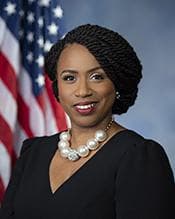
Ayanna Pressley
Democratic Representative
Massachusetts
Cosponsors (11)
Joyce Beatty (Democratic)Ilhan Omar (Democratic)Delia C. Ramirez (Democratic)Greg Casar (Democratic)Shri Thanedar (Democratic)Mark DeSaulnier (Democratic)Eleanor Holmes Norton (Democratic)Bonnie Watson Coleman (Democratic)Alexandria Ocasio-Cortez (Democratic)Summer L. Lee (Democratic)Rashida Tlaib (Democratic)
Education and Workforce Committee
- Introduced
- In Committee
- On Floor
- Passed Chamber
- Enacted
The Ending Punitive, Unfair, School-based Harm that is Overt and Unresponsive to Trauma Act of 2025, or the "Ending PUSHOUT Act of 2025," seeks to eliminate the discriminatory use and overuse of exclusionary discipline practices in schools. Its core purpose is to prevent the criminalization and pushout of students, especially Black and Brown girls, by addressing educational barriers such as discrimination, punitive policies, and a lack of support for mental health needs or trauma. The bill defines key terms like **exclusionary discipline**, **pushout**, and various prohibited practices to clarify its scope. To achieve its goals, the Act mandates the Assistant Secretary for Civil Rights to annually strengthen **data collection** on exclusionary discipline practices in public preschool, elementary, and secondary schools. This data must include detailed information on suspensions, expulsions, law enforcement referrals, and arrests, disaggregated by numerous categories such as race, ethnicity, sex (including sexual orientation and gender identity), disability status, and low-income status. An annual public report to Congress will identify schools, local educational agencies, and States demonstrating patterns of overuse and discriminatory use of these practices. The bill establishes **Healing School Climate Grants**, awarded competitively to eligible entities like local educational agencies or non-profit organizations, to reduce exclusionary discipline. Grant recipients must prioritize schools with high rates of disparities in discipline for marginalized student groups. A critical program requirement for grantees is the **prohibition** of certain practices, including out-of-school suspension or expulsion for students in preschool through grade 5 for non-serious incidents, and for all K-12 students for insubordination, willful defiance, vulgarity, truancy, or appearance policy violations. It also bans **corporal punishment**, **seclusion**, and most forms of mechanical, chemical, or life-threatening physical restraints. Grant funds are to be used for evaluating and revising discipline policies, providing professional development for school officials on implicit bias and **culturally sustaining practices**, and implementing evidence-based alternatives. These alternatives include **multi-tiered systems of support**, **restorative practices**, and social-emotional learning strategies. Funds must also support creating safe learning environments, providing access to counseling and **trauma-informed services**, and hiring mental health personnel. Significantly, the bill prohibits using grant funds to hire school-based law enforcement, purchase surveillance equipment, arm school personnel, or enter into partnerships with law enforcement or immigration agencies. Finally, the Act establishes a **Joint Task Force to End School Pushout of Girls of Color**, co-chaired by the Secretaries of Education and Health and Human Services. This task force, composed of students, educators, parents, school officials, civil rights representatives, and mental health professionals (excluding law enforcement), will study the causes of discipline disparities and develop recommendations. The bill authorizes $500,000,000 annually for the grants and task force, and an additional $500,000,000 for the civil rights data collection efforts.
View Full TextSuggested Questions
Get AI-generated questions to help you understand this bill better
Timeline
Introduced in House
Referred to the House Committee on Education and Workforce.
Education
Ending PUSHOUT Act of 2025
USA119th CongressHR-2738| House
| Updated: 4/8/2025
The Ending Punitive, Unfair, School-based Harm that is Overt and Unresponsive to Trauma Act of 2025, or the "Ending PUSHOUT Act of 2025," seeks to eliminate the discriminatory use and overuse of exclusionary discipline practices in schools. Its core purpose is to prevent the criminalization and pushout of students, especially Black and Brown girls, by addressing educational barriers such as discrimination, punitive policies, and a lack of support for mental health needs or trauma. The bill defines key terms like **exclusionary discipline**, **pushout**, and various prohibited practices to clarify its scope. To achieve its goals, the Act mandates the Assistant Secretary for Civil Rights to annually strengthen **data collection** on exclusionary discipline practices in public preschool, elementary, and secondary schools. This data must include detailed information on suspensions, expulsions, law enforcement referrals, and arrests, disaggregated by numerous categories such as race, ethnicity, sex (including sexual orientation and gender identity), disability status, and low-income status. An annual public report to Congress will identify schools, local educational agencies, and States demonstrating patterns of overuse and discriminatory use of these practices. The bill establishes **Healing School Climate Grants**, awarded competitively to eligible entities like local educational agencies or non-profit organizations, to reduce exclusionary discipline. Grant recipients must prioritize schools with high rates of disparities in discipline for marginalized student groups. A critical program requirement for grantees is the **prohibition** of certain practices, including out-of-school suspension or expulsion for students in preschool through grade 5 for non-serious incidents, and for all K-12 students for insubordination, willful defiance, vulgarity, truancy, or appearance policy violations. It also bans **corporal punishment**, **seclusion**, and most forms of mechanical, chemical, or life-threatening physical restraints. Grant funds are to be used for evaluating and revising discipline policies, providing professional development for school officials on implicit bias and **culturally sustaining practices**, and implementing evidence-based alternatives. These alternatives include **multi-tiered systems of support**, **restorative practices**, and social-emotional learning strategies. Funds must also support creating safe learning environments, providing access to counseling and **trauma-informed services**, and hiring mental health personnel. Significantly, the bill prohibits using grant funds to hire school-based law enforcement, purchase surveillance equipment, arm school personnel, or enter into partnerships with law enforcement or immigration agencies. Finally, the Act establishes a **Joint Task Force to End School Pushout of Girls of Color**, co-chaired by the Secretaries of Education and Health and Human Services. This task force, composed of students, educators, parents, school officials, civil rights representatives, and mental health professionals (excluding law enforcement), will study the causes of discipline disparities and develop recommendations. The bill authorizes $500,000,000 annually for the grants and task force, and an additional $500,000,000 for the civil rights data collection efforts.
View Full TextSuggested Questions
Get AI-generated questions to help you understand this bill better
Timeline
Introduced in House
Referred to the House Committee on Education and Workforce.
Ayanna Pressley
Democratic Representative
Massachusetts
Cosponsors (11)
Joyce Beatty (Democratic)Ilhan Omar (Democratic)Delia C. Ramirez (Democratic)Greg Casar (Democratic)Shri Thanedar (Democratic)Mark DeSaulnier (Democratic)Eleanor Holmes Norton (Democratic)Bonnie Watson Coleman (Democratic)Alexandria Ocasio-Cortez (Democratic)Summer L. Lee (Democratic)Rashida Tlaib (Democratic)
Education and Workforce Committee
Education
Related Bills
- Introduced
- In Committee
- On Floor
- Passed Chamber
- Enacted