Department of Peacebuilding Act of 2025
USA119th CongressHR-1111| House
| Updated: 2/4/2026
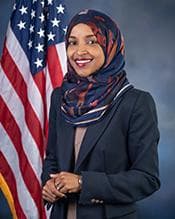
Ilhan Omar
Democratic Representative
Minnesota
Cosponsors (49)
Jonathan L. Jackson (Democratic)Robin L. Kelly (Democratic)Raúl M. Grijalva (Democratic)Analilia Mejia (Democratic)Juan Vargas (Democratic)Troy A. Carter (Democratic)Maxine Dexter (Democratic)Eric Swalwell (Democratic)Maxwell Frost (Democratic)Melanie A. Stansbury (Democratic)Steve Cohen (Democratic)Delia C. Ramirez (Democratic)Adriano Espaillat (Democratic)Shri Thanedar (Democratic)Danny K. Davis (Democratic)Ted Lieu (Democratic)Henry C. "Hank" Johnson (Democratic)André Carson (Democratic)Mark DeSaulnier (Democratic)Sara Jacobs (Democratic)Daniel S. Goldman (Democratic)Jerrold Nadler (Democratic)LaMonica McIver (Democratic)Adelita S. Grijalva (Democratic)Alma S. Adams (Democratic)Pramila Jayapal (Democratic)Eleanor Holmes Norton (Democratic)Bonnie Watson Coleman (Democratic)Lateefah Simon (Democratic)Mike Quigley (Democratic)Janice D. Schakowsky (Democratic)James P. McGovern (Democratic)Alexandria Ocasio-Cortez (Democratic)Maxine Waters (Democratic)Summer L. Lee (Democratic)Nydia M. Velázquez (Democratic)Yvette D. Clarke (Democratic)Bennie G. Thompson (Democratic)Sylvester Turner (Democratic)Suzanne Bonamici (Democratic)Nanette Diaz Barragán (Democratic)Jesús G. "Chuy" García (Democratic)Teresa Leger Fernandez (Democratic)Gwen Moore (Democratic)Rashida Tlaib (Democratic)Ayanna Pressley (Democratic)Veronica Escobar (Democratic)Chellie Pingree (Democratic)Judy Chu (Democratic)
Oversight and Government Reform Committee
- Introduced
- In Committee
- On Floor
- Passed Chamber
- Enacted
This bill proposes the establishment of a new executive branch entity, the Department of Peacebuilding , headed by a Secretary of Peacebuilding appointed by the President with Senate consent. The Department's central mission is to cultivate peace and peacebuilding as a strategic national policy objective, aiming to reduce and prevent violence in the United States and globally through nonviolent conflict resolution. It seeks to strengthen nonmilitary means of peacemaking and address the interconnectedness of peace with justice, equality, health, national security, education, and planetary survival. The Department would comprise several key offices, including those for Peace Education and Training , Domestic Peacebuilding Activities , International Peacebuilding Activities , Technology for Peace , Arms Control and Disarmament , Peacebuilding Information and Research , and Human Rights and Economic Rights . The Secretary would proactively engage with all branches of the Federal Government on peace-related matters, monitor conflict, and develop metrics to measure progress toward peace, reporting annually to the President, Congress, and the public. Domestically, the Department would focus on developing policies to prevent personal and family violence, reduce drug and alcohol abuse, and address gun violence and societal challenges like school violence, hate crimes, and economic injustice. It would support community-based violence prevention programs, provide counseling for victims, and promote public education on diversity. The bill also emphasizes preventing the school-to-prison pipeline through restorative practices and nonviolence training. Internationally, the Department would advise the Secretaries of Defense and State on national security, human rights, and conflict prevention. It would contribute to post-conflict reconstruction training, sponsor conflict-prevention initiatives, and work to eradicate extreme hunger, disease, poverty, and human trafficking. A significant provision includes the training and deployment of unarmed civilian peacekeepers and strengthening the enforcement of international arms embargoes. The Office of Peace Education and Training would develop and disseminate peace curricula for all educational levels, focusing on nonviolent conflict resolution, empathy, and the benefits of a peaceful society. It would also provide grants for peace studies departments and community peace block grants. The Office of Peacebuilding Information and Research would commission studies on the impact of violence, compile effective community peacebuilding activities, and research the media's role in conflict escalation and de-escalation. The Office of Arms Control and Disarmament would advise on the reduction and elimination of weapons of mass destruction, develop nonviolent strategies to prevent their use, and address nuclear waste cleanup. The Office of Human Rights and Economic Rights would work to incorporate human rights principles into international agreements, document abuses like genocide and torture, and analyze the economic causes of conflict and human displacement. The bill also establishes an Intergovernmental Advisory Council on Peace and a Federal Interagency Committee on Peace to ensure coordination across governmental levels and federal agencies. Crucially, the Secretary of Peacebuilding would be a member of the National Security Council and consulted by the Secretaries of Defense and State on matters of conflict prevention and diplomatic initiatives. The bill authorizes appropriations, with at least 85% of funds designated for domestic peace programs, and encourages the observance of "Peace Days" to celebrate peacemakers.
View Full TextSuggested Questions
Get AI-generated questions to help you understand this bill better
Timeline
Introduced in House
Referred to the House Committee on Oversight and Government Reform.
Committee Consideration and Mark-up Session Held
Government Operations and Politics
Advanced technology and technological innovationsAdvisory bodiesAir qualityAlternative and renewable resourcesAlternative dispute resolution, mediation, arbitrationAnimal protection and human-animal relationshipsArms control and nonproliferationAssault and harassment offensesChild healthChild safety and welfareCivics educationClimate change and greenhouse gasesCommemorative events and holidaysCommunity life and organizationComputers and information technologyConflicts and warsCorrectional facilities and imprisonmentCrime preventionCrimes against childrenCrimes against womenCrime victimsCultural exchanges and relationsDetention of personsDiplomacy, foreign officials, Americans abroadDomestic violence and child abuseDrug, alcohol, tobacco useEconomic developmentEconomic performance and conditionsElementary and secondary educationEmergency medical services and trauma careEmployment discrimination and employee rightsEnvironmental educationExecutive agency funding and structureFirearms and explosivesForeign aid and international reliefGovernment information and archivesGovernment studies and investigationsHate crimesHazardous wastes and toxic substancesHealth promotion and preventive careHealth technology, devices, suppliesHigher educationHuman rightsHuman traffickingImmigration status and proceduresImmunology and vaccinationInfectious and parasitic diseasesInternational organizations and cooperationJuvenile crime and gang violenceLand use and conservationLaw enforcement administration and fundingMental healthNatural disastersNews media and reportingNuclear weaponsPreschool educationProtest and dissentRacial and ethnic relationsRadioactive wastes and releasesReconstruction and stabilizationRefugees, asylum, displaced personsRule of law and government transparencySex, gender, sexual orientation discriminationSex offensesTeaching, teachers, curriculaTechnology assessmentUnited NationsViolent crimeWar crimes, genocide, crimes against humanityWomen's rights
Department of Peacebuilding Act of 2025
USA119th CongressHR-1111| House
| Updated: 2/4/2026
This bill proposes the establishment of a new executive branch entity, the Department of Peacebuilding , headed by a Secretary of Peacebuilding appointed by the President with Senate consent. The Department's central mission is to cultivate peace and peacebuilding as a strategic national policy objective, aiming to reduce and prevent violence in the United States and globally through nonviolent conflict resolution. It seeks to strengthen nonmilitary means of peacemaking and address the interconnectedness of peace with justice, equality, health, national security, education, and planetary survival. The Department would comprise several key offices, including those for Peace Education and Training , Domestic Peacebuilding Activities , International Peacebuilding Activities , Technology for Peace , Arms Control and Disarmament , Peacebuilding Information and Research , and Human Rights and Economic Rights . The Secretary would proactively engage with all branches of the Federal Government on peace-related matters, monitor conflict, and develop metrics to measure progress toward peace, reporting annually to the President, Congress, and the public. Domestically, the Department would focus on developing policies to prevent personal and family violence, reduce drug and alcohol abuse, and address gun violence and societal challenges like school violence, hate crimes, and economic injustice. It would support community-based violence prevention programs, provide counseling for victims, and promote public education on diversity. The bill also emphasizes preventing the school-to-prison pipeline through restorative practices and nonviolence training. Internationally, the Department would advise the Secretaries of Defense and State on national security, human rights, and conflict prevention. It would contribute to post-conflict reconstruction training, sponsor conflict-prevention initiatives, and work to eradicate extreme hunger, disease, poverty, and human trafficking. A significant provision includes the training and deployment of unarmed civilian peacekeepers and strengthening the enforcement of international arms embargoes. The Office of Peace Education and Training would develop and disseminate peace curricula for all educational levels, focusing on nonviolent conflict resolution, empathy, and the benefits of a peaceful society. It would also provide grants for peace studies departments and community peace block grants. The Office of Peacebuilding Information and Research would commission studies on the impact of violence, compile effective community peacebuilding activities, and research the media's role in conflict escalation and de-escalation. The Office of Arms Control and Disarmament would advise on the reduction and elimination of weapons of mass destruction, develop nonviolent strategies to prevent their use, and address nuclear waste cleanup. The Office of Human Rights and Economic Rights would work to incorporate human rights principles into international agreements, document abuses like genocide and torture, and analyze the economic causes of conflict and human displacement. The bill also establishes an Intergovernmental Advisory Council on Peace and a Federal Interagency Committee on Peace to ensure coordination across governmental levels and federal agencies. Crucially, the Secretary of Peacebuilding would be a member of the National Security Council and consulted by the Secretaries of Defense and State on matters of conflict prevention and diplomatic initiatives. The bill authorizes appropriations, with at least 85% of funds designated for domestic peace programs, and encourages the observance of "Peace Days" to celebrate peacemakers.
View Full TextSuggested Questions
Get AI-generated questions to help you understand this bill better
Timeline
Introduced in House
Referred to the House Committee on Oversight and Government Reform.
Committee Consideration and Mark-up Session Held
Ilhan Omar
Democratic Representative
Minnesota
Cosponsors (49)
Jonathan L. Jackson (Democratic)Robin L. Kelly (Democratic)Raúl M. Grijalva (Democratic)Analilia Mejia (Democratic)Juan Vargas (Democratic)Troy A. Carter (Democratic)Maxine Dexter (Democratic)Eric Swalwell (Democratic)Maxwell Frost (Democratic)Melanie A. Stansbury (Democratic)Steve Cohen (Democratic)Delia C. Ramirez (Democratic)Adriano Espaillat (Democratic)Shri Thanedar (Democratic)Danny K. Davis (Democratic)Ted Lieu (Democratic)Henry C. "Hank" Johnson (Democratic)André Carson (Democratic)Mark DeSaulnier (Democratic)Sara Jacobs (Democratic)Daniel S. Goldman (Democratic)Jerrold Nadler (Democratic)LaMonica McIver (Democratic)Adelita S. Grijalva (Democratic)Alma S. Adams (Democratic)Pramila Jayapal (Democratic)Eleanor Holmes Norton (Democratic)Bonnie Watson Coleman (Democratic)Lateefah Simon (Democratic)Mike Quigley (Democratic)Janice D. Schakowsky (Democratic)James P. McGovern (Democratic)Alexandria Ocasio-Cortez (Democratic)Maxine Waters (Democratic)Summer L. Lee (Democratic)Nydia M. Velázquez (Democratic)Yvette D. Clarke (Democratic)Bennie G. Thompson (Democratic)Sylvester Turner (Democratic)Suzanne Bonamici (Democratic)Nanette Diaz Barragán (Democratic)Jesús G. "Chuy" García (Democratic)Teresa Leger Fernandez (Democratic)Gwen Moore (Democratic)Rashida Tlaib (Democratic)Ayanna Pressley (Democratic)Veronica Escobar (Democratic)Chellie Pingree (Democratic)Judy Chu (Democratic)
Oversight and Government Reform Committee
Government Operations and Politics
- Introduced
- In Committee
- On Floor
- Passed Chamber
- Enacted
Advanced technology and technological innovationsAdvisory bodiesAir qualityAlternative and renewable resourcesAlternative dispute resolution, mediation, arbitrationAnimal protection and human-animal relationshipsArms control and nonproliferationAssault and harassment offensesChild healthChild safety and welfareCivics educationClimate change and greenhouse gasesCommemorative events and holidaysCommunity life and organizationComputers and information technologyConflicts and warsCorrectional facilities and imprisonmentCrime preventionCrimes against childrenCrimes against womenCrime victimsCultural exchanges and relationsDetention of personsDiplomacy, foreign officials, Americans abroadDomestic violence and child abuseDrug, alcohol, tobacco useEconomic developmentEconomic performance and conditionsElementary and secondary educationEmergency medical services and trauma careEmployment discrimination and employee rightsEnvironmental educationExecutive agency funding and structureFirearms and explosivesForeign aid and international reliefGovernment information and archivesGovernment studies and investigationsHate crimesHazardous wastes and toxic substancesHealth promotion and preventive careHealth technology, devices, suppliesHigher educationHuman rightsHuman traffickingImmigration status and proceduresImmunology and vaccinationInfectious and parasitic diseasesInternational organizations and cooperationJuvenile crime and gang violenceLand use and conservationLaw enforcement administration and fundingMental healthNatural disastersNews media and reportingNuclear weaponsPreschool educationProtest and dissentRacial and ethnic relationsRadioactive wastes and releasesReconstruction and stabilizationRefugees, asylum, displaced personsRule of law and government transparencySex, gender, sexual orientation discriminationSex offensesTeaching, teachers, curriculaTechnology assessmentUnited NationsViolent crimeWar crimes, genocide, crimes against humanityWomen's rights