Federal Extreme Risk Protection Order Act of 2022
USA117th CongressHR-2377| House
| Updated: 6/9/2022
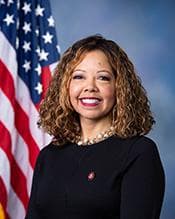
Lucy McBath
Democratic Representative
Georgia
Cosponsors (147)
Brenda L. Lawrence (Democratic)Dwight Evans (Democratic)Val Butler Demings (Democratic)Nikema Williams (Democratic)John Garamendi (Democratic)Sylvia R. Garcia (Democratic)Ruben Gallego (Democratic)Marc A. Veasey (Democratic)Robert C. "Bobby" Scott (Democratic)Barbara Lee (Democratic)Mikie Sherrill (Democratic)Robin L. Kelly (Democratic)Tom Malinowski (Democratic)Ritchie Torres (Democratic)Mark Pocan (Democratic)Karen Bass (Democratic)Joyce Beatty (Democratic)Lisa Blunt Rochester (Democratic)David N. Cicilline (Democratic)David J. Trone (Democratic)Ed Case (Democratic)Emanuel Cleaver (Democratic)Brian Higgins (Democratic)Chrissy Houlahan (Democratic)Kathleen M. Rice (Democratic)Darren Soto (Democratic)Raul Ruiz (Democratic)Sheila Jackson Lee (Democratic)Derek Kilmer (Democratic)John A. Yarmuth (Democratic)Carolyn B. Maloney (Democratic)Bill Foster (Democratic)Joe Courtney (Democratic)Mondaire Jones (Democratic)C. A. Dutch Ruppersberger (Democratic)Ilhan Omar (Democratic)Shontel M. Brown (Democratic)Frederica S. Wilson (Democratic)Terri A. Sewell (Democratic)Bobby L. Rush (Democratic)Troy A. Carter (Democratic)Gregorio Kilili Camacho Sablan (Democratic)Steven Horsford (Democratic)Andy Levin (Democratic)Jimmy Panetta (Democratic)J. Luis Correa (Democratic)Eric Swalwell (Democratic)Dina Titus (Democratic)Kathy E. Manning (Democratic)Madeleine Dean (Democratic)Melanie A. Stansbury (Democratic)Katherine M. Clark (Democratic)Steve Cohen (Democratic)Suzan K. DelBene (Democratic)Jennifer Wexton (Democratic)Thomas R. Suozzi (Democratic)John P. Sarbanes (Democratic)Rosa L. DeLauro (Democratic)Haley M. Stevens (Democratic)Anthony G. Brown (Democratic)Adriano Espaillat (Democratic)Danny K. Davis (Democratic)Lucille Roybal-Allard (Democratic)Peter A. DeFazio (Democratic)Daniel T. Kildee (Democratic)Jake Auchincloss (Democratic)Ted Lieu (Democratic)Ro Khanna (Democratic)Greg Stanton (Democratic)Sean Patrick Maloney (Democratic)Kurt Schrader (Democratic)Henry C. "Hank" Johnson (Democratic)Al Green (Democratic)André Carson (Democratic)John B. Larson (Democratic)Stephen F. Lynch (Democratic)Mark DeSaulnier (Democratic)Jim Cooper (Democratic)Joseph D. Morelle (Democratic)Marilyn Strickland (Democratic)Gregory W. Meeks (Democratic)Dean Phillips (Democratic)Jahana Hayes (Democratic)Hakeem S. Jeffries (Democratic)Raja Krishnamoorthi (Democratic)James A. Himes (Democratic)Jerrold Nadler (Democratic)Theodore E. Deutch (Democratic)Alma S. Adams (Democratic)Anna G. Eshoo (Democratic)Mark Takano (Democratic)Pramila Jayapal (Democratic)Betty McCollum (Democratic)Eleanor Holmes Norton (Democratic)Brad Sherman (Democratic)Bonnie Watson Coleman (Democratic)Mary Gay Scanlon (Democratic)Norma J. Torres (Democratic)Antonio Delgado (Democratic)Salud O. Carbajal (Democratic)Jamie Raskin (Democratic)Joe Neguse (Democratic)Donald S. Beyer (Democratic)Sean Casten (Democratic)Janice D. Schakowsky (Democratic)Andy Kim (Democratic)James P. McGovern (Democratic)Maxine Waters (Democratic)Michael F. Q. San Nicolas (Democratic)Adam Smith (Democratic)Julia Brownley (Democratic)Eddie Bernice Johnson (Democratic)Marie Newman (Democratic)Yvette D. Clarke (Democratic)Rick Larsen (Democratic)Peter Welch (Democratic)Colin Z. Allred (Democratic)Bennie G. Thompson (Democratic)Earl Blumenauer (Democratic)Deborah K. Ross (Democratic)Lori Trahan (Democratic)Charlie Crist (Democratic)Seth Moulton (Democratic)Mike Thompson (Democratic)Suzanne Bonamici (Democratic)Josh Gottheimer (Democratic)Linda T. Sánchez (Democratic)Ed Perlmutter (Democratic)Zoe Lofgren (Democratic)Nanette Diaz Barragán (Democratic)Jesús G. "Chuy" García (Democratic)Jason Crow (Democratic)Gwen Moore (Democratic)Susie Lee (Democratic)Grace Meng (Democratic)Rashida Tlaib (Democratic)Bradley Scott Schneider (Democratic)Kweisi Mfume (Democratic)Ayanna Pressley (Democratic)Jamaal Bowman (Democratic)Veronica Escobar (Democratic)Debbie Wasserman Schultz (Democratic)Lauren Underwood (Democratic)Chellie Pingree (Democratic)Bill Pascrell (Democratic)Susan Wild (Democratic)Mike Levin (Democratic)
Crime and Federal Government Surveillance Subcommittee, Judiciary Committee, Judiciary Committee
- Introduced
- In Committee
- On Floor
- Passed Chamber
- Enacted
Federal Extreme Risk Protection Order Act of 2022 This bill authorizes and establishes procedures for federal courts to issue federal extreme risk protection orders. Additionally, the bill establishes grants to support the implementation of extreme risk protection order laws at the state and local levels, extends federal firearms restrictions to individuals who are subject to extreme risk protection orders, and expands related data collection. Extreme risk protection order laws, or red flag laws, generally allow certain individuals (e.g., law enforcement officers or family members) to petition a court for a temporary order that prohibits an at-risk individual from purchasing and possessing firearms. Among its provisions, the bill authorizes a family or household member, or a law enforcement officer, to petition for a federal extreme risk protection order with respect to an individual who poses a risk to themselves or others; directs the Department of Justice to establish a grant program to help states, local governments, Indian tribes, and other entities implement extreme risk protection order laws; extends federal restrictions on the receipt, possession, shipment, and transportation of firearms and ammunition to individuals who are subject to extreme risk protection orders; and requires the Federal Bureau of Investigation to compile records from federal, tribal, and state courts and other agencies that identify individuals who are subject to extreme risk protection orders.
Suggested Questions
Get AI-generated questions to help you understand this bill better
Timeline
Introduced in House
Referred to the House Committee on the Judiciary.
Referred to the Subcommittee on Crime, Terrorism, and Homeland Security.
Subcommittee on Crime, Terrorism, and Homeland Security Discharged.
Ordered to be Reported (Amended) by the Yeas and Nays: 24 - 18.
Committee Consideration and Mark-up Session Held.
Placed on the Union Calendar, Calendar No. 256.
Reported (Amended) by the Committee on Judiciary. H. Rept. 117-342.
Rules Committee Resolution H. Res. 1153 Reported to House. Rule provides for consideration of H.R. 2377 and H.R. 7910. Provides for one hour of debate on H.R. 2377 and two hours of debate on H.R. 7910. Also provides for a motion to recommit on each measure.
Received in the Senate and Read twice and referred to the Committee on the Judiciary.
Considered under the provisions of rule H. Res. 1153. (consideration: CR H5415-5429)
Rule provides for consideration of H.R. 2377 and H.R. 7910. Provides for one hour of debate on H.R. 2377 and two hours of debate on H.R. 7910. Also provides for a motion to recommit on each measure.
DEBATE - The House proceeded with one hour of debate on H.R. 2377.
The previous question was ordered pursuant to the rule.
On passage Passed by the Yeas and Nays: 224 - 202 (Roll no. 255).
View VoteMotion to reconsider laid on the table Agreed to without objection.
Crime and Law Enforcement
Assault and harassment offensesCongressional oversightCriminal justice information and recordsDue process and equal protectionFirearms and explosivesJudicial procedure and administrationLaw enforcement administration and fundingLaw enforcement officersMental healthRetail and wholesale tradesState and local government operationsViolent crime
Federal Extreme Risk Protection Order Act of 2022
USA117th CongressHR-2377| House
| Updated: 6/9/2022
Federal Extreme Risk Protection Order Act of 2022 This bill authorizes and establishes procedures for federal courts to issue federal extreme risk protection orders. Additionally, the bill establishes grants to support the implementation of extreme risk protection order laws at the state and local levels, extends federal firearms restrictions to individuals who are subject to extreme risk protection orders, and expands related data collection. Extreme risk protection order laws, or red flag laws, generally allow certain individuals (e.g., law enforcement officers or family members) to petition a court for a temporary order that prohibits an at-risk individual from purchasing and possessing firearms. Among its provisions, the bill authorizes a family or household member, or a law enforcement officer, to petition for a federal extreme risk protection order with respect to an individual who poses a risk to themselves or others; directs the Department of Justice to establish a grant program to help states, local governments, Indian tribes, and other entities implement extreme risk protection order laws; extends federal restrictions on the receipt, possession, shipment, and transportation of firearms and ammunition to individuals who are subject to extreme risk protection orders; and requires the Federal Bureau of Investigation to compile records from federal, tribal, and state courts and other agencies that identify individuals who are subject to extreme risk protection orders.
Suggested Questions
Get AI-generated questions to help you understand this bill better
Timeline
Introduced in House
Referred to the House Committee on the Judiciary.
Referred to the Subcommittee on Crime, Terrorism, and Homeland Security.
Subcommittee on Crime, Terrorism, and Homeland Security Discharged.
Ordered to be Reported (Amended) by the Yeas and Nays: 24 - 18.
Committee Consideration and Mark-up Session Held.
Placed on the Union Calendar, Calendar No. 256.
Reported (Amended) by the Committee on Judiciary. H. Rept. 117-342.
Rules Committee Resolution H. Res. 1153 Reported to House. Rule provides for consideration of H.R. 2377 and H.R. 7910. Provides for one hour of debate on H.R. 2377 and two hours of debate on H.R. 7910. Also provides for a motion to recommit on each measure.
Received in the Senate and Read twice and referred to the Committee on the Judiciary.
Considered under the provisions of rule H. Res. 1153. (consideration: CR H5415-5429)
Rule provides for consideration of H.R. 2377 and H.R. 7910. Provides for one hour of debate on H.R. 2377 and two hours of debate on H.R. 7910. Also provides for a motion to recommit on each measure.
DEBATE - The House proceeded with one hour of debate on H.R. 2377.
The previous question was ordered pursuant to the rule.
On passage Passed by the Yeas and Nays: 224 - 202 (Roll no. 255).
View VoteMotion to reconsider laid on the table Agreed to without objection.
Lucy McBath
Democratic Representative
Georgia
Cosponsors (147)
Brenda L. Lawrence (Democratic)Dwight Evans (Democratic)Val Butler Demings (Democratic)Nikema Williams (Democratic)John Garamendi (Democratic)Sylvia R. Garcia (Democratic)Ruben Gallego (Democratic)Marc A. Veasey (Democratic)Robert C. "Bobby" Scott (Democratic)Barbara Lee (Democratic)Mikie Sherrill (Democratic)Robin L. Kelly (Democratic)Tom Malinowski (Democratic)Ritchie Torres (Democratic)Mark Pocan (Democratic)Karen Bass (Democratic)Joyce Beatty (Democratic)Lisa Blunt Rochester (Democratic)David N. Cicilline (Democratic)David J. Trone (Democratic)Ed Case (Democratic)Emanuel Cleaver (Democratic)Brian Higgins (Democratic)Chrissy Houlahan (Democratic)Kathleen M. Rice (Democratic)Darren Soto (Democratic)Raul Ruiz (Democratic)Sheila Jackson Lee (Democratic)Derek Kilmer (Democratic)John A. Yarmuth (Democratic)Carolyn B. Maloney (Democratic)Bill Foster (Democratic)Joe Courtney (Democratic)Mondaire Jones (Democratic)C. A. Dutch Ruppersberger (Democratic)Ilhan Omar (Democratic)Shontel M. Brown (Democratic)Frederica S. Wilson (Democratic)Terri A. Sewell (Democratic)Bobby L. Rush (Democratic)Troy A. Carter (Democratic)Gregorio Kilili Camacho Sablan (Democratic)Steven Horsford (Democratic)Andy Levin (Democratic)Jimmy Panetta (Democratic)J. Luis Correa (Democratic)Eric Swalwell (Democratic)Dina Titus (Democratic)Kathy E. Manning (Democratic)Madeleine Dean (Democratic)Melanie A. Stansbury (Democratic)Katherine M. Clark (Democratic)Steve Cohen (Democratic)Suzan K. DelBene (Democratic)Jennifer Wexton (Democratic)Thomas R. Suozzi (Democratic)John P. Sarbanes (Democratic)Rosa L. DeLauro (Democratic)Haley M. Stevens (Democratic)Anthony G. Brown (Democratic)Adriano Espaillat (Democratic)Danny K. Davis (Democratic)Lucille Roybal-Allard (Democratic)Peter A. DeFazio (Democratic)Daniel T. Kildee (Democratic)Jake Auchincloss (Democratic)Ted Lieu (Democratic)Ro Khanna (Democratic)Greg Stanton (Democratic)Sean Patrick Maloney (Democratic)Kurt Schrader (Democratic)Henry C. "Hank" Johnson (Democratic)Al Green (Democratic)André Carson (Democratic)John B. Larson (Democratic)Stephen F. Lynch (Democratic)Mark DeSaulnier (Democratic)Jim Cooper (Democratic)Joseph D. Morelle (Democratic)Marilyn Strickland (Democratic)Gregory W. Meeks (Democratic)Dean Phillips (Democratic)Jahana Hayes (Democratic)Hakeem S. Jeffries (Democratic)Raja Krishnamoorthi (Democratic)James A. Himes (Democratic)Jerrold Nadler (Democratic)Theodore E. Deutch (Democratic)Alma S. Adams (Democratic)Anna G. Eshoo (Democratic)Mark Takano (Democratic)Pramila Jayapal (Democratic)Betty McCollum (Democratic)Eleanor Holmes Norton (Democratic)Brad Sherman (Democratic)Bonnie Watson Coleman (Democratic)Mary Gay Scanlon (Democratic)Norma J. Torres (Democratic)Antonio Delgado (Democratic)Salud O. Carbajal (Democratic)Jamie Raskin (Democratic)Joe Neguse (Democratic)Donald S. Beyer (Democratic)Sean Casten (Democratic)Janice D. Schakowsky (Democratic)Andy Kim (Democratic)James P. McGovern (Democratic)Maxine Waters (Democratic)Michael F. Q. San Nicolas (Democratic)Adam Smith (Democratic)Julia Brownley (Democratic)Eddie Bernice Johnson (Democratic)Marie Newman (Democratic)Yvette D. Clarke (Democratic)Rick Larsen (Democratic)Peter Welch (Democratic)Colin Z. Allred (Democratic)Bennie G. Thompson (Democratic)Earl Blumenauer (Democratic)Deborah K. Ross (Democratic)Lori Trahan (Democratic)Charlie Crist (Democratic)Seth Moulton (Democratic)Mike Thompson (Democratic)Suzanne Bonamici (Democratic)Josh Gottheimer (Democratic)Linda T. Sánchez (Democratic)Ed Perlmutter (Democratic)Zoe Lofgren (Democratic)Nanette Diaz Barragán (Democratic)Jesús G. "Chuy" García (Democratic)Jason Crow (Democratic)Gwen Moore (Democratic)Susie Lee (Democratic)Grace Meng (Democratic)Rashida Tlaib (Democratic)Bradley Scott Schneider (Democratic)Kweisi Mfume (Democratic)Ayanna Pressley (Democratic)Jamaal Bowman (Democratic)Veronica Escobar (Democratic)Debbie Wasserman Schultz (Democratic)Lauren Underwood (Democratic)Chellie Pingree (Democratic)Bill Pascrell (Democratic)Susan Wild (Democratic)Mike Levin (Democratic)
Crime and Federal Government Surveillance Subcommittee, Judiciary Committee, Judiciary Committee
Crime and Law Enforcement
Related Bills
- HR 117-3480: Extreme Risk Protection Order Act of 2021
- HRES 117-1153: Providing for consideration of the bill (H.R. 2377) to authorize the issuance of extreme risk protection orders; providing for consideration of the bill (H.R. 7910) to amend title 18, United States Code, to provide for an increased age limit on the purchase of certain firearms, prevent gun trafficking, modernize the prohibition on untraceable firearms, encourage the safe storage of firearms, and for other purposes; and for other purposes.
- S 117-1819: Extreme Risk Protection Order Act of 2021
- HR 117-9624: Gun Violence Prevention and Community Safety Act of 2022
- S 117-5299: Gun Violence Prevention and Community Safety Act of 2022
- Introduced
- In Committee
- On Floor
- Passed Chamber
- Enacted
Assault and harassment offensesCongressional oversightCriminal justice information and recordsDue process and equal protectionFirearms and explosivesJudicial procedure and administrationLaw enforcement administration and fundingLaw enforcement officersMental healthRetail and wholesale tradesState and local government operationsViolent crime