First Step Act of 2018
USA115th CongressS-756| Senate
| Updated: 12/21/2018
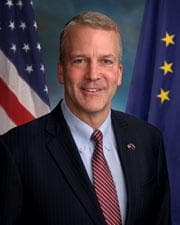
Dan Sullivan
Republican Senator
Alaska
Cosponsors (21)
Jeanne Shaheen (Democratic)Bill Cassidy (Republican)Tom Udall (Democratic)Thomas Tillis (Republican)Edward J. Markey (Democratic)Elizabeth Warren (Democratic)Christopher A. Coons (Democratic)Angus S. King (Independent)James M. Inhofe (Republican)Sheldon Whitehouse (Democratic)Chris Van Hollen (Democratic)Christopher Murphy (Democratic)John Kennedy (Republican)Brian Schatz (Democratic)Cory A. Booker (Democratic)Susan M. Collins (Republican)Marco Rubio (Republican)Gary C. Peters (Democratic)Rob Portman (Republican)Ron Wyden (Democratic)Lisa Murkowski (Republican)
Transportation and Infrastructure Committee, Commerce, Science, and Transportation Committee, Water, Wildlife and Fisheries Subcommittee, Coast Guard and Maritime Transportation Subcommittee, Natural Resources Committee
- Introduced
- In Committee
- On Floor
- Passed Chamber
- Enacted
First Step Act of 2018 TITLE I--RECIDIVISM REDUCTION (Sec. 101) This bill directs the Department of Justice (DOJ) to establish a risk and needs assessment system to evaluate the recidivism risk of prisoners; to guide housing, grouping, and program assignments; and to incentivize and reward participation in and completion of recidivism reduction programs and productive activities. (Sec. 102) The Bureau of Prisons (BOP) must implement the risk and needs assessment system at its facilities. The bill modifies the computation of good time credit to allow a prisoner to earn a maximum of 54 days per year of the sentence imposed (instead of 54 days per year of the sentence actually served). (Sec. 103) The Government Accountability Office must audit the use of the risk and needs assessment system at BOP facilities. (Sec. 104) The bill authorizes funds for FY2019-FY2023 to establish and implement the risk and needs assessment system. Of the amount appropriated, 80% is reserved for use by the BOP for implementation. (Sec. 105) The bill does not authorize prerelease custody or supervised release for an individual serving a prison term for a state offense. (Sec. 106) It prohibits discrimination against a program, treatment, regimen, group, company, charity, person, or entity based on the fact that it may be or is faith-based. (Sec. 107) The bill establishes the Independent Review Committee to help DOJ: review existing prisoner risk and needs assessment systems, develop recommendations regarding rehabilitative programs and productive activities, research and analyze the effectiveness of such programs, and review and validate the system. TITLE II--BUREAU OF PRISONS SECURE FIREARMS STORAGE Lieutenant Osvaldo Albarati Correctional Officer Self-Protection Act of 2018 (Sec. 202) The BOP must allow federal correctional officers to securely store and carry concealed firearms on BOP premises outside the security perimeter of a prison. TITLE III--RESTRAINTS ON PREGNANT PRISONERS PROHIBITED (Sec. 301) The bill limits the use of restraints on federal prisoners who are pregnant or in postpartum recovery. TITLE IV--SENTENCING REFORM (Sec. 401) This bill reduces, and restricts the application of, the enhanced mandatory minimum prison terms for certain repeat drug offenses involving high-level drug quantities (e.g., one kilogram or more of heroin). Specifically, it reduces the mandatory minimum sentence: from 20 to 15 years for a high-level offense after one prior conviction, and from life to 25 years for a high-level offense after two or more prior convictions. Additionally, the mandatory minimum penalty applies if the prior convictions are for a serious drug felony or serious violent felony (currently, a felony drug offense). (Sec. 402) It broadens eligibility for the existing safety valve exception. Courts may impose a sentence below the mandatory minimum for certain nonviolent, cooperative drug defendants with a limited criminal history. (Sec. 403) The bill reduces from 25 to 15 years the enhanced mandatory minimum prison term for a defendant who uses a firearm in a crime of violence or drug offense after a prior conviction for such offense. (Sec. 404) It makes the Fair Sentencing Act of 2010 retroactive. A convicted crack cocaine offender sentenced before August 3, 2010, may petition federal court for resentencing. TITLE V--SECOND CHANCE ACT OF 2007 REAUTHORIZATION Second Chance Reauthorization Act of 2018 (Sec. 502) This bill amends the Omnibus Crime Control and Safe Streets Act of 1968: to revise and reauthorize grant programs for offender reentry demonstration projects; family-based substance abuse treatment; and evaluating and improving educational methods at prisons, jails, and juvenile facilities; and to repeal grant programs for offender reentry courts and drug treatment alternatives to incarceration. Additionally, the legislation amends the Second Chance Act of 2007: to rename, revise, and reauthorize grant programs for technology career training demonstration projects and reentry mentoring services; to reauthorize offender reentry research and the grant program for offender reentry substance abuse and criminal justice collaboration; to reauthorize and modify eligibility for an elderly offender early release pilot program; and to repeal grant programs for the responsible reintegration of offenders and the study of Depot Naltrexone to treat heroin addiction. It amends the federal criminal code to establish partnerships between prisons and faith- or community-based nonprofit organizations to conduct activities to reduce recidivism. (Sec. 503) The DOJ Office of Inspector General must conduct annual audits of selected grant recipients to prevent waste, fraud, and abuse of funds. The bill subjects grants to accountability provisions and limits the use of grants for conferences that use more than $20,000 in DOJ funds. DOJ, in collaboration with interested persons, providers, and organizations, and state, local, and tribal governments, must coordinate and report to Congress on federal reentry programs, policies, and practices. Finally, the National Institute of Justice must evaluate the effectiveness of grants for offender reentry and recidivism reduction programs. TITLE VI--MISCELLANEOUS CRIMINAL JUSTICE (Sec. 601) The bill amends the federal criminal code: to direct the BOP to place a prisoner in a facility that is not more than 500 driving miles away from the prisoner's primary residence, subject to bed availability and the prisoner's security designation; and to specify that the designation of a prison placement is not reviewable by a court. (Sec. 602) The BOP must place low-risk prisoners on home confinement for the maximum amount of time permitted. (Sec. 603) The bill reauthorizes through FY2022 and modifies eligibility for an elderly offender early release pilot program. (Sec. 604) The BOP must, as part of prerelease planning procedures, help a prisoner obtain identification, including a Social Security card, driver's license or other official photo identification, and a birth certificate. (Sec. 605) The bill authorizes Federal Prison Industries to sell products to new markets such as the District of Columbia government and nonprofit organizations. (Sec. 606) The BOP must incorporate specialized and comprehensive de-escalation procedures into its training programs. (Sec. 607) The BOP must report on its capacity to treat heroin and opioid abuse through evidence-based programs, including medication-assisted treatment. The Administrative Office of the U.S. Courts must report on the capacity of treatment-service providers to provide medication-assisted treatment for opioid and heroin abuse to prisoners serving a term of supervised release, including plans to expand access. (Sec. 608) The BOP must establish pilot programs: (1) on youth mentorship; and (2) on service to abandoned, rescued, or vulnerable animals. (Sec. 609) Probation and pretrial services officers must perform court-directed supervision of sex offenders conditionally released from civil commitment. (Sec. 610) The bill expands data collection requirements regarding the National Prisoner Statistics Program. (Sec. 611) The BOP must make tampons and sanitary napkins available free of charge. (Sec. 612) The bill requires at least 8% of funds for the Justice and Mental Health Collaboration Program to be used to provide technical assistance. (Sec. 613) The bill prohibits juvenile solitary confinement, except as a temporary response to behavior that poses a serious and immediate risk of harm.
Suggested Questions
Get AI-generated questions to help you understand this bill better
Timeline
Introduced in Senate
Read twice and referred to the Committee on Commerce, Science, and Transportation.
Committee on Commerce, Science, and Transportation. Ordered to be reported without amendment favorably.
Committee on Commerce, Science, and Transportation. Reported by Senator Thune without amendment. With written report No. 115-135.
Placed on Senate Legislative Calendar under General Orders. Calendar No. 181.
Passed Senate with amendments by Unanimous Consent.
Passed/agreed to in Senate: Passed Senate with amendments by Unanimous Consent.
Measure laid before Senate by unanimous consent. (consideration: CR S4895)
Referred to the Committee on Transportation and Infrastructure, and in addition to the Committee on Natural Resources, for a period to be subsequently determined by the Speaker, in each case for consideration of such provisions as fall within the jurisdiction of the committee concerned.
Message on Senate action sent to the House.
Received in the House.
Referred to the Subcommittee on Coast Guard and Maritime Transportation.
Referred to the Subcommittee on Water, Power and Oceans.
Ordered to be Reported (Amended) by Voice Vote.
Subcommittee on Coast Guard and Maritime Transportation Discharged.
Committee Consideration and Mark-up Session Held.
Mr. Young (AK) moved to suspend the rules and pass the bill, as amended.
Considered under suspension of the rules. (consideration: CR H7640-7645)
DEBATE - The House proceeded with forty minutes of debate on S. 756.
Passed/agreed to in House: On motion to suspend the rules and pass the bill, as amended Agreed to by voice vote.(text: CR H7640-7642)
On motion to suspend the rules and pass the bill, as amended Agreed to by voice vote. (text: CR H7640-7642)
Motion to reconsider laid on the table Agreed to without objection.
Message on House action received in Senate and at desk: House amendment to Senate bill.
Motion by Senator McConnell to concur in the House amendment to S. 756 with an amendment (SA 4108) made in Senate.
Measure laid before Senate by unanimous consent.
Cloture motion on the motion to concur in the House amendment to S. 756 with an amendment (SA 4108) presented in Senate. (text: CR 7567)
Considered by Senate (Message from the House considered). (consideration: CR S7639)
Cloture on the motion to concur in the House amendment to S. 756 with an amendment (SA 4108) invoked in Senate by Yea-Nay Vote. 82 - 12. Record Vote Number: 267. (text: CR S7650)
View VoteConsidered by Senate (Message from the House considered). (consideration: CR S7740-7745, S7746-7752, S7753-7781)
Senate concurred in the House amendment to S. 756 with an amendment (SA 4108) by Yea-Nay Vote. 87 - 12. Record Vote Number: 271.
View VoteMessage on Senate action sent to the House.
Presented to President.
Mr. Goodlatte moved that the House suspend the rules and agree to the Senate amendment to the House amendment. (consideration: CR H10346-10366)
DEBATE - The House proceeded with forty minutes of debate on the motion to suspend the rules and agree to the Senate amendment to the House amendment to S. 756.
At the conclusion of debate, the Yeas and Nays were demanded and ordered. Pursuant to the provisions of clause 8, rule XX, the chair announced that further proceedings on the motion would be postponed.
On motion that the House suspend the rules and agree to the Senate amendment to the House amendment Agreed to by the Yeas and Nays (2/3 required): 358 - 36 (Roll No. 448). (consideration: CR H10431; text: CR H10346-10360)
View VoteMotion to reconsider laid on the table Agreed to without objection.
Signed by President.
Became Public Law No: 115-391.
Crime and Law Enforcement
Accounting and auditingAdministrative law and regulatory proceduresAdult education and literacyAdvisory bodiesCensus and government statisticsChild safety and welfareCoast guardCongressional oversightCorrectional facilities and imprisonmentCrime preventionCrime victimsCriminal investigation, prosecution, interrogationCriminal justice information and recordsCriminal procedure and sentencingDepartment of CommerceDepartment of Homeland SecurityDepartment of JusticeDepartment of StateDepartment of the InteriorDrug, alcohol, tobacco useDrug therapyDrug trafficking and controlled substancesEconomic performance and conditionsEducational technology and distance educationElementary and secondary educationEmergency medical services and trauma careEmployment and training programsEnvironmental assessment, monitoring, researchExecutive agency funding and structureFamily relationshipsFamily servicesFirearms and explosivesFraud offenses and financial crimesGovernment information and archivesGovernment studies and investigationsHealth care coverage and accessHealth technology, devices, suppliesHomelessness and emergency shelterIndian social and development programsInfrastructure developmentInternational law and treatiesInternational organizations and cooperationJuvenile crime and gang violenceLaw enforcement administration and fundingLaw enforcement officersLow- and moderate-income housingMarine and coastal resources, fisheriesMarine and inland water transportationMarine pollutionMaterialsMental healthPerformance measurementPoverty and welfare assistancePublic contracts and procurementResearch administration and fundingResearch and developmentRural conditions and developmentSex offensesSocial work, volunteer service, charitable organizationsSolid waste and recyclingState and local courtsTrade agreements and negotiationsVeterans' education, employment, rehabilitationVeterans' loans, housing, homeless programsVeterans' medical careVeterans' pensions and compensationVocational and technical educationWildlife conservation and habitat protectionWomen's healthWorker safety and healthYouth employment and child labor
First Step Act of 2018
USA115th CongressS-756| Senate
| Updated: 12/21/2018
First Step Act of 2018 TITLE I--RECIDIVISM REDUCTION (Sec. 101) This bill directs the Department of Justice (DOJ) to establish a risk and needs assessment system to evaluate the recidivism risk of prisoners; to guide housing, grouping, and program assignments; and to incentivize and reward participation in and completion of recidivism reduction programs and productive activities. (Sec. 102) The Bureau of Prisons (BOP) must implement the risk and needs assessment system at its facilities. The bill modifies the computation of good time credit to allow a prisoner to earn a maximum of 54 days per year of the sentence imposed (instead of 54 days per year of the sentence actually served). (Sec. 103) The Government Accountability Office must audit the use of the risk and needs assessment system at BOP facilities. (Sec. 104) The bill authorizes funds for FY2019-FY2023 to establish and implement the risk and needs assessment system. Of the amount appropriated, 80% is reserved for use by the BOP for implementation. (Sec. 105) The bill does not authorize prerelease custody or supervised release for an individual serving a prison term for a state offense. (Sec. 106) It prohibits discrimination against a program, treatment, regimen, group, company, charity, person, or entity based on the fact that it may be or is faith-based. (Sec. 107) The bill establishes the Independent Review Committee to help DOJ: review existing prisoner risk and needs assessment systems, develop recommendations regarding rehabilitative programs and productive activities, research and analyze the effectiveness of such programs, and review and validate the system. TITLE II--BUREAU OF PRISONS SECURE FIREARMS STORAGE Lieutenant Osvaldo Albarati Correctional Officer Self-Protection Act of 2018 (Sec. 202) The BOP must allow federal correctional officers to securely store and carry concealed firearms on BOP premises outside the security perimeter of a prison. TITLE III--RESTRAINTS ON PREGNANT PRISONERS PROHIBITED (Sec. 301) The bill limits the use of restraints on federal prisoners who are pregnant or in postpartum recovery. TITLE IV--SENTENCING REFORM (Sec. 401) This bill reduces, and restricts the application of, the enhanced mandatory minimum prison terms for certain repeat drug offenses involving high-level drug quantities (e.g., one kilogram or more of heroin). Specifically, it reduces the mandatory minimum sentence: from 20 to 15 years for a high-level offense after one prior conviction, and from life to 25 years for a high-level offense after two or more prior convictions. Additionally, the mandatory minimum penalty applies if the prior convictions are for a serious drug felony or serious violent felony (currently, a felony drug offense). (Sec. 402) It broadens eligibility for the existing safety valve exception. Courts may impose a sentence below the mandatory minimum for certain nonviolent, cooperative drug defendants with a limited criminal history. (Sec. 403) The bill reduces from 25 to 15 years the enhanced mandatory minimum prison term for a defendant who uses a firearm in a crime of violence or drug offense after a prior conviction for such offense. (Sec. 404) It makes the Fair Sentencing Act of 2010 retroactive. A convicted crack cocaine offender sentenced before August 3, 2010, may petition federal court for resentencing. TITLE V--SECOND CHANCE ACT OF 2007 REAUTHORIZATION Second Chance Reauthorization Act of 2018 (Sec. 502) This bill amends the Omnibus Crime Control and Safe Streets Act of 1968: to revise and reauthorize grant programs for offender reentry demonstration projects; family-based substance abuse treatment; and evaluating and improving educational methods at prisons, jails, and juvenile facilities; and to repeal grant programs for offender reentry courts and drug treatment alternatives to incarceration. Additionally, the legislation amends the Second Chance Act of 2007: to rename, revise, and reauthorize grant programs for technology career training demonstration projects and reentry mentoring services; to reauthorize offender reentry research and the grant program for offender reentry substance abuse and criminal justice collaboration; to reauthorize and modify eligibility for an elderly offender early release pilot program; and to repeal grant programs for the responsible reintegration of offenders and the study of Depot Naltrexone to treat heroin addiction. It amends the federal criminal code to establish partnerships between prisons and faith- or community-based nonprofit organizations to conduct activities to reduce recidivism. (Sec. 503) The DOJ Office of Inspector General must conduct annual audits of selected grant recipients to prevent waste, fraud, and abuse of funds. The bill subjects grants to accountability provisions and limits the use of grants for conferences that use more than $20,000 in DOJ funds. DOJ, in collaboration with interested persons, providers, and organizations, and state, local, and tribal governments, must coordinate and report to Congress on federal reentry programs, policies, and practices. Finally, the National Institute of Justice must evaluate the effectiveness of grants for offender reentry and recidivism reduction programs. TITLE VI--MISCELLANEOUS CRIMINAL JUSTICE (Sec. 601) The bill amends the federal criminal code: to direct the BOP to place a prisoner in a facility that is not more than 500 driving miles away from the prisoner's primary residence, subject to bed availability and the prisoner's security designation; and to specify that the designation of a prison placement is not reviewable by a court. (Sec. 602) The BOP must place low-risk prisoners on home confinement for the maximum amount of time permitted. (Sec. 603) The bill reauthorizes through FY2022 and modifies eligibility for an elderly offender early release pilot program. (Sec. 604) The BOP must, as part of prerelease planning procedures, help a prisoner obtain identification, including a Social Security card, driver's license or other official photo identification, and a birth certificate. (Sec. 605) The bill authorizes Federal Prison Industries to sell products to new markets such as the District of Columbia government and nonprofit organizations. (Sec. 606) The BOP must incorporate specialized and comprehensive de-escalation procedures into its training programs. (Sec. 607) The BOP must report on its capacity to treat heroin and opioid abuse through evidence-based programs, including medication-assisted treatment. The Administrative Office of the U.S. Courts must report on the capacity of treatment-service providers to provide medication-assisted treatment for opioid and heroin abuse to prisoners serving a term of supervised release, including plans to expand access. (Sec. 608) The BOP must establish pilot programs: (1) on youth mentorship; and (2) on service to abandoned, rescued, or vulnerable animals. (Sec. 609) Probation and pretrial services officers must perform court-directed supervision of sex offenders conditionally released from civil commitment. (Sec. 610) The bill expands data collection requirements regarding the National Prisoner Statistics Program. (Sec. 611) The BOP must make tampons and sanitary napkins available free of charge. (Sec. 612) The bill requires at least 8% of funds for the Justice and Mental Health Collaboration Program to be used to provide technical assistance. (Sec. 613) The bill prohibits juvenile solitary confinement, except as a temporary response to behavior that poses a serious and immediate risk of harm.
Suggested Questions
Get AI-generated questions to help you understand this bill better
Timeline
Introduced in Senate
Read twice and referred to the Committee on Commerce, Science, and Transportation.
Committee on Commerce, Science, and Transportation. Ordered to be reported without amendment favorably.
Committee on Commerce, Science, and Transportation. Reported by Senator Thune without amendment. With written report No. 115-135.
Placed on Senate Legislative Calendar under General Orders. Calendar No. 181.
Passed Senate with amendments by Unanimous Consent.
Passed/agreed to in Senate: Passed Senate with amendments by Unanimous Consent.
Measure laid before Senate by unanimous consent. (consideration: CR S4895)
Referred to the Committee on Transportation and Infrastructure, and in addition to the Committee on Natural Resources, for a period to be subsequently determined by the Speaker, in each case for consideration of such provisions as fall within the jurisdiction of the committee concerned.
Message on Senate action sent to the House.
Received in the House.
Referred to the Subcommittee on Coast Guard and Maritime Transportation.
Referred to the Subcommittee on Water, Power and Oceans.
Ordered to be Reported (Amended) by Voice Vote.
Subcommittee on Coast Guard and Maritime Transportation Discharged.
Committee Consideration and Mark-up Session Held.
Mr. Young (AK) moved to suspend the rules and pass the bill, as amended.
Considered under suspension of the rules. (consideration: CR H7640-7645)
DEBATE - The House proceeded with forty minutes of debate on S. 756.
Passed/agreed to in House: On motion to suspend the rules and pass the bill, as amended Agreed to by voice vote.(text: CR H7640-7642)
On motion to suspend the rules and pass the bill, as amended Agreed to by voice vote. (text: CR H7640-7642)
Motion to reconsider laid on the table Agreed to without objection.
Message on House action received in Senate and at desk: House amendment to Senate bill.
Motion by Senator McConnell to concur in the House amendment to S. 756 with an amendment (SA 4108) made in Senate.
Measure laid before Senate by unanimous consent.
Cloture motion on the motion to concur in the House amendment to S. 756 with an amendment (SA 4108) presented in Senate. (text: CR 7567)
Considered by Senate (Message from the House considered). (consideration: CR S7639)
Cloture on the motion to concur in the House amendment to S. 756 with an amendment (SA 4108) invoked in Senate by Yea-Nay Vote. 82 - 12. Record Vote Number: 267. (text: CR S7650)
View VoteConsidered by Senate (Message from the House considered). (consideration: CR S7740-7745, S7746-7752, S7753-7781)
Senate concurred in the House amendment to S. 756 with an amendment (SA 4108) by Yea-Nay Vote. 87 - 12. Record Vote Number: 271.
View VoteMessage on Senate action sent to the House.
Presented to President.
Mr. Goodlatte moved that the House suspend the rules and agree to the Senate amendment to the House amendment. (consideration: CR H10346-10366)
DEBATE - The House proceeded with forty minutes of debate on the motion to suspend the rules and agree to the Senate amendment to the House amendment to S. 756.
At the conclusion of debate, the Yeas and Nays were demanded and ordered. Pursuant to the provisions of clause 8, rule XX, the chair announced that further proceedings on the motion would be postponed.
On motion that the House suspend the rules and agree to the Senate amendment to the House amendment Agreed to by the Yeas and Nays (2/3 required): 358 - 36 (Roll No. 448). (consideration: CR H10431; text: CR H10346-10360)
View VoteMotion to reconsider laid on the table Agreed to without objection.
Signed by President.
Became Public Law No: 115-391.
Dan Sullivan
Republican Senator
Alaska
Cosponsors (21)
Jeanne Shaheen (Democratic)Bill Cassidy (Republican)Tom Udall (Democratic)Thomas Tillis (Republican)Edward J. Markey (Democratic)Elizabeth Warren (Democratic)Christopher A. Coons (Democratic)Angus S. King (Independent)James M. Inhofe (Republican)Sheldon Whitehouse (Democratic)Chris Van Hollen (Democratic)Christopher Murphy (Democratic)John Kennedy (Republican)Brian Schatz (Democratic)Cory A. Booker (Democratic)Susan M. Collins (Republican)Marco Rubio (Republican)Gary C. Peters (Democratic)Rob Portman (Republican)Ron Wyden (Democratic)Lisa Murkowski (Republican)
Transportation and Infrastructure Committee, Commerce, Science, and Transportation Committee, Water, Wildlife and Fisheries Subcommittee, Coast Guard and Maritime Transportation Subcommittee, Natural Resources Committee
Crime and Law Enforcement
Related Bills
- S 115-3635: A bill to reauthorize the Second Chance Act of 2007.
- S 115-2795: A bill to provide for programs to help reduce the risk that prisoners will recidivate upon release from prison, and for other purposes.
- HR 115-2748: To reauthorize and amend the Marine Debris Act to promote international action to reduce marine debris, and for other purposes.
- HR 115-6206: Coast Guard Blue Technology Center of Expertise Act
- S 115-3649: A bill to provide for programs to help reduce the risk that prisoners will recidivate upon release from prison, and for other purposes.
- HR 115-2899: To reauthorize the Second Chance Act of 2007.
- S 115-3508: Save Our Seas Act of 2018
- HR 115-6175: Maritime Safety Act of 2018
- S 115-2471: A bill to amend title 18, United States Code, to improve the compassionate release process of the Bureau of Prisons, and for other purposes.
- S 115-3747: A bill to provide for programs to help reduce the risk that prisoners will recidivate upon release from prison, and for other purposes.
- Introduced
- In Committee
- On Floor
- Passed Chamber
- Enacted
Accounting and auditingAdministrative law and regulatory proceduresAdult education and literacyAdvisory bodiesCensus and government statisticsChild safety and welfareCoast guardCongressional oversightCorrectional facilities and imprisonmentCrime preventionCrime victimsCriminal investigation, prosecution, interrogationCriminal justice information and recordsCriminal procedure and sentencingDepartment of CommerceDepartment of Homeland SecurityDepartment of JusticeDepartment of StateDepartment of the InteriorDrug, alcohol, tobacco useDrug therapyDrug trafficking and controlled substancesEconomic performance and conditionsEducational technology and distance educationElementary and secondary educationEmergency medical services and trauma careEmployment and training programsEnvironmental assessment, monitoring, researchExecutive agency funding and structureFamily relationshipsFamily servicesFirearms and explosivesFraud offenses and financial crimesGovernment information and archivesGovernment studies and investigationsHealth care coverage and accessHealth technology, devices, suppliesHomelessness and emergency shelterIndian social and development programsInfrastructure developmentInternational law and treatiesInternational organizations and cooperationJuvenile crime and gang violenceLaw enforcement administration and fundingLaw enforcement officersLow- and moderate-income housingMarine and coastal resources, fisheriesMarine and inland water transportationMarine pollutionMaterialsMental healthPerformance measurementPoverty and welfare assistancePublic contracts and procurementResearch administration and fundingResearch and developmentRural conditions and developmentSex offensesSocial work, volunteer service, charitable organizationsSolid waste and recyclingState and local courtsTrade agreements and negotiationsVeterans' education, employment, rehabilitationVeterans' loans, housing, homeless programsVeterans' medical careVeterans' pensions and compensationVocational and technical educationWildlife conservation and habitat protectionWomen's healthWorker safety and healthYouth employment and child labor