A resolution designating the month of April 2025 as "Earth Month" and expressing support for environmental stewardship and climate action.
USA119th CongressSRES-183| Senate
| Updated: 4/28/2025
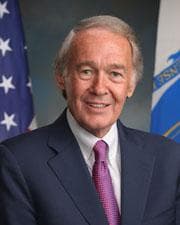
Edward J. Markey
Democratic Senator
Massachusetts
Cosponsors (4)
Judiciary Committee
- Introduced
- In Committee
- On Floor
- Passed Chamber
- Enacted
This resolution formally designates the month of April 2025 as "Earth Month" , building upon the legacy of Earth Day, which was first celebrated in 1970. It acknowledges that the original Earth Day launched the modern environmental movement, leading to significant legislative achievements like the Clean Water Act and the Clean Air Act. The resolution emphasizes the accelerating rate of climate change, its dire threats, and its disproportionate impact on human health and vulnerable communities. The designation of Earth Month provides an extended opportunity for public engagement in environmental protection and restoration, beyond a single day. It encourages collaborative efforts to address environmental challenges, uplift Indigenous environmental knowledge , and center frontline communities in climate solutions. Furthermore, the resolution promotes improving energy efficiency, transitioning to cleaner energy sources, expanding environmental and climate literacy, and enjoying the natural outdoors of the United States.
View Full TextSuggested Questions
Get AI-generated questions to help you understand this bill better
Timeline
Introduced in Senate
Referred to the Committee on the Judiciary. (text: CR S2609)
Environmental Protection
A resolution designating the month of April 2025 as "Earth Month" and expressing support for environmental stewardship and climate action.
USA119th CongressSRES-183| Senate
| Updated: 4/28/2025
This resolution formally designates the month of April 2025 as "Earth Month" , building upon the legacy of Earth Day, which was first celebrated in 1970. It acknowledges that the original Earth Day launched the modern environmental movement, leading to significant legislative achievements like the Clean Water Act and the Clean Air Act. The resolution emphasizes the accelerating rate of climate change, its dire threats, and its disproportionate impact on human health and vulnerable communities. The designation of Earth Month provides an extended opportunity for public engagement in environmental protection and restoration, beyond a single day. It encourages collaborative efforts to address environmental challenges, uplift Indigenous environmental knowledge , and center frontline communities in climate solutions. Furthermore, the resolution promotes improving energy efficiency, transitioning to cleaner energy sources, expanding environmental and climate literacy, and enjoying the natural outdoors of the United States.
View Full TextSuggested Questions
Get AI-generated questions to help you understand this bill better
Timeline
Introduced in Senate
Referred to the Committee on the Judiciary. (text: CR S2609)
Edward J. Markey
Democratic Senator
Massachusetts
Cosponsors (4)
Judiciary Committee
Environmental Protection
- Introduced
- In Committee
- On Floor
- Passed Chamber
- Enacted