Choice in Affordable Housing Act of 2025
USA119th CongressS-890| Senate
| Updated: 3/6/2025
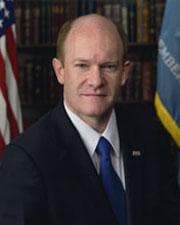
Christopher A. Coons
Democratic Senator
Delaware
Cosponsors (9)
Banking, Housing, and Urban Affairs Committee
- Introduced
- In Committee
- On Floor
- Passed Chamber
- Enacted
This bill, titled the Choice in Affordable Housing Act of 2025, seeks to significantly increase landlord participation in the Housing Choice Voucher (HCV) program , particularly in high-opportunity neighborhoods, to expand housing options for low-income families, the elderly, and persons with disabilities. Congress notes a decline in landlord engagement and finds that the program relies on private landlords, making it crucial to address barriers and make the program more attractive and manageable for property owners. The legislation introduces one-time incentive payments for landlords who lease units in low-poverty census tracts that have not previously accepted vouchers, with payments potentially up to 200 percent of the monthly housing assistance payment. It also mandates assistance for public housing agencies (PHAs) to cover security deposits , or a substantial portion thereof, for tenants, prioritizing extremely low-income families. These initiatives, along with other landlord recruitment and retention efforts, will be funded through a new Herschel Lashkowitz Housing Partnership Fund , authorized at $100 million annually for five years. PHAs will also receive landlord liaison bonus payments for employing dedicated staff to conduct outreach, education, and provide direct support to landlords participating in the program. To streamline processes, the bill modifies housing quality standards (HQS) inspections , allowing units already inspected and approved under other federal housing programs, such as the Low-Income Housing Tax Credit or HOME Investment Partnerships Program, to be deemed compliant. New landlords can also request a pre-approval inspection of their units before a tenant is selected, simplifying their entry into the program. To expand housing choices, the Secretary of Housing and Urban Development must designate significantly more metropolitan areas where PHAs are required to use Small Area Fair Market Rents (SAFMRs) , ensuring voucher values better reflect neighborhood-level rents. Additionally, the Secretary is directed to reform the Section 8 Management Assessment Program (SEMAP) to promote positive landlord interactions and increase the diversity of neighborhoods where voucher holders can lease units. Finally, the bill authorizes $7 million annually for the Tribal Housing and Urban Development-Veterans Affairs Supportive Housing (Tribal HUD-VASH) program for fiscal years 2025 through 2029. The Secretary is also required to submit annual reports for five years, evaluating the Act's effectiveness in recruiting and retaining landlords, especially in high-opportunity areas, and tracking key program metrics like the number of participating landlords and units.
View Full TextSuggested Questions
Get AI-generated questions to help you understand this bill better
Timeline
Introduced in Senate
Read twice and referred to the Committee on Banking, Housing, and Urban Affairs.
Housing and Community Development
Congressional oversightDisability and paralysisHousing and community development fundingHousing industry and standardsIndian social and development programsLandlord and tenantPublic housingVeterans' loans, housing, homeless programs
Choice in Affordable Housing Act of 2025
USA119th CongressS-890| Senate
| Updated: 3/6/2025
This bill, titled the Choice in Affordable Housing Act of 2025, seeks to significantly increase landlord participation in the Housing Choice Voucher (HCV) program , particularly in high-opportunity neighborhoods, to expand housing options for low-income families, the elderly, and persons with disabilities. Congress notes a decline in landlord engagement and finds that the program relies on private landlords, making it crucial to address barriers and make the program more attractive and manageable for property owners. The legislation introduces one-time incentive payments for landlords who lease units in low-poverty census tracts that have not previously accepted vouchers, with payments potentially up to 200 percent of the monthly housing assistance payment. It also mandates assistance for public housing agencies (PHAs) to cover security deposits , or a substantial portion thereof, for tenants, prioritizing extremely low-income families. These initiatives, along with other landlord recruitment and retention efforts, will be funded through a new Herschel Lashkowitz Housing Partnership Fund , authorized at $100 million annually for five years. PHAs will also receive landlord liaison bonus payments for employing dedicated staff to conduct outreach, education, and provide direct support to landlords participating in the program. To streamline processes, the bill modifies housing quality standards (HQS) inspections , allowing units already inspected and approved under other federal housing programs, such as the Low-Income Housing Tax Credit or HOME Investment Partnerships Program, to be deemed compliant. New landlords can also request a pre-approval inspection of their units before a tenant is selected, simplifying their entry into the program. To expand housing choices, the Secretary of Housing and Urban Development must designate significantly more metropolitan areas where PHAs are required to use Small Area Fair Market Rents (SAFMRs) , ensuring voucher values better reflect neighborhood-level rents. Additionally, the Secretary is directed to reform the Section 8 Management Assessment Program (SEMAP) to promote positive landlord interactions and increase the diversity of neighborhoods where voucher holders can lease units. Finally, the bill authorizes $7 million annually for the Tribal Housing and Urban Development-Veterans Affairs Supportive Housing (Tribal HUD-VASH) program for fiscal years 2025 through 2029. The Secretary is also required to submit annual reports for five years, evaluating the Act's effectiveness in recruiting and retaining landlords, especially in high-opportunity areas, and tracking key program metrics like the number of participating landlords and units.
View Full TextSuggested Questions
Get AI-generated questions to help you understand this bill better
Timeline
Introduced in Senate
Read twice and referred to the Committee on Banking, Housing, and Urban Affairs.
Christopher A. Coons
Democratic Senator
Delaware
Cosponsors (9)
Banking, Housing, and Urban Affairs Committee
Housing and Community Development
- Introduced
- In Committee
- On Floor
- Passed Chamber
- Enacted
Congressional oversightDisability and paralysisHousing and community development fundingHousing industry and standardsIndian social and development programsLandlord and tenantPublic housingVeterans' loans, housing, homeless programs