Time to Choose Act of 2025
USA119th CongressS-731| Senate
| Updated: 2/25/2025
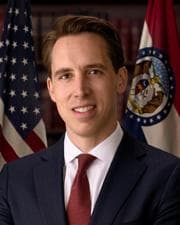
Josh Hawley
Republican Senator
Missouri
Cosponsors (4)
Homeland Security and Governmental Affairs Committee
- Introduced
- In Committee
- On Floor
- Passed Chamber
- Enacted
This bill addresses concerns about conflicts of interest among consulting firms that simultaneously work for the United States Government and certain foreign entities. Congress finds that such dual contracting can support efforts by foreign governments to generate economic and military power that may undermine U.S. economic and national security. The legislation aims to prevent firms from aiding foreign adversaries while also being contracted by Federal agencies responsible for protecting the nation. To achieve this, the bill mandates that the Federal Acquisition Regulatory Council amend the Federal Acquisition Regulation within one year. These amendments will require any entity offering consulting services to an executive agency to certify that neither it nor its affiliates hold a consulting contract with a covered foreign entity . Federal contracts for consulting services will be prohibited for any entity found to be providing services to such covered foreign entities based on this self-certification. A limited waiver process is established, allowing the head of an executive agency to grant a waiver on a case-by-case basis. This waiver is permissible if it is determined to be in the national security interests of the United States and if no other entity without a conflict of interest can perform the work. The agency head must consult with the Secretary of Defense and the Director of National Intelligence, notify the Office of Management and Budget and appropriate congressional committees, and publish the names of covered foreign entities unless national security is harmed. Waivers are subject to strict limitations, lasting no more than 365 days, with a single possible extension of up to 180 days. Only one waiver across all executive agencies may be granted to a single entity at any given time. Notifications for waivers must include extensive information about the contractor, its foreign ownership, the covered foreign entities involved, and the nature of the work performed for them, including any potential military or intelligence applications. The bill also outlines significant penalties for non-compliance. If a consulting firm knowingly submits false certification or information, its federal contract will be terminated, and the firm may face suspension or debarment from future federal contracts. Furthermore, knowingly hiding or misrepresenting contracts with covered foreign entities could lead to liability under the False Claims Act , resulting in penalties up to three times the amount of damages sustained by the U.S. Government. The term "covered foreign entity" includes the Government of the People's Republic of China, the Russian Federation, state sponsors of terrorism, and entities on various Department of Commerce and Treasury lists.
Suggested Questions
Get AI-generated questions to help you understand this bill better
Timeline
Introduced in Senate
Read twice and referred to the Committee on Homeland Security and Governmental Affairs.
Government Operations and Politics
AsiaChinaPublic contracts and procurement
Time to Choose Act of 2025
USA119th CongressS-731| Senate
| Updated: 2/25/2025
This bill addresses concerns about conflicts of interest among consulting firms that simultaneously work for the United States Government and certain foreign entities. Congress finds that such dual contracting can support efforts by foreign governments to generate economic and military power that may undermine U.S. economic and national security. The legislation aims to prevent firms from aiding foreign adversaries while also being contracted by Federal agencies responsible for protecting the nation. To achieve this, the bill mandates that the Federal Acquisition Regulatory Council amend the Federal Acquisition Regulation within one year. These amendments will require any entity offering consulting services to an executive agency to certify that neither it nor its affiliates hold a consulting contract with a covered foreign entity . Federal contracts for consulting services will be prohibited for any entity found to be providing services to such covered foreign entities based on this self-certification. A limited waiver process is established, allowing the head of an executive agency to grant a waiver on a case-by-case basis. This waiver is permissible if it is determined to be in the national security interests of the United States and if no other entity without a conflict of interest can perform the work. The agency head must consult with the Secretary of Defense and the Director of National Intelligence, notify the Office of Management and Budget and appropriate congressional committees, and publish the names of covered foreign entities unless national security is harmed. Waivers are subject to strict limitations, lasting no more than 365 days, with a single possible extension of up to 180 days. Only one waiver across all executive agencies may be granted to a single entity at any given time. Notifications for waivers must include extensive information about the contractor, its foreign ownership, the covered foreign entities involved, and the nature of the work performed for them, including any potential military or intelligence applications. The bill also outlines significant penalties for non-compliance. If a consulting firm knowingly submits false certification or information, its federal contract will be terminated, and the firm may face suspension or debarment from future federal contracts. Furthermore, knowingly hiding or misrepresenting contracts with covered foreign entities could lead to liability under the False Claims Act , resulting in penalties up to three times the amount of damages sustained by the U.S. Government. The term "covered foreign entity" includes the Government of the People's Republic of China, the Russian Federation, state sponsors of terrorism, and entities on various Department of Commerce and Treasury lists.
Suggested Questions
Get AI-generated questions to help you understand this bill better
Timeline
Introduced in Senate
Read twice and referred to the Committee on Homeland Security and Governmental Affairs.
Josh Hawley
Republican Senator
Missouri
Cosponsors (4)
Homeland Security and Governmental Affairs Committee
Government Operations and Politics
Related Bills
- Introduced
- In Committee
- On Floor
- Passed Chamber
- Enacted
AsiaChinaPublic contracts and procurement