SCRUB Act of 2025
USA119th CongressS-648| Senate
| Updated: 2/20/2025
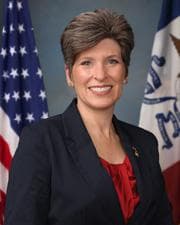
Joni Ernst
Republican Senator
Iowa
Homeland Security and Governmental Affairs Committee
- Introduced
- In Committee
- On Floor
- Passed Chamber
- Enacted
The "Searching for and Cutting Regulations that are Unnecessarily Burdensome Act of 2025," or SCRUB Act, establishes a comprehensive framework for reviewing and reducing federal regulations. A core provision introduces a "cut-go" procedure , requiring agencies to repeal existing rules or sets of rules to offset the annual costs of any new rule they promulgate. This ensures that the economic burden of new regulations is balanced by reductions from older ones, with the Office of Information and Regulatory Affairs (OIRA) certifying these cost calculations. Agencies may also proactively repeal rules to generate regulatory cost reduction credits for future use. The bill mandates a significant retrospective review of the Code of Federal Regulations by the newly established United States DOGE Service. This service is tasked with identifying and repealing rules that impose unnecessary burdens, prioritizing major rules, those over 15 years old, or rules with disproportionately high costs for small entities. The ambitious goal is to achieve at least a 33 percent reduction in the cumulative costs of federal regulation by July 4, 2026, through coordinated efforts with the Office of Management and Budget and relevant agencies. Rules targeted for repeal must meet specific criteria, such as having achieved their original purpose, having costs not justified by benefits, being obsolete, ineffective, or overlapping with other regulations. Importantly, any rule repealed under this Act cannot be reissued in substantially the same form unless explicitly authorized by a new law. Furthermore, the bill requires agencies to include a plan for future review of any new rule within 10 years of its issuance, ensuring ongoing scrutiny of regulatory effectiveness and burden. Non-compliance with these "cut-go" procedures and future review plans is subject to judicial review.
View Full TextSuggested Questions
Get AI-generated questions to help you understand this bill better
Timeline
Introduced in Senate
Read twice and referred to the Committee on Homeland Security and Governmental Affairs.
Government Operations and Politics
Administrative law and regulatory proceduresJudicial review and appeals
SCRUB Act of 2025
USA119th CongressS-648| Senate
| Updated: 2/20/2025
The "Searching for and Cutting Regulations that are Unnecessarily Burdensome Act of 2025," or SCRUB Act, establishes a comprehensive framework for reviewing and reducing federal regulations. A core provision introduces a "cut-go" procedure , requiring agencies to repeal existing rules or sets of rules to offset the annual costs of any new rule they promulgate. This ensures that the economic burden of new regulations is balanced by reductions from older ones, with the Office of Information and Regulatory Affairs (OIRA) certifying these cost calculations. Agencies may also proactively repeal rules to generate regulatory cost reduction credits for future use. The bill mandates a significant retrospective review of the Code of Federal Regulations by the newly established United States DOGE Service. This service is tasked with identifying and repealing rules that impose unnecessary burdens, prioritizing major rules, those over 15 years old, or rules with disproportionately high costs for small entities. The ambitious goal is to achieve at least a 33 percent reduction in the cumulative costs of federal regulation by July 4, 2026, through coordinated efforts with the Office of Management and Budget and relevant agencies. Rules targeted for repeal must meet specific criteria, such as having achieved their original purpose, having costs not justified by benefits, being obsolete, ineffective, or overlapping with other regulations. Importantly, any rule repealed under this Act cannot be reissued in substantially the same form unless explicitly authorized by a new law. Furthermore, the bill requires agencies to include a plan for future review of any new rule within 10 years of its issuance, ensuring ongoing scrutiny of regulatory effectiveness and burden. Non-compliance with these "cut-go" procedures and future review plans is subject to judicial review.
View Full TextSuggested Questions
Get AI-generated questions to help you understand this bill better
Timeline
Introduced in Senate
Read twice and referred to the Committee on Homeland Security and Governmental Affairs.
Joni Ernst
Republican Senator
Iowa
Homeland Security and Governmental Affairs Committee
Government Operations and Politics
- Introduced
- In Committee
- On Floor
- Passed Chamber
- Enacted
Administrative law and regulatory proceduresJudicial review and appeals