State-Sponsored Visa Pilot Program Act of 2026
USA119th CongressS-5197| Senate
| Updated: 7/30/2026
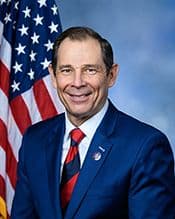
John R. Curtis
Republican Senator
Utah
Cosponsors (1)
Judiciary Committee
- Introduced
- In Committee
- On Floor
- Passed Chamber
- Enacted
The "State-Sponsored Visa Pilot Program Act of 2026" amends the Immigration and Nationality Act to create a new nonimmigrant visa category, designated as "W," allowing states to sponsor foreign nationals. These sponsored aliens would temporarily reside and work in a state to perform services, provide capital investment, direct enterprises, or otherwise contribute to the state's economic development agenda, along with their spouses and minor children. States must apply to the Secretary of Homeland Security to participate, with their programs requiring legislative approval and procedures for regulating employment, assessing labor needs, and investigating worker displacement. Participating states must attest that the hiring of sponsored nonimmigrants will not displace U.S. workers and must annually inform federal authorities of the nonimmigrants' residence and employment. Aliens seeking this status must be otherwise admissible, pass a comprehensive background check, and be petitioned by an approved state. The period of authorized status is determined by the state, up to three years, and is renewable if the state requests it and the alien has continuously resided in the sponsoring state. A significant provision requires State-sponsored nonimmigrants to waive certain rights , including federal judicial review of admissibility determinations at the port of entry and the right to contest or appeal removal actions, except for asylum claims. While authorized for employment, these nonimmigrants are ineligible for federal means-tested public benefits, and their employers must pay an amount equivalent to federal payroll taxes into the Treasury. States may require bonds from nonimmigrants to ensure compliance, with mandatory bonds imposed if a state's non-compliance rate exceeds 3 percent. The bill establishes numerical limitations on the total number of W visas, distributed among participating states based on a formula that includes a base allocation, economic growth adjustments, and incentives or penalties for state compliance with program terms. States demonstrating high compliance can receive increased allocations, while those with high non-compliance rates face reductions or even a five-year suspension from the program. Furthermore, the bill includes a provision allowing certain aliens who were physically present in the United States on December 31, 2016, to apply for a waiver of specific inadmissibility or deportability grounds if sponsored by a state. These aliens must provide evidence of their presence, pay a fee and a penalty, and are subject to strict fraud prevention measures. Employers who provide employment records for these aliens are protected from prosecution for prior unlawful employment, provided the records are not fraudulent. Finally, the legislation allows aliens with approved immigrant petitions to file adjustment of status applications, granting them lawful presence and employment/travel authorization while their applications are pending.
View Full TextSuggested Questions
Get AI-generated questions to help you understand this bill better
Timeline
Introduced in Senate
Read twice and referred to the Committee on the Judiciary.
Immigration
State-Sponsored Visa Pilot Program Act of 2026
USA119th CongressS-5197| Senate
| Updated: 7/30/2026
The "State-Sponsored Visa Pilot Program Act of 2026" amends the Immigration and Nationality Act to create a new nonimmigrant visa category, designated as "W," allowing states to sponsor foreign nationals. These sponsored aliens would temporarily reside and work in a state to perform services, provide capital investment, direct enterprises, or otherwise contribute to the state's economic development agenda, along with their spouses and minor children. States must apply to the Secretary of Homeland Security to participate, with their programs requiring legislative approval and procedures for regulating employment, assessing labor needs, and investigating worker displacement. Participating states must attest that the hiring of sponsored nonimmigrants will not displace U.S. workers and must annually inform federal authorities of the nonimmigrants' residence and employment. Aliens seeking this status must be otherwise admissible, pass a comprehensive background check, and be petitioned by an approved state. The period of authorized status is determined by the state, up to three years, and is renewable if the state requests it and the alien has continuously resided in the sponsoring state. A significant provision requires State-sponsored nonimmigrants to waive certain rights , including federal judicial review of admissibility determinations at the port of entry and the right to contest or appeal removal actions, except for asylum claims. While authorized for employment, these nonimmigrants are ineligible for federal means-tested public benefits, and their employers must pay an amount equivalent to federal payroll taxes into the Treasury. States may require bonds from nonimmigrants to ensure compliance, with mandatory bonds imposed if a state's non-compliance rate exceeds 3 percent. The bill establishes numerical limitations on the total number of W visas, distributed among participating states based on a formula that includes a base allocation, economic growth adjustments, and incentives or penalties for state compliance with program terms. States demonstrating high compliance can receive increased allocations, while those with high non-compliance rates face reductions or even a five-year suspension from the program. Furthermore, the bill includes a provision allowing certain aliens who were physically present in the United States on December 31, 2016, to apply for a waiver of specific inadmissibility or deportability grounds if sponsored by a state. These aliens must provide evidence of their presence, pay a fee and a penalty, and are subject to strict fraud prevention measures. Employers who provide employment records for these aliens are protected from prosecution for prior unlawful employment, provided the records are not fraudulent. Finally, the legislation allows aliens with approved immigrant petitions to file adjustment of status applications, granting them lawful presence and employment/travel authorization while their applications are pending.
View Full TextSuggested Questions
Get AI-generated questions to help you understand this bill better
Timeline
Introduced in Senate
Read twice and referred to the Committee on the Judiciary.
John R. Curtis
Republican Senator
Utah
Cosponsors (1)
Judiciary Committee
Immigration
- Introduced
- In Committee
- On Floor
- Passed Chamber
- Enacted