STRONG GRID Act of 2026
USA119th CongressS-5159| Senate
| Updated: 7/29/2026
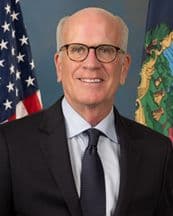
Peter Welch
Democratic Senator
Vermont
Energy and Natural Resources Committee
- Introduced
- In Committee
- On Floor
- Passed Chamber
- Enacted
This legislation, known as the STRONG GRID Act of 2026, aims to enhance electric grid resilience and promote microgrid deployment across the United States. It amends the Public Utility Regulatory Policies Act of 1978 (PURPA) by directing states to consider new standards for microgrid interconnection and for quantifying the benefits of investments in grid resilience. States are required to commence consideration of these standards within one year and complete their determinations within two years, though prior state actions on comparable standards may exempt them from these deadlines. The bill defines a microgrid as a controllable entity of interconnected loads and distributed energy resources that can connect, disconnect, or run in parallel with the main electric grid. States are encouraged to establish regulatory frameworks that account for aspects like islanding and resource protection. Furthermore, states must consider developing methodologies to evaluate and quantify the value of resilience investments, including defining required service levels and considering critical customer generation capacity, excluding military installations from these specific standards. To support microgrid development, the Act establishes a new Electric Grid Resilience Program under the Energy Policy and Conservation Act, allocating $500 million from fiscal years 2027 through 2031. This program empowers State energy offices to award competitive grants for various microgrid activities, including needs assessments, design, construction, cybersecurity, and staff training. Priority is given to projects that improve resilience and reliability, benefit rural or low-income communities, or deploy distributed and renewable energy resources, requiring a 25% cost share from grant recipients. Additionally, the Secretary of Energy is mandated to provide technical assistance to utilities, regulators, and other stakeholders to facilitate microgrid adoption and deployment. This assistance covers areas such as interconnection processes, valuation of benefits, and integrated distribution system planning. The Secretary will also develop best practices for microgrid cybersecurity, data protection, and ownership, and host educational workshops on microgrid benefits and implementation. Finally, the bill creates a pilot program for demonstrating innovative microgrid applications, authorizing $200 million for competitive grants from fiscal years 2027 through 2031. This program prioritizes projects showcasing advanced microgrid concepts, such as those providing ancillary grid services, aggregating distributed energy resources into virtual power plants, or demonstrating black-start capabilities and high renewable energy penetration. The Secretary will report annually on funded projects and provide a comprehensive report on the pilot program's outcomes, benefits, and regulatory challenges within five years.
View Full TextSuggested Questions
Get AI-generated questions to help you understand this bill better
Timeline
Introduced in Senate
Read twice and referred to the Committee on Energy and Natural Resources.
Energy
STRONG GRID Act of 2026
USA119th CongressS-5159| Senate
| Updated: 7/29/2026
This legislation, known as the STRONG GRID Act of 2026, aims to enhance electric grid resilience and promote microgrid deployment across the United States. It amends the Public Utility Regulatory Policies Act of 1978 (PURPA) by directing states to consider new standards for microgrid interconnection and for quantifying the benefits of investments in grid resilience. States are required to commence consideration of these standards within one year and complete their determinations within two years, though prior state actions on comparable standards may exempt them from these deadlines. The bill defines a microgrid as a controllable entity of interconnected loads and distributed energy resources that can connect, disconnect, or run in parallel with the main electric grid. States are encouraged to establish regulatory frameworks that account for aspects like islanding and resource protection. Furthermore, states must consider developing methodologies to evaluate and quantify the value of resilience investments, including defining required service levels and considering critical customer generation capacity, excluding military installations from these specific standards. To support microgrid development, the Act establishes a new Electric Grid Resilience Program under the Energy Policy and Conservation Act, allocating $500 million from fiscal years 2027 through 2031. This program empowers State energy offices to award competitive grants for various microgrid activities, including needs assessments, design, construction, cybersecurity, and staff training. Priority is given to projects that improve resilience and reliability, benefit rural or low-income communities, or deploy distributed and renewable energy resources, requiring a 25% cost share from grant recipients. Additionally, the Secretary of Energy is mandated to provide technical assistance to utilities, regulators, and other stakeholders to facilitate microgrid adoption and deployment. This assistance covers areas such as interconnection processes, valuation of benefits, and integrated distribution system planning. The Secretary will also develop best practices for microgrid cybersecurity, data protection, and ownership, and host educational workshops on microgrid benefits and implementation. Finally, the bill creates a pilot program for demonstrating innovative microgrid applications, authorizing $200 million for competitive grants from fiscal years 2027 through 2031. This program prioritizes projects showcasing advanced microgrid concepts, such as those providing ancillary grid services, aggregating distributed energy resources into virtual power plants, or demonstrating black-start capabilities and high renewable energy penetration. The Secretary will report annually on funded projects and provide a comprehensive report on the pilot program's outcomes, benefits, and regulatory challenges within five years.
View Full TextSuggested Questions
Get AI-generated questions to help you understand this bill better
Timeline
Introduced in Senate
Read twice and referred to the Committee on Energy and Natural Resources.
Peter Welch
Democratic Senator
Vermont
Energy and Natural Resources Committee
Energy
- Introduced
- In Committee
- On Floor
- Passed Chamber
- Enacted