Reimagining Education and Skills through Unified Longitudinal Talent Systems (RESULTS) Act of 2026
USA119th CongressS-5157| Senate
| Updated: 7/29/2026
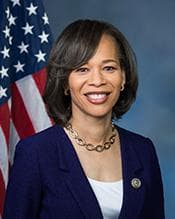
Lisa Blunt Rochester
Democratic Senator
Delaware
Cosponsors (1)
Health, Education, Labor, and Pensions Committee
- Introduced
- In Committee
- On Floor
- Passed Chamber
- Enacted
The Reimagining Education and Skills through Unified Longitudinal Talent Systems (RESULTS) Act of 2026 aims to significantly enhance states' ability to collect, integrate, and utilize education and workforce data. It establishes a competitive grant program, administered by the Secretary of Education in consultation with the Secretary of Labor, to fund the creation, modernization, and improvement of statewide longitudinal data systems (SLDS) . These grants provide flexible, consolidated funding to help states build robust data infrastructure and address cross-sector challenges. A core purpose is to promote accessible and seamless data by connecting individual-level information across various sectors, including early childhood education, K-12 schools, postsecondary institutions, adult education, workforce development, and employment outcomes. The bill critically emphasizes protecting individual privacy and confidentiality , requiring adherence to all applicable Federal and State privacy laws like FERPA and PPRA, while also mandating increased data transparency. Statewide longitudinal data systems supported by these grants must integrate data from public education entities and workforce programs, including those funded by the Workforce Innovation and Opportunity Act and unemployment insurance wage records. These systems are required to disaggregate data by key demographic factors, maintain strict privacy protocols, and establish interagency governance . Funds can also be used for establishing data governance structures, funding Chief Data, Evaluation, or Privacy Officers, and using the SLDS for Federal accountability reporting. The bill encourages making data more accessible to various stakeholders, such as students, parents, workers, employers, and researchers, through tools like data dashboards, public portals, and de-identified aggregate datasets. Grants can support expanding datasets to include private education institutions and comprehensive program offerings, promoting the adoption of structured, open, linked, interoperable, and durable (SOLID) data formats , and facilitating participation in multi-state data collaboratives to understand interstate employment trends. Additional uses of funds include enhancing collaboration with private sector data entities and end-users, providing training on data interpretation, and ensuring robust data security and privacy through defined policies and cybersecurity training. The legislation also permits exploring evidence-based, secure methods of leveraging artificial intelligence with SLDS, provided it complies with privacy laws and the NIST AI Risk Management Framework. Finally, the bill amends the Workforce Innovation and Opportunity Act to allow states to use the National Directory of New Hires for performance reporting, strengthening workforce data analysis.
View Full TextSuggested Questions
Get AI-generated questions to help you understand this bill better
Timeline
Introduced in Senate
Read twice and referred to the Committee on Health, Education, Labor, and Pensions.
Labor and Employment
Reimagining Education and Skills through Unified Longitudinal Talent Systems (RESULTS) Act of 2026
USA119th CongressS-5157| Senate
| Updated: 7/29/2026
The Reimagining Education and Skills through Unified Longitudinal Talent Systems (RESULTS) Act of 2026 aims to significantly enhance states' ability to collect, integrate, and utilize education and workforce data. It establishes a competitive grant program, administered by the Secretary of Education in consultation with the Secretary of Labor, to fund the creation, modernization, and improvement of statewide longitudinal data systems (SLDS) . These grants provide flexible, consolidated funding to help states build robust data infrastructure and address cross-sector challenges. A core purpose is to promote accessible and seamless data by connecting individual-level information across various sectors, including early childhood education, K-12 schools, postsecondary institutions, adult education, workforce development, and employment outcomes. The bill critically emphasizes protecting individual privacy and confidentiality , requiring adherence to all applicable Federal and State privacy laws like FERPA and PPRA, while also mandating increased data transparency. Statewide longitudinal data systems supported by these grants must integrate data from public education entities and workforce programs, including those funded by the Workforce Innovation and Opportunity Act and unemployment insurance wage records. These systems are required to disaggregate data by key demographic factors, maintain strict privacy protocols, and establish interagency governance . Funds can also be used for establishing data governance structures, funding Chief Data, Evaluation, or Privacy Officers, and using the SLDS for Federal accountability reporting. The bill encourages making data more accessible to various stakeholders, such as students, parents, workers, employers, and researchers, through tools like data dashboards, public portals, and de-identified aggregate datasets. Grants can support expanding datasets to include private education institutions and comprehensive program offerings, promoting the adoption of structured, open, linked, interoperable, and durable (SOLID) data formats , and facilitating participation in multi-state data collaboratives to understand interstate employment trends. Additional uses of funds include enhancing collaboration with private sector data entities and end-users, providing training on data interpretation, and ensuring robust data security and privacy through defined policies and cybersecurity training. The legislation also permits exploring evidence-based, secure methods of leveraging artificial intelligence with SLDS, provided it complies with privacy laws and the NIST AI Risk Management Framework. Finally, the bill amends the Workforce Innovation and Opportunity Act to allow states to use the National Directory of New Hires for performance reporting, strengthening workforce data analysis.
View Full TextSuggested Questions
Get AI-generated questions to help you understand this bill better
Timeline
Introduced in Senate
Read twice and referred to the Committee on Health, Education, Labor, and Pensions.
Lisa Blunt Rochester
Democratic Senator
Delaware
Cosponsors (1)
Health, Education, Labor, and Pensions Committee
Labor and Employment
- Introduced
- In Committee
- On Floor
- Passed Chamber
- Enacted