Fairness in Fentanyl Sentencing Act of 2025
USA119th CongressS-477| Senate
| Updated: 2/6/2025
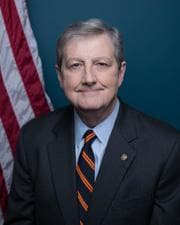
John Kennedy
Republican Senator
Louisiana
Cosponsors (5)
Judiciary Committee
- Introduced
- In Committee
- On Floor
- Passed Chamber
- Enacted
This bill substantially modifies the penalties for offenses involving fentanyl and its analogues under federal law, significantly reducing the quantity thresholds that trigger higher statutory penalties for manufacturing, distributing, or importing these substances. For instance, the highest penalty tier now applies to 20 grams of fentanyl instead of 400 grams, and 5 grams instead of 100 grams, with similar reductions for lower penalty tiers. These amendments explicitly extend to both scheduled and unscheduled analogues of fentanyl, ensuring broader application of the revised thresholds. The legislation directs the United States Sentencing Commission to review and amend its guidelines and policy statements to ensure consistency with these new, lower fentanyl quantity thresholds. The Commission is granted emergency authority to promulgate these changes within 120 days of the bill's enactment. Furthermore, the bill mandates the Postmaster General to increase the availability of chemical screening devices and dedicate personnel within the U.S. Postal Service to prevent the illegal importation of fentanyl and other synthetic opioids, authorizing $9,000,000 for these interdiction efforts.
Suggested Questions
Get AI-generated questions to help you understand this bill better
Timeline
Introduced in Senate
Read twice and referred to the Committee on the Judiciary.
Crime and Law Enforcement
Administrative law and regulatory proceduresCriminal procedure and sentencingDrug trafficking and controlled substancesPostal serviceTrade restrictionsU.S. Sentencing Commission
Fairness in Fentanyl Sentencing Act of 2025
USA119th CongressS-477| Senate
| Updated: 2/6/2025
This bill substantially modifies the penalties for offenses involving fentanyl and its analogues under federal law, significantly reducing the quantity thresholds that trigger higher statutory penalties for manufacturing, distributing, or importing these substances. For instance, the highest penalty tier now applies to 20 grams of fentanyl instead of 400 grams, and 5 grams instead of 100 grams, with similar reductions for lower penalty tiers. These amendments explicitly extend to both scheduled and unscheduled analogues of fentanyl, ensuring broader application of the revised thresholds. The legislation directs the United States Sentencing Commission to review and amend its guidelines and policy statements to ensure consistency with these new, lower fentanyl quantity thresholds. The Commission is granted emergency authority to promulgate these changes within 120 days of the bill's enactment. Furthermore, the bill mandates the Postmaster General to increase the availability of chemical screening devices and dedicate personnel within the U.S. Postal Service to prevent the illegal importation of fentanyl and other synthetic opioids, authorizing $9,000,000 for these interdiction efforts.
Suggested Questions
Get AI-generated questions to help you understand this bill better
Timeline
Introduced in Senate
Read twice and referred to the Committee on the Judiciary.
John Kennedy
Republican Senator
Louisiana
Cosponsors (5)
Judiciary Committee
Crime and Law Enforcement
- Introduced
- In Committee
- On Floor
- Passed Chamber
- Enacted
Administrative law and regulatory proceduresCriminal procedure and sentencingDrug trafficking and controlled substancesPostal serviceTrade restrictionsU.S. Sentencing Commission