SAFE Orbit Act
USA119th CongressS-428| Senate
| Updated: 9/29/2025
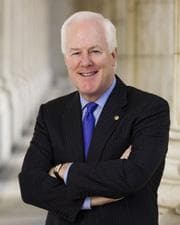
John Cornyn
Republican Senator
Texas
Cosponsors (7)
Commerce, Science, and Transportation Committee
- Introduced
- In Committee
- On Floor
- Passed Chamber
- Enacted
The Act directs the Secretary of Commerce to promote safe space operations by acquiring and disseminating unclassified data, analytics, and services related to space activities. It authorizes the Assistant Secretary of Commerce for Space Commerce to collect location tracking, orbit determination, and conjunction data, and to provide a publicly accessible database that includes these data and basic space situational awareness services at no charge. The legislation grants immunity to U.S. entities and individuals from lawsuits arising from the provision or receipt of these services. The Assistant Secretary must leverage commercial capabilities, prioritize data from U.S. firms, protect proprietary information, and standardize reporting with industry, academia, and the National Institute of Standards and Technology. It requires the Secretary to enter into contracts and other agreements necessary to carry out these functions and encourages foreign governments to participate in unclassified data sharing. The Act mandates that the basic services offered by the federal government not compete with private sector products, with a review cycle of at least every three years. The Office of Space Commerce is elevated to a bureau reporting directly to the Secretary of Commerce, with its head appointed by the President and reporting to the Secretary. The new Assistant Secretary of Commerce for Space Commerce is given a level IV Executive Schedule salary and is responsible for space situational awareness and traffic management duties under the Act. The legislation requires staffing plans and transition reports to be submitted to congressional committees, and prohibits reductions in full‑time positions except for performance reasons. These provisions aim to streamline space traffic coordination while preserving commercial innovation and protecting proprietary data.
Suggested Questions
Get AI-generated questions to help you understand this bill better
Timeline
Introduced in Senate
Read twice and referred to the Committee on Commerce, Science, and Transportation.
Committee on Commerce, Science, and Transportation. Ordered to be reported with an amendment favorably.
Committee on Commerce, Science, and Transportation. Reported by Senator Cruz with amendments. With written report No. 119-65.
Placed on Senate Legislative Calendar under General Orders. Calendar No. 170.
Science, Technology, Communications
Advanced technology and technological innovationsCongressional oversightDepartment of CommerceExecutive agency funding and structureInternational scientific cooperationSpacecraft and satellitesSpace flight and exploration
SAFE Orbit Act
USA119th CongressS-428| Senate
| Updated: 9/29/2025
The Act directs the Secretary of Commerce to promote safe space operations by acquiring and disseminating unclassified data, analytics, and services related to space activities. It authorizes the Assistant Secretary of Commerce for Space Commerce to collect location tracking, orbit determination, and conjunction data, and to provide a publicly accessible database that includes these data and basic space situational awareness services at no charge. The legislation grants immunity to U.S. entities and individuals from lawsuits arising from the provision or receipt of these services. The Assistant Secretary must leverage commercial capabilities, prioritize data from U.S. firms, protect proprietary information, and standardize reporting with industry, academia, and the National Institute of Standards and Technology. It requires the Secretary to enter into contracts and other agreements necessary to carry out these functions and encourages foreign governments to participate in unclassified data sharing. The Act mandates that the basic services offered by the federal government not compete with private sector products, with a review cycle of at least every three years. The Office of Space Commerce is elevated to a bureau reporting directly to the Secretary of Commerce, with its head appointed by the President and reporting to the Secretary. The new Assistant Secretary of Commerce for Space Commerce is given a level IV Executive Schedule salary and is responsible for space situational awareness and traffic management duties under the Act. The legislation requires staffing plans and transition reports to be submitted to congressional committees, and prohibits reductions in full‑time positions except for performance reasons. These provisions aim to streamline space traffic coordination while preserving commercial innovation and protecting proprietary data.
Suggested Questions
Get AI-generated questions to help you understand this bill better
Timeline
Introduced in Senate
Read twice and referred to the Committee on Commerce, Science, and Transportation.
Committee on Commerce, Science, and Transportation. Ordered to be reported with an amendment favorably.
Committee on Commerce, Science, and Transportation. Reported by Senator Cruz with amendments. With written report No. 119-65.
Placed on Senate Legislative Calendar under General Orders. Calendar No. 170.
John Cornyn
Republican Senator
Texas
Cosponsors (7)
Commerce, Science, and Transportation Committee
Science, Technology, Communications
- Introduced
- In Committee
- On Floor
- Passed Chamber
- Enacted
Advanced technology and technological innovationsCongressional oversightDepartment of CommerceExecutive agency funding and structureInternational scientific cooperationSpacecraft and satellitesSpace flight and exploration