Future of Artificial Intelligence Innovation Act of 2026
USA119th CongressS-3952| Senate
| Updated: 3/19/2026
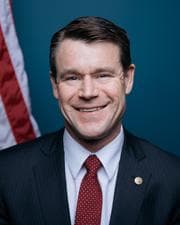
Todd Young
Republican Senator
Indiana
Cosponsors (3)
Commerce, Science, and Transportation Committee
- Introduced
- In Committee
- On Floor
- Passed Chamber
- Enacted
This bill, titled the Future of Artificial Intelligence Innovation Act of 2026, aims to bolster the United States' leadership in artificial intelligence (AI) by establishing standards, supporting research, and fostering innovation. It emphasizes maximizing AI's potential for all stakeholders while ensuring security and trustworthiness. The legislation is structured into three main titles addressing voluntary standards, research and development, and research security. Title I focuses on establishing voluntary AI standards, metrics, and evaluation tools , along with testbeds and international cooperation. It mandates the creation of a Center for Artificial Intelligence Standards and Innovation within the National Institute of Standards and Technology (NIST). This Center will develop best practices for assessing AI systems, support red-teaming and blue-teaming efforts, and create tools for detecting synthetic content, including watermarking. It will also coordinate with international partners to ensure global interoperability in AI standards. Additionally, Title I establishes an interagency testbed program , led by NIST and the Department of Energy, to facilitate collaboration between federal laboratories and public/private entities. This program will conduct rigorous testing and evaluation of AI systems, focusing on capabilities, limitations, and security vulnerabilities, particularly in critical infrastructure and against biological threats. A voluntary test program for foundation models is also included, with provisions to protect confidential information and intellectual property. The bill also directs the Under Secretary of Commerce for Standards and Technology and the Secretary of Energy to lead efforts in forming international coalitions with like-minded governments. These coalitions will promote the development and adoption of international technical standards for AI, encourage U.S.-developed standards globally, and facilitate international research collaboration. Participation criteria emphasize scientific advancement, intellectual property protection, and research security, explicitly excluding the People's Republic of China until specific conditions are met. Title II focuses on AI research, development, and capacity building activities . It directs the Office of Science and Technology Policy (OSTP) to develop a list of priorities for Federal investment in creating or improving curated, publicly available government data for AI systems . This initiative aims to expedite AI development by prioritizing scientific research data and datasets unlikely to receive sufficient private sector support, while considering national security and privacy concerns. Furthermore, Title II establishes a program for Federal grand challenges in AI , administered by OSTP, to award prizes for solving specific, well-defined challenges in AI research and development. These challenges span diverse areas such as microelectronics, next-generation computing, explainability, advanced manufacturing, and cybersecurity for AI. The program aims to stimulate innovation and commercialization by leveraging prize competitions. Finally, Title III addresses research security and other matters . It mandates that all activities authorized under the Act comply with existing research security provisions. The bill also expands NIST's authority to hire critical technical experts and extends the sunset date for this authority. It introduces requirements for certifications and annual audits of temporary fellows working on AI and critical emerging technologies for Federal agencies, ensuring they do not perform inherently governmental functions and promoting accountability.
View Full TextSuggested Questions
Get AI-generated questions to help you understand this bill better
Timeline
Introduced in Senate
Read twice and referred to the Committee on Commerce, Science, and Transportation.
Star Print ordered on the bill.
Science, Technology, Communications
Future of Artificial Intelligence Innovation Act of 2026
USA119th CongressS-3952| Senate
| Updated: 3/19/2026
This bill, titled the Future of Artificial Intelligence Innovation Act of 2026, aims to bolster the United States' leadership in artificial intelligence (AI) by establishing standards, supporting research, and fostering innovation. It emphasizes maximizing AI's potential for all stakeholders while ensuring security and trustworthiness. The legislation is structured into three main titles addressing voluntary standards, research and development, and research security. Title I focuses on establishing voluntary AI standards, metrics, and evaluation tools , along with testbeds and international cooperation. It mandates the creation of a Center for Artificial Intelligence Standards and Innovation within the National Institute of Standards and Technology (NIST). This Center will develop best practices for assessing AI systems, support red-teaming and blue-teaming efforts, and create tools for detecting synthetic content, including watermarking. It will also coordinate with international partners to ensure global interoperability in AI standards. Additionally, Title I establishes an interagency testbed program , led by NIST and the Department of Energy, to facilitate collaboration between federal laboratories and public/private entities. This program will conduct rigorous testing and evaluation of AI systems, focusing on capabilities, limitations, and security vulnerabilities, particularly in critical infrastructure and against biological threats. A voluntary test program for foundation models is also included, with provisions to protect confidential information and intellectual property. The bill also directs the Under Secretary of Commerce for Standards and Technology and the Secretary of Energy to lead efforts in forming international coalitions with like-minded governments. These coalitions will promote the development and adoption of international technical standards for AI, encourage U.S.-developed standards globally, and facilitate international research collaboration. Participation criteria emphasize scientific advancement, intellectual property protection, and research security, explicitly excluding the People's Republic of China until specific conditions are met. Title II focuses on AI research, development, and capacity building activities . It directs the Office of Science and Technology Policy (OSTP) to develop a list of priorities for Federal investment in creating or improving curated, publicly available government data for AI systems . This initiative aims to expedite AI development by prioritizing scientific research data and datasets unlikely to receive sufficient private sector support, while considering national security and privacy concerns. Furthermore, Title II establishes a program for Federal grand challenges in AI , administered by OSTP, to award prizes for solving specific, well-defined challenges in AI research and development. These challenges span diverse areas such as microelectronics, next-generation computing, explainability, advanced manufacturing, and cybersecurity for AI. The program aims to stimulate innovation and commercialization by leveraging prize competitions. Finally, Title III addresses research security and other matters . It mandates that all activities authorized under the Act comply with existing research security provisions. The bill also expands NIST's authority to hire critical technical experts and extends the sunset date for this authority. It introduces requirements for certifications and annual audits of temporary fellows working on AI and critical emerging technologies for Federal agencies, ensuring they do not perform inherently governmental functions and promoting accountability.
View Full TextSuggested Questions
Get AI-generated questions to help you understand this bill better
Timeline
Introduced in Senate
Read twice and referred to the Committee on Commerce, Science, and Transportation.
Star Print ordered on the bill.
Todd Young
Republican Senator
Indiana
Cosponsors (3)
Commerce, Science, and Transportation Committee
Science, Technology, Communications
- Introduced
- In Committee
- On Floor
- Passed Chamber
- Enacted