No Funding for Foreign Agents Act
USA119th CongressS-3610| Senate
| Updated: 1/8/2026
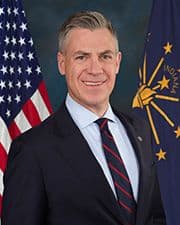
Jim Banks
Republican Senator
Indiana
Foreign Relations Committee
- Introduced
- In Committee
- On Floor
- Passed Chamber
- Enacted
This proposed legislation, known as the "No Funding for Foreign Agents Act," aims to restrict the flow of United States financial assistance. It specifically prohibits both direct and indirect financial assistance from being provided to any entity that is controlled by an agent of a covered foreign principal, thereby preventing U.S. government funds from supporting interests tied to certain foreign governments or entities. The bill defines a "covered foreign principal" as the government or a political party of a designated "covered nation," which includes countries such as the People's Republic of China, the Russian Federation, the Islamic Republic of Iran, and the Democratic People's Republic of Korea, among others. An "agent of a covered foreign principal" is broadly defined to include individuals acting on behalf of these principals, diplomatic officers, registered lobbyists for foreign entities, and those required to register under the Foreign Agents Registration Act. The term "controlled" refers to situations where an agent or combination of agents holds a majority or dominant minority voting interest in an entity. The prohibition applies to various forms of aid, including contracts, grants, loans, and even government-funded payments where beneficiaries choose service providers. Importantly, the legislation clarifies that it does not terminate financial assistance to entities not controlled by such agents, nor does it affect general foreign assistance as defined by existing law, ensuring its focus remains on specific, identified foreign ties.
View Full TextSuggested Questions
Get AI-generated questions to help you understand this bill better
Timeline
Introduced in Senate
Read twice and referred to the Committee on Foreign Relations.
International Affairs
No Funding for Foreign Agents Act
USA119th CongressS-3610| Senate
| Updated: 1/8/2026
This proposed legislation, known as the "No Funding for Foreign Agents Act," aims to restrict the flow of United States financial assistance. It specifically prohibits both direct and indirect financial assistance from being provided to any entity that is controlled by an agent of a covered foreign principal, thereby preventing U.S. government funds from supporting interests tied to certain foreign governments or entities. The bill defines a "covered foreign principal" as the government or a political party of a designated "covered nation," which includes countries such as the People's Republic of China, the Russian Federation, the Islamic Republic of Iran, and the Democratic People's Republic of Korea, among others. An "agent of a covered foreign principal" is broadly defined to include individuals acting on behalf of these principals, diplomatic officers, registered lobbyists for foreign entities, and those required to register under the Foreign Agents Registration Act. The term "controlled" refers to situations where an agent or combination of agents holds a majority or dominant minority voting interest in an entity. The prohibition applies to various forms of aid, including contracts, grants, loans, and even government-funded payments where beneficiaries choose service providers. Importantly, the legislation clarifies that it does not terminate financial assistance to entities not controlled by such agents, nor does it affect general foreign assistance as defined by existing law, ensuring its focus remains on specific, identified foreign ties.
View Full TextSuggested Questions
Get AI-generated questions to help you understand this bill better
Timeline
Introduced in Senate
Read twice and referred to the Committee on Foreign Relations.
Jim Banks
Republican Senator
Indiana
Foreign Relations Committee
International Affairs
- Introduced
- In Committee
- On Floor
- Passed Chamber
- Enacted