Community Protection and Wildfire Resilience Act
USA119th CongressS-3609| Senate
| Updated: 1/8/2026
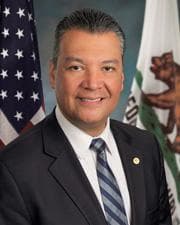
Alex Padilla
Democratic Senator
California
Cosponsors (1)
Homeland Security and Governmental Affairs Committee
- Introduced
- In Committee
- On Floor
- Passed Chamber
- Enacted
The Community Protection and Wildfire Resilience Act establishes a new grant program, administered by the Federal Emergency Management Agency (FEMA) in coordination with the Forest Service, to enhance community safety and resilience against wildfires. This program offers grants to eligible entities, including states, Indian Tribes, and local governments, either to develop comprehensive community protection and wildfire resilience plans or to implement projects outlined in existing plans. These plans must be developed in coordination with a wide range of local stakeholders, including emergency responders, tribal governments, and non-governmental organizations. They are designed to include strategies for improving early detection, public outreach, evacuation planning, addressing vulnerable populations, and hardening critical infrastructure and homes. Grants for plan development can be up to $250,000, while project implementation grants can reach $10,000,000, with priority given to communities in high-risk fire areas. The bill also mandates several reports and updates to existing programs. The Government Accountability Office (GAO) is directed to report on federal wildfire protection programs, implementation impediments, and the potential for wildfire survivability certifications to incentivize insurance companies. Additionally, it updates the definition of "at-risk communities" and requires regular mapping, and calls for a report on radio communication interoperability for wildfire management. Finally, the bill amends the existing Community Wildfire Defense Grant Program to explicitly allow funding for projects focused on structure hardening to resist flames and embers. A non-Federal cost-share of 25 percent is required for project implementation grants, which can be waived, while plan development grants require no cost-share. The Act authorizes an appropriation of $1,000,000,000 annually for fiscal years 2025 through 2029 to fund these critical wildfire resilience efforts.
View Full TextSuggested Questions
Get AI-generated questions to help you understand this bill better
Timeline
Introduced in Senate
Read twice and referred to the Committee on Homeland Security and Governmental Affairs.
Emergency Management
Community Protection and Wildfire Resilience Act
USA119th CongressS-3609| Senate
| Updated: 1/8/2026
The Community Protection and Wildfire Resilience Act establishes a new grant program, administered by the Federal Emergency Management Agency (FEMA) in coordination with the Forest Service, to enhance community safety and resilience against wildfires. This program offers grants to eligible entities, including states, Indian Tribes, and local governments, either to develop comprehensive community protection and wildfire resilience plans or to implement projects outlined in existing plans. These plans must be developed in coordination with a wide range of local stakeholders, including emergency responders, tribal governments, and non-governmental organizations. They are designed to include strategies for improving early detection, public outreach, evacuation planning, addressing vulnerable populations, and hardening critical infrastructure and homes. Grants for plan development can be up to $250,000, while project implementation grants can reach $10,000,000, with priority given to communities in high-risk fire areas. The bill also mandates several reports and updates to existing programs. The Government Accountability Office (GAO) is directed to report on federal wildfire protection programs, implementation impediments, and the potential for wildfire survivability certifications to incentivize insurance companies. Additionally, it updates the definition of "at-risk communities" and requires regular mapping, and calls for a report on radio communication interoperability for wildfire management. Finally, the bill amends the existing Community Wildfire Defense Grant Program to explicitly allow funding for projects focused on structure hardening to resist flames and embers. A non-Federal cost-share of 25 percent is required for project implementation grants, which can be waived, while plan development grants require no cost-share. The Act authorizes an appropriation of $1,000,000,000 annually for fiscal years 2025 through 2029 to fund these critical wildfire resilience efforts.
View Full TextSuggested Questions
Get AI-generated questions to help you understand this bill better
Timeline
Introduced in Senate
Read twice and referred to the Committee on Homeland Security and Governmental Affairs.
Alex Padilla
Democratic Senator
California
Cosponsors (1)
Homeland Security and Governmental Affairs Committee
Emergency Management
- Introduced
- In Committee
- On Floor
- Passed Chamber
- Enacted