Ending Chinese Lawfare Act
USA119th CongressS-3574| Senate
| Updated: 12/18/2025
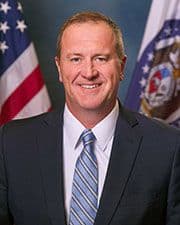
Eric Schmitt
Republican Senator
Missouri
Judiciary Committee
- Introduced
- In Committee
- On Floor
- Passed Chamber
- Enacted
This bill aims to prevent United States courts from recognizing, enforcing, or giving effect to any judgment, order, decree, or provisional measure issued by a court of the People’s Republic of China (PRC) under specific circumstances. The prohibition applies if a U.S. court determines that the PRC proceeding was initiated, directed, or materially supported by the Chinese Communist Party (CCP) or the PRC government, and was substantially motivated by retaliation for protected political speech , the lawful exercise of governmental authority, or rights secured by the U.S. Constitution. United States courts may make this determination based on the totality of the circumstances , considering factors such as the lack of judicial independence in China, the plaintiff's affiliation with the CCP, public statements by Chinese officials, and the absence of due process. If a party attempts to enforce a judgment barred under these provisions, the prevailing party opposing enforcement will be awarded reasonable attorneys’ fees, costs, and expenses. The legislation grants original jurisdiction to U.S. district courts over actions seeking recognition or enforcement of such judgments, allowing for removal of state court actions to federal court. The Attorney General is authorized to intervene in these proceedings and submit statements of interest regarding the political nature of the foreign case or U.S. foreign policy interests, which courts must give substantial weight. Furthermore, no such judgment may be recognized or enforced if it would penalize or chill speech or conduct protected by the First Amendment or interfere with the lawful exercise of U.S. sovereign authority. The bill also permits any person or entity incurring costs or burdens from such a PRC proceeding to bring a civil action in a U.S. district court for declaratory and injunctive relief , defining various forms of injury in fact for Article III standing.
Suggested Questions
Get AI-generated questions to help you understand this bill better
Timeline
Introduced in Senate
Read twice and referred to the Committee on the Judiciary.
International Affairs
Ending Chinese Lawfare Act
USA119th CongressS-3574| Senate
| Updated: 12/18/2025
This bill aims to prevent United States courts from recognizing, enforcing, or giving effect to any judgment, order, decree, or provisional measure issued by a court of the People’s Republic of China (PRC) under specific circumstances. The prohibition applies if a U.S. court determines that the PRC proceeding was initiated, directed, or materially supported by the Chinese Communist Party (CCP) or the PRC government, and was substantially motivated by retaliation for protected political speech , the lawful exercise of governmental authority, or rights secured by the U.S. Constitution. United States courts may make this determination based on the totality of the circumstances , considering factors such as the lack of judicial independence in China, the plaintiff's affiliation with the CCP, public statements by Chinese officials, and the absence of due process. If a party attempts to enforce a judgment barred under these provisions, the prevailing party opposing enforcement will be awarded reasonable attorneys’ fees, costs, and expenses. The legislation grants original jurisdiction to U.S. district courts over actions seeking recognition or enforcement of such judgments, allowing for removal of state court actions to federal court. The Attorney General is authorized to intervene in these proceedings and submit statements of interest regarding the political nature of the foreign case or U.S. foreign policy interests, which courts must give substantial weight. Furthermore, no such judgment may be recognized or enforced if it would penalize or chill speech or conduct protected by the First Amendment or interfere with the lawful exercise of U.S. sovereign authority. The bill also permits any person or entity incurring costs or burdens from such a PRC proceeding to bring a civil action in a U.S. district court for declaratory and injunctive relief , defining various forms of injury in fact for Article III standing.
Suggested Questions
Get AI-generated questions to help you understand this bill better
Timeline
Introduced in Senate
Read twice and referred to the Committee on the Judiciary.
Eric Schmitt
Republican Senator
Missouri
Judiciary Committee
International Affairs
- Introduced
- In Committee
- On Floor
- Passed Chamber
- Enacted