Redistricting Reform Act of 2025
USA119th CongressS-2885| Senate
| Updated: 9/18/2025
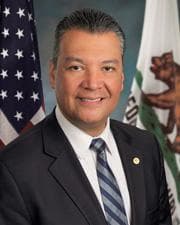
Alex Padilla
Democratic Senator
California
Judiciary Committee
- Introduced
- In Committee
- On Floor
- Passed Chamber
- Enacted
This legislation aims to standardize and depoliticize the process of congressional redistricting across states, asserting federal authority to establish terms and conditions for drawing House district maps. It mandates that all states, with limited exceptions for existing compliant commissions and Iowa's specific process, must conduct congressional redistricting through an independent redistricting commission . Each state's independent redistricting commission will consist of 15 members, appointed in a two-phase process by a nonpartisan state agency and then by initial commission members. The selection pool for commissioners must be diverse, representing demographic groups and geographic regions, and members must meet strict eligibility criteria, including disqualifications for recent political involvement. Commission actions, including the approval of final maps, require broad multi-partisan support , ensuring no single political faction can dominate the process. The bill establishes a ranked set of criteria for drawing district maps, prioritizing constitutional requirements like equal population and compliance with the Voting Rights Act of 1965 . It specifically requires districts to be drawn to ensure the practical ability of protected groups to elect representatives of choice and to represent communities of interest , defined by shared identities or needs, not political affiliation. A key provision prohibits drawing maps with the intent or effect of materially favoring or disfavoring any political party, with a rebuttable presumption of violation based on statistical partisan advantage. To ensure transparency, commissions must operate openly, holding public meetings and soliciting input, including proposed maps, throughout the redistricting process. A public internet site will host all commission information, draft plans, public comments, and demographic data in an easily searchable format. Multiple public hearings are required before and after the development of preliminary plans, allowing extensive public review and comment before a final map is approved. If a state fails to enact a redistricting plan by the specified deadline, a three-judge federal court will assume exclusive authority to develop and publish the plan, adhering to the bill's criteria. The legislation also provides for civil enforcement , allowing the Attorney General or aggrieved citizens to bring actions in federal court for violations. These cases will receive expedited consideration, and courts are empowered to adopt replacement plans if state plans are found non-compliant, with no legislative privilege claims allowed. States will receive federal payments from the Election Assistance Commission to support the establishment and operation of their independent redistricting commissions and to carry out the redistricting process. The bill bans mid-decade redistricting unless mandated by a court to ensure compliance with federal or state law. These provisions generally apply to redistricting carried out following the 2030 decennial census and subsequent censuses, with the mid-decade ban applying from the 2020 census.
View Full TextSuggested Questions
Get AI-generated questions to help you understand this bill better
Timeline
Introduced in Senate
Read twice and referred to the Committee on the Judiciary.
Government Operations and Politics
Redistricting Reform Act of 2025
USA119th CongressS-2885| Senate
| Updated: 9/18/2025
This legislation aims to standardize and depoliticize the process of congressional redistricting across states, asserting federal authority to establish terms and conditions for drawing House district maps. It mandates that all states, with limited exceptions for existing compliant commissions and Iowa's specific process, must conduct congressional redistricting through an independent redistricting commission . Each state's independent redistricting commission will consist of 15 members, appointed in a two-phase process by a nonpartisan state agency and then by initial commission members. The selection pool for commissioners must be diverse, representing demographic groups and geographic regions, and members must meet strict eligibility criteria, including disqualifications for recent political involvement. Commission actions, including the approval of final maps, require broad multi-partisan support , ensuring no single political faction can dominate the process. The bill establishes a ranked set of criteria for drawing district maps, prioritizing constitutional requirements like equal population and compliance with the Voting Rights Act of 1965 . It specifically requires districts to be drawn to ensure the practical ability of protected groups to elect representatives of choice and to represent communities of interest , defined by shared identities or needs, not political affiliation. A key provision prohibits drawing maps with the intent or effect of materially favoring or disfavoring any political party, with a rebuttable presumption of violation based on statistical partisan advantage. To ensure transparency, commissions must operate openly, holding public meetings and soliciting input, including proposed maps, throughout the redistricting process. A public internet site will host all commission information, draft plans, public comments, and demographic data in an easily searchable format. Multiple public hearings are required before and after the development of preliminary plans, allowing extensive public review and comment before a final map is approved. If a state fails to enact a redistricting plan by the specified deadline, a three-judge federal court will assume exclusive authority to develop and publish the plan, adhering to the bill's criteria. The legislation also provides for civil enforcement , allowing the Attorney General or aggrieved citizens to bring actions in federal court for violations. These cases will receive expedited consideration, and courts are empowered to adopt replacement plans if state plans are found non-compliant, with no legislative privilege claims allowed. States will receive federal payments from the Election Assistance Commission to support the establishment and operation of their independent redistricting commissions and to carry out the redistricting process. The bill bans mid-decade redistricting unless mandated by a court to ensure compliance with federal or state law. These provisions generally apply to redistricting carried out following the 2030 decennial census and subsequent censuses, with the mid-decade ban applying from the 2020 census.
View Full TextSuggested Questions
Get AI-generated questions to help you understand this bill better
Timeline
Introduced in Senate
Read twice and referred to the Committee on the Judiciary.
Alex Padilla
Democratic Senator
California
Judiciary Committee
Government Operations and Politics
Related Bills
- Introduced
- In Committee
- On Floor
- Passed Chamber
- Enacted