Primacy Certainty Act of 2025
USA119th CongressS-2505| Senate
| Updated: 7/29/2025
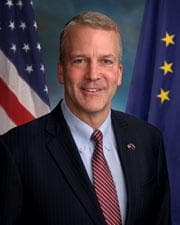
Dan Sullivan
Republican Senator
Alaska
Cosponsors (2)
Environment and Public Works Committee
- Introduced
- In Committee
- On Floor
- Passed Chamber
- Enacted
The "Primacy Certainty Act of 2025" aims to amend the Safe Drinking Water Act by establishing clear and expedited timelines for the Environmental Protection Agency's (EPA) review and decision-making process regarding State applications for primary enforcement responsibility over Class VI underground injection control (UIC) wells . This legislation seeks to provide greater certainty for States seeking to manage these programs, which are crucial for carbon capture and storage projects. It defines Class VI wells by referencing the Infrastructure Investment and Jobs Act and sets specific deadlines for EPA action. Under the bill, if the EPA does not approve or disapprove a State's Class VI well program application within 180 days, it must provide a detailed written explanation of the review status, reasons for delay, and specific deficiencies. Crucially, if a complete application from a State with existing UIC authority for other well classes remains undecided after an additional 30 days (totaling 210 days), it will be automatically considered approved . The EPA is also required to determine application completeness within 10 days, or the application will be deemed administratively complete upon State request. Furthermore, the bill streamlines the process by requiring the EPA to expeditiously decide on pending Class VI well permits and transfer relevant information to newly approved States. It mandates that denials or partial disapprovals must be based solely on the State not meeting established criteria and prohibits the EPA from imposing additional conditions not explicitly required by the Act. The legislation also directs the EPA to designate a coordinator for each State's Class VI well program and report on necessary resources to Congress.
Suggested Questions
Get AI-generated questions to help you understand this bill better
Timeline
Introduced in Senate
Read twice and referred to the Committee on Environment and Public Works.
Environmental Protection
Primacy Certainty Act of 2025
USA119th CongressS-2505| Senate
| Updated: 7/29/2025
The "Primacy Certainty Act of 2025" aims to amend the Safe Drinking Water Act by establishing clear and expedited timelines for the Environmental Protection Agency's (EPA) review and decision-making process regarding State applications for primary enforcement responsibility over Class VI underground injection control (UIC) wells . This legislation seeks to provide greater certainty for States seeking to manage these programs, which are crucial for carbon capture and storage projects. It defines Class VI wells by referencing the Infrastructure Investment and Jobs Act and sets specific deadlines for EPA action. Under the bill, if the EPA does not approve or disapprove a State's Class VI well program application within 180 days, it must provide a detailed written explanation of the review status, reasons for delay, and specific deficiencies. Crucially, if a complete application from a State with existing UIC authority for other well classes remains undecided after an additional 30 days (totaling 210 days), it will be automatically considered approved . The EPA is also required to determine application completeness within 10 days, or the application will be deemed administratively complete upon State request. Furthermore, the bill streamlines the process by requiring the EPA to expeditiously decide on pending Class VI well permits and transfer relevant information to newly approved States. It mandates that denials or partial disapprovals must be based solely on the State not meeting established criteria and prohibits the EPA from imposing additional conditions not explicitly required by the Act. The legislation also directs the EPA to designate a coordinator for each State's Class VI well program and report on necessary resources to Congress.
Suggested Questions
Get AI-generated questions to help you understand this bill better
Timeline
Introduced in Senate
Read twice and referred to the Committee on Environment and Public Works.
Dan Sullivan
Republican Senator
Alaska
Cosponsors (2)
Environment and Public Works Committee
Environmental Protection
Related Bills
- Introduced
- In Committee
- On Floor
- Passed Chamber
- Enacted