Curbing Officials' Income and Nondisclosure (COIN) Act
USA119th CongressS-2143| Senate
| Updated: 6/23/2025
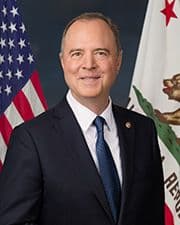
Adam B. Schiff
Democratic Senator
California
Cosponsors (10)
Homeland Security and Governmental Affairs Committee
- Introduced
- In Committee
- On Floor
- Passed Chamber
- Enacted
The Curbing Officials' Income and Nondisclosure (COIN) Act is designed to prevent financial exploitation by public office holders by establishing stringent rules regarding their involvement with digital assets. This legislation introduces a comprehensive framework of prohibitions, enhanced disclosure requirements, and severe penalties applicable to covered individuals and their immediate family members. A central provision defines "prohibited financial transactions" to include the issuance, sponsorship, or endorsement of various digital assets, such as cryptocurrencies, meme coins, non-fungible tokens, and payment stablecoins . These restrictions are in effect during a public official's term, for 180 days preceding it, and for two years following the termination of their service. However, the mere purchase, sale, or holding of financial instruments routinely accessible to the public is explicitly excluded. Violations of these prohibitions can result in substantial consequences. Civil penalties may include fines up to $25,000 per violation, 10 percent of the financial interest's value, or the financial gain derived, whichever is greater, along with disgorgement of profits. For knowing violations, criminal penalties are introduced, potentially leading to fines, imprisonment for up to 15 years, and disqualification from holding public office, particularly in cases involving bribery or insider trading. Any conduct related to these prohibited transactions is deemed an unofficial act, thereby removing any claim to official immunity. Furthermore, the Act strengthens existing ethics requirements by amending federal law to mandate the disclosure of cryptocurrencies and other digital assets exceeding $1,000 in value by public officials. It also expands the definition of "financial interest" for conflict-of-interest purposes to explicitly include various digital assets. These measures aim to increase transparency and prevent conflicts of interest. Finally, the bill requires payment stablecoin issuers to submit initial and quarterly certifications to the Office of Government Ethics and their primary regulator, confirming that no public official profits from their stablecoin issuance. These certifications will be made publicly available. Failure to comply can lead to the revocation of approval to operate, and submitting false certifications carries criminal penalties. The Government Accountability Office is also tasked with reporting on recommendations to update federal ethics laws in light of new digital asset regulatory frameworks.
View Full TextSuggested Questions
Get AI-generated questions to help you understand this bill better
Timeline
Introduced in Senate
Read twice and referred to the Committee on Homeland Security and Governmental Affairs.
Government Operations and Politics
Curbing Officials' Income and Nondisclosure (COIN) Act
USA119th CongressS-2143| Senate
| Updated: 6/23/2025
The Curbing Officials' Income and Nondisclosure (COIN) Act is designed to prevent financial exploitation by public office holders by establishing stringent rules regarding their involvement with digital assets. This legislation introduces a comprehensive framework of prohibitions, enhanced disclosure requirements, and severe penalties applicable to covered individuals and their immediate family members. A central provision defines "prohibited financial transactions" to include the issuance, sponsorship, or endorsement of various digital assets, such as cryptocurrencies, meme coins, non-fungible tokens, and payment stablecoins . These restrictions are in effect during a public official's term, for 180 days preceding it, and for two years following the termination of their service. However, the mere purchase, sale, or holding of financial instruments routinely accessible to the public is explicitly excluded. Violations of these prohibitions can result in substantial consequences. Civil penalties may include fines up to $25,000 per violation, 10 percent of the financial interest's value, or the financial gain derived, whichever is greater, along with disgorgement of profits. For knowing violations, criminal penalties are introduced, potentially leading to fines, imprisonment for up to 15 years, and disqualification from holding public office, particularly in cases involving bribery or insider trading. Any conduct related to these prohibited transactions is deemed an unofficial act, thereby removing any claim to official immunity. Furthermore, the Act strengthens existing ethics requirements by amending federal law to mandate the disclosure of cryptocurrencies and other digital assets exceeding $1,000 in value by public officials. It also expands the definition of "financial interest" for conflict-of-interest purposes to explicitly include various digital assets. These measures aim to increase transparency and prevent conflicts of interest. Finally, the bill requires payment stablecoin issuers to submit initial and quarterly certifications to the Office of Government Ethics and their primary regulator, confirming that no public official profits from their stablecoin issuance. These certifications will be made publicly available. Failure to comply can lead to the revocation of approval to operate, and submitting false certifications carries criminal penalties. The Government Accountability Office is also tasked with reporting on recommendations to update federal ethics laws in light of new digital asset regulatory frameworks.
View Full TextSuggested Questions
Get AI-generated questions to help you understand this bill better
Timeline
Introduced in Senate
Read twice and referred to the Committee on Homeland Security and Governmental Affairs.
Adam B. Schiff
Democratic Senator
California
Cosponsors (10)
Homeland Security and Governmental Affairs Committee
Government Operations and Politics
- Introduced
- In Committee
- On Floor
- Passed Chamber
- Enacted