ANTE Act
USA119th CongressS-1886| Senate
| Updated: 5/22/2025
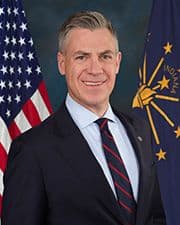
Jim Banks
Republican Senator
Indiana
Cosponsors (1)
Finance Committee
- Introduced
- In Committee
- On Floor
- Passed Chamber
- Enacted
The "Axing Nonmarket Tariff Evasion Act," or ANTE Act, amends the Trade Act of 1974 to empower the United States Trade Representative (USTR) to address duty evasion by certain foreign entities. Specifically, it allows the USTR to initiate inquiries into whether a covered entity is establishing or planning investments in a third country to circumvent duties imposed on a nonmarket economy country under Section 301. A covered entity is defined as one owned, controlled, or operated by a nonmarket economy country, or where such a country holds at least 25% equity, while a nonmarket economy country is one determined under the Tariff Act of 1930 and included on the "Special 301 Priority Watch List." Upon an affirmative determination of duty evasion, the USTR is authorized to impose remedial measures on goods produced by the covered entity in the third country. These measures can include duties equal to or greater than those originally placed on the relevant product from the nonmarket economy country. Such actions can be taken at any point during an investigation if production has begun, or prospectively if there are plans for production. The USTR must justify to Congress any decision not to impose a measure, detailing its potential social and economic impacts. Inquiries can be self-initiated by the USTR or requested by interested parties or Congress. The USTR must decide within 45 days if an inquiry is warranted and, if so, make an evasion determination within 180 days. Remedial measures remain in effect as long as the original Section 301 action against the nonmarket economy country is active, or as long as that country maintains a controlling interest in the third-country investment, whichever period is shorter.
Suggested Questions
Get AI-generated questions to help you understand this bill better
Timeline
Introduced in Senate
Read twice and referred to the Committee on Finance.
Foreign Trade and International Finance
ANTE Act
USA119th CongressS-1886| Senate
| Updated: 5/22/2025
The "Axing Nonmarket Tariff Evasion Act," or ANTE Act, amends the Trade Act of 1974 to empower the United States Trade Representative (USTR) to address duty evasion by certain foreign entities. Specifically, it allows the USTR to initiate inquiries into whether a covered entity is establishing or planning investments in a third country to circumvent duties imposed on a nonmarket economy country under Section 301. A covered entity is defined as one owned, controlled, or operated by a nonmarket economy country, or where such a country holds at least 25% equity, while a nonmarket economy country is one determined under the Tariff Act of 1930 and included on the "Special 301 Priority Watch List." Upon an affirmative determination of duty evasion, the USTR is authorized to impose remedial measures on goods produced by the covered entity in the third country. These measures can include duties equal to or greater than those originally placed on the relevant product from the nonmarket economy country. Such actions can be taken at any point during an investigation if production has begun, or prospectively if there are plans for production. The USTR must justify to Congress any decision not to impose a measure, detailing its potential social and economic impacts. Inquiries can be self-initiated by the USTR or requested by interested parties or Congress. The USTR must decide within 45 days if an inquiry is warranted and, if so, make an evasion determination within 180 days. Remedial measures remain in effect as long as the original Section 301 action against the nonmarket economy country is active, or as long as that country maintains a controlling interest in the third-country investment, whichever period is shorter.
Suggested Questions
Get AI-generated questions to help you understand this bill better
Timeline
Introduced in Senate
Read twice and referred to the Committee on Finance.
Jim Banks
Republican Senator
Indiana
Cosponsors (1)
Finance Committee
Foreign Trade and International Finance
Related Bills
- Introduced
- In Committee
- On Floor
- Passed Chamber
- Enacted