Fuel Choice and Deregulation Act of 2025
USA119th CongressS-1841| Senate
| Updated: 5/21/2025
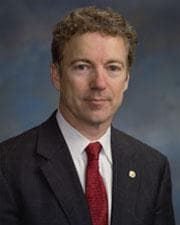
Rand Paul
Republican Senator
Kentucky
Environment and Public Works Committee
- Introduced
- In Committee
- On Floor
- Passed Chamber
- Enacted
The bill, titled the Fuel Choice and Deregulation Act of 2025, seeks to provide significant regulatory relief for alternative fuel producers and consumers by amending the Clean Air Act. It specifies that **aftermarket conversions** of motor vehicles to alternative fuel operation are not considered tampering if they maintain **emission performance** and are properly installed. Such conversions would also be exempt from requiring a **certificate of conformity** from the Administrator, though a label indicating the conversion is required. Furthermore, the legislation prohibits the Administrator from controlling or prohibiting **biomass fuels** under the Clean Air Act. To incentivize the production of alternative fuel-capable vehicles, the bill introduces new definitions for various alternative fuels and vehicle types, including "**fuel choice enabling vehicles**" and "**fuel choice enabling manufacturers**." A manufacturer qualifies as "fuel choice enabling" if at least 50 percent of their fleet for a given model year consists of these alternative fuel-capable vehicles. Qualifying "fuel choice enabling manufacturers" receive substantial benefits, including an **8 miles per gallon bonus** added to their average fuel economy calculation. Additionally, if these manufacturers comply with existing fuel economy standards, their vehicles are **deemed compliant** with all applicable **greenhouse gas regulations** under the Clean Air Act. The bill also extends the period for using fuel economy credits from three to five years and modifies **ethanol waiver** provisions to allow for fuels containing "10 percent or more of" ethanol. These changes are set to apply to automobiles manufactured for model year 2026 and beyond.
View Full TextSuggested Questions
Get AI-generated questions to help you understand this bill better
Environmental Protection
Fuel Choice and Deregulation Act of 2025
USA119th CongressS-1841| Senate
| Updated: 5/21/2025
The bill, titled the Fuel Choice and Deregulation Act of 2025, seeks to provide significant regulatory relief for alternative fuel producers and consumers by amending the Clean Air Act. It specifies that **aftermarket conversions** of motor vehicles to alternative fuel operation are not considered tampering if they maintain **emission performance** and are properly installed. Such conversions would also be exempt from requiring a **certificate of conformity** from the Administrator, though a label indicating the conversion is required. Furthermore, the legislation prohibits the Administrator from controlling or prohibiting **biomass fuels** under the Clean Air Act. To incentivize the production of alternative fuel-capable vehicles, the bill introduces new definitions for various alternative fuels and vehicle types, including "**fuel choice enabling vehicles**" and "**fuel choice enabling manufacturers**." A manufacturer qualifies as "fuel choice enabling" if at least 50 percent of their fleet for a given model year consists of these alternative fuel-capable vehicles. Qualifying "fuel choice enabling manufacturers" receive substantial benefits, including an **8 miles per gallon bonus** added to their average fuel economy calculation. Additionally, if these manufacturers comply with existing fuel economy standards, their vehicles are **deemed compliant** with all applicable **greenhouse gas regulations** under the Clean Air Act. The bill also extends the period for using fuel economy credits from three to five years and modifies **ethanol waiver** provisions to allow for fuels containing "10 percent or more of" ethanol. These changes are set to apply to automobiles manufactured for model year 2026 and beyond.
View Full TextSuggested Questions
Get AI-generated questions to help you understand this bill better
Rand Paul
Republican Senator
Kentucky
Environment and Public Works Committee
Environmental Protection
- Introduced
- In Committee
- On Floor
- Passed Chamber
- Enacted