College for All Act of 2025
USA119th CongressS-1832| Senate
| Updated: 5/21/2025
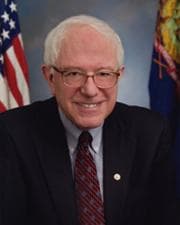
Bernard Sanders
Independent Senator
Vermont
Cosponsors (11)
Finance Committee
- Introduced
- In Committee
- On Floor
- Passed Chamber
- Enacted
The "College for All Act of 2025" aims to significantly reduce the cost of higher education and improve student outcomes by establishing a comprehensive federal-state partnership to eliminate tuition and fees at public institutions and Tribal Colleges and Universities for eligible students. The bill also creates a grant program for private nonprofit Historically Black Colleges and Universities and Minority-Serving Institutions to achieve similar tuition elimination. Furthermore, it enhances the Federal Pell Grant program and increases funding for various student support initiatives and minority-serving institutions. Under Title I, the Federal-State partnership provides grants to states and TCUs to eliminate tuition and required fees for eligible students. At public four-year institutions and four-year TCUs, tuition elimination is initially for working and middle-class students, based on specific income thresholds. The federal share starts at 100% in 2026-2027, gradually decreasing to 80% by 2030-2031, with states increasing their share over time, while TCUs receive 100% federal support. Participating states must maintain prior levels of state fiscal support for higher education , operating expenditures, and need-based financial aid. They are also required to ensure public institutions increase tenure-track or tenured faculty and provide institutional aid to Pell Grant recipients to cover their net price. Remaining funds, after tuition elimination, can be used to reduce the cost of attendance, improve instruction, and enhance student support through evidence-based reforms. An automatic stabilizer allows for waivers or reductions in state requirements during economic downturns. Title II establishes a grant program for eligible private nonprofit HBCUs and MSIs to eliminate tuition and fees for eligible students, defined by income thresholds. These institutions must adhere to tuition hike limitations and, for four-year institutions, improve transfer pathways with community colleges. Additionally, a subpart provides grants to Governors of outlying areas to cover the difference between in-state and out-of-state tuition for eligible students attending public four-year institutions elsewhere. Title III significantly improves the Federal Pell Grant program by repealing the scoring requirement and substantially increasing the maximum award to $14,790 for most institutions in 2026-2027. Pell Grant eligibility is extended to 7 years and 6 months, and funds can explicitly be used for living and non-tuition expenses . Eligibility is expanded to "Dreamer students" and those with certain immigration statuses, and Pell Grants are fully excluded from gross income for tax purposes. Title IV introduces Inclusive Student Success Grants for eligible states and TCUs to improve student outcomes, prioritizing support for underserved student populations through evidence-based reforms. These reforms include comprehensive student support, basic needs assistance, and transfer pathway improvements. Titles V and VI significantly increase federal investments, authorizing $3 billion for Federal TRIO Programs and $736 million for GEAR UP Programs for FY2026. Appropriations for HBCUs, TCUs, and other Minority-Serving Institutions are doubled to $510 million annually, providing vital resources.
Suggested Questions
Get AI-generated questions to help you understand this bill better
Timeline
Introduced in Senate
Read twice and referred to the Committee on Finance.
Education
College for All Act of 2025
USA119th CongressS-1832| Senate
| Updated: 5/21/2025
The "College for All Act of 2025" aims to significantly reduce the cost of higher education and improve student outcomes by establishing a comprehensive federal-state partnership to eliminate tuition and fees at public institutions and Tribal Colleges and Universities for eligible students. The bill also creates a grant program for private nonprofit Historically Black Colleges and Universities and Minority-Serving Institutions to achieve similar tuition elimination. Furthermore, it enhances the Federal Pell Grant program and increases funding for various student support initiatives and minority-serving institutions. Under Title I, the Federal-State partnership provides grants to states and TCUs to eliminate tuition and required fees for eligible students. At public four-year institutions and four-year TCUs, tuition elimination is initially for working and middle-class students, based on specific income thresholds. The federal share starts at 100% in 2026-2027, gradually decreasing to 80% by 2030-2031, with states increasing their share over time, while TCUs receive 100% federal support. Participating states must maintain prior levels of state fiscal support for higher education , operating expenditures, and need-based financial aid. They are also required to ensure public institutions increase tenure-track or tenured faculty and provide institutional aid to Pell Grant recipients to cover their net price. Remaining funds, after tuition elimination, can be used to reduce the cost of attendance, improve instruction, and enhance student support through evidence-based reforms. An automatic stabilizer allows for waivers or reductions in state requirements during economic downturns. Title II establishes a grant program for eligible private nonprofit HBCUs and MSIs to eliminate tuition and fees for eligible students, defined by income thresholds. These institutions must adhere to tuition hike limitations and, for four-year institutions, improve transfer pathways with community colleges. Additionally, a subpart provides grants to Governors of outlying areas to cover the difference between in-state and out-of-state tuition for eligible students attending public four-year institutions elsewhere. Title III significantly improves the Federal Pell Grant program by repealing the scoring requirement and substantially increasing the maximum award to $14,790 for most institutions in 2026-2027. Pell Grant eligibility is extended to 7 years and 6 months, and funds can explicitly be used for living and non-tuition expenses . Eligibility is expanded to "Dreamer students" and those with certain immigration statuses, and Pell Grants are fully excluded from gross income for tax purposes. Title IV introduces Inclusive Student Success Grants for eligible states and TCUs to improve student outcomes, prioritizing support for underserved student populations through evidence-based reforms. These reforms include comprehensive student support, basic needs assistance, and transfer pathway improvements. Titles V and VI significantly increase federal investments, authorizing $3 billion for Federal TRIO Programs and $736 million for GEAR UP Programs for FY2026. Appropriations for HBCUs, TCUs, and other Minority-Serving Institutions are doubled to $510 million annually, providing vital resources.
Suggested Questions
Get AI-generated questions to help you understand this bill better
Timeline
Introduced in Senate
Read twice and referred to the Committee on Finance.
Bernard Sanders
Independent Senator
Vermont
Cosponsors (11)
Finance Committee
Education
Related Bills
- Introduced
- In Committee
- On Floor
- Passed Chamber
- Enacted