Advancing GETs Act of 2025
USA119th CongressS-1327| Senate
| Updated: 4/15/2026
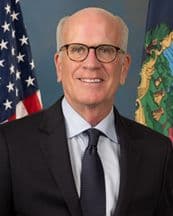
Peter Welch
Democratic Senator
Vermont
Cosponsors (1)
Energy Subcommittee, Energy and Natural Resources Committee
- Introduced
- In Committee
- On Floor
- Passed Chamber
- Enacted
This legislation mandates the Federal Energy Regulatory Commission (FERC) to establish a shared savings incentive for investments in grid-enhancing technologies (GETs). Within 18 months, FERC must issue a final rule to return a portion of the savings attributable to GETs to the developer, defined as the entity paying for installation. This incentive will provide developers with 10 to 25 percent of the savings over a three-year period, applied consistently across all eligible investments, not on a case-by-case basis. Eligibility for the incentive requires that the expected savings from the GET investment be at least four times the cost over three years, and it applies only to newly installed GETs, not those already in place. FERC is also tasked with determining appropriate consumer protections and will evaluate the incentive's necessity and efficacy between seven and ten years after its establishment, considering its alignment with regional transmission planning requirements. Furthermore, the bill requires transmission operators to submit annual reports on congestion costs , identifying constraints causing over $500,000 in costs and planned upgrades. FERC must establish a universal metric for this reporting within 18 months. The collected data will be used by FERC and the Department of Energy (DOE) to conduct analyses and create a publicly available, annually updated map of transmission system congestion costs. Finally, the DOE is directed to establish an application guide for utilities and developers seeking to implement GETs, to be reviewed and updated annually. The DOE will also provide technical assistance and create a clearinghouse of past GET projects to aid in identifying solutions. The bill authorizes appropriations of $5 million for fiscal year 2025 and $1 million annually from 2026 through 2036 to support these efforts.
View Full TextSuggested Questions
Get AI-generated questions to help you understand this bill better
Timeline
Introduced in Senate
Read twice and referred to the Committee on Energy and Natural Resources.
Committee on Energy and Natural Resources Subcommittee on Energy. Hearings held.
Committee on Energy and Natural Resources Subcommittee on Energy. Hearings held. With printed Hearing: S.Hrg. 119-366.
Energy
Advanced technology and technological innovationsCongressional oversightData collection, sharing, protectionElectric power generation and transmissionEnergy efficiency and conservationEnergy pricesEnergy revenues and royaltiesEnergy storage, supplies, demandGovernment information and archivesGovernment studies and investigations
Advancing GETs Act of 2025
USA119th CongressS-1327| Senate
| Updated: 4/15/2026
This legislation mandates the Federal Energy Regulatory Commission (FERC) to establish a shared savings incentive for investments in grid-enhancing technologies (GETs). Within 18 months, FERC must issue a final rule to return a portion of the savings attributable to GETs to the developer, defined as the entity paying for installation. This incentive will provide developers with 10 to 25 percent of the savings over a three-year period, applied consistently across all eligible investments, not on a case-by-case basis. Eligibility for the incentive requires that the expected savings from the GET investment be at least four times the cost over three years, and it applies only to newly installed GETs, not those already in place. FERC is also tasked with determining appropriate consumer protections and will evaluate the incentive's necessity and efficacy between seven and ten years after its establishment, considering its alignment with regional transmission planning requirements. Furthermore, the bill requires transmission operators to submit annual reports on congestion costs , identifying constraints causing over $500,000 in costs and planned upgrades. FERC must establish a universal metric for this reporting within 18 months. The collected data will be used by FERC and the Department of Energy (DOE) to conduct analyses and create a publicly available, annually updated map of transmission system congestion costs. Finally, the DOE is directed to establish an application guide for utilities and developers seeking to implement GETs, to be reviewed and updated annually. The DOE will also provide technical assistance and create a clearinghouse of past GET projects to aid in identifying solutions. The bill authorizes appropriations of $5 million for fiscal year 2025 and $1 million annually from 2026 through 2036 to support these efforts.
View Full TextSuggested Questions
Get AI-generated questions to help you understand this bill better
Timeline
Introduced in Senate
Read twice and referred to the Committee on Energy and Natural Resources.
Committee on Energy and Natural Resources Subcommittee on Energy. Hearings held.
Committee on Energy and Natural Resources Subcommittee on Energy. Hearings held. With printed Hearing: S.Hrg. 119-366.
Peter Welch
Democratic Senator
Vermont
Cosponsors (1)
Energy Subcommittee, Energy and Natural Resources Committee
Energy
Related Bills
- Introduced
- In Committee
- On Floor
- Passed Chamber
- Enacted
Advanced technology and technological innovationsCongressional oversightData collection, sharing, protectionElectric power generation and transmissionEnergy efficiency and conservationEnergy pricesEnergy revenues and royaltiesEnergy storage, supplies, demandGovernment information and archivesGovernment studies and investigations