Education Savings Accounts for Military Families Act of 2025
USA119th CongressS-1244| Senate
| Updated: 4/1/2025
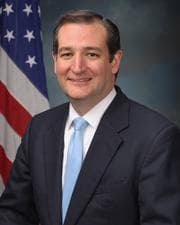
Ted Cruz
Republican Senator
Texas
Cosponsors (2)
Finance Committee
- Introduced
- In Committee
- On Floor
- Passed Chamber
- Enacted
The "Education Savings Accounts for Military Families Act of 2025" proposes to amend the Elementary and Secondary Education Act of 1965 by creating a new program for Military Education Savings Accounts (MESAs) . Under this program, the Secretary of Education, in consultation with the Secretary of Defense, would establish and fund these accounts for eligible military dependent children at the request of their parents. The primary purpose is to empower military families with financial resources to cover diverse educational expenses. To participate, parents must submit an application demonstrating their child is an eligible military dependent and agree to provide instruction in core subjects, not enroll the child full-time in public school, and use funds appropriately. Applications will be accepted year-round, and the Secretary will establish procedures for expeditious approval and automatic renewals, unless fraud occurs or the parent chooses not to renew. An eligible military dependent child is defined as having a parent on active duty and, for first-time applicants, having been enrolled in a public school for at least 100 consecutive days in the prior school year. Initially, each MESA would receive $6,000 per child for the first school year, with subsequent years' amounts adjusted based on the Chained Consumer Price Index. If funds are insufficient, previously established accounts are renewed first. Remaining funds are then allocated via a lottery, prioritizing siblings of current MESA holders, followed by children of enlisted members, warrant officers, and then commissioned officers. Funds from MESAs can be used for a wide array of qualified educational services. These include tuition for private schools, online learning programs, tutoring, extracurricular activities, and educational therapies . Other covered expenses include textbooks, computer hardware (with restrictions), standardized exam fees, and contributions to college savings accounts. The Secretary of Education must approve providers of these services, requiring them to be licensed in their operating state, and may require surety bonds for providers receiving substantial payments. The Secretary will make quarterly transfers to the accounts, but parents can choose an alternative schedule. Parents must submit expense reports detailing how previous funds were used before receiving new transfers. Funds can roll over year-to-year until the account terminates, which occurs if the child enrolls full-time in public school, completes postsecondary education, reaches age 22 (or 26 for children with disabilities), or if funds are unused for two years. Remaining funds upon termination are returned to the U.S. Treasury. States receiving funds under this title must consider children with MESAs as meeting compulsory school attendance requirements. For children attending public school less than full-time, MESA funds would be used to cover their attendance costs. The bill also specifies that MESAs are exempt from federal taxation, and contributions and distributions are not included in gross income. To ensure accountability, the Secretary must establish a website and hotline for anonymously reporting suspected fraud and conduct random audits. The bill explicitly states that providers of qualified educational services are not considered agents of the state or federal government solely due to receiving payments. It also prohibits federal or state control over nonpublic education providers and forbids discrimination based on a provider's religious character or affiliation. For fiscal year 2026, $1.2 billion is authorized for appropriations to carry out this section, with subsequent years' authorizations adjusted by the Chained Consumer Price Index. The Secretary may use up to 5 percent of appropriated funds for administrative expenses related to the program.
View Full TextSuggested Questions
Get AI-generated questions to help you understand this bill better
Timeline
Introduced in Senate
Read twice and referred to the Committee on Finance.
Education
Education Savings Accounts for Military Families Act of 2025
USA119th CongressS-1244| Senate
| Updated: 4/1/2025
The "Education Savings Accounts for Military Families Act of 2025" proposes to amend the Elementary and Secondary Education Act of 1965 by creating a new program for Military Education Savings Accounts (MESAs) . Under this program, the Secretary of Education, in consultation with the Secretary of Defense, would establish and fund these accounts for eligible military dependent children at the request of their parents. The primary purpose is to empower military families with financial resources to cover diverse educational expenses. To participate, parents must submit an application demonstrating their child is an eligible military dependent and agree to provide instruction in core subjects, not enroll the child full-time in public school, and use funds appropriately. Applications will be accepted year-round, and the Secretary will establish procedures for expeditious approval and automatic renewals, unless fraud occurs or the parent chooses not to renew. An eligible military dependent child is defined as having a parent on active duty and, for first-time applicants, having been enrolled in a public school for at least 100 consecutive days in the prior school year. Initially, each MESA would receive $6,000 per child for the first school year, with subsequent years' amounts adjusted based on the Chained Consumer Price Index. If funds are insufficient, previously established accounts are renewed first. Remaining funds are then allocated via a lottery, prioritizing siblings of current MESA holders, followed by children of enlisted members, warrant officers, and then commissioned officers. Funds from MESAs can be used for a wide array of qualified educational services. These include tuition for private schools, online learning programs, tutoring, extracurricular activities, and educational therapies . Other covered expenses include textbooks, computer hardware (with restrictions), standardized exam fees, and contributions to college savings accounts. The Secretary of Education must approve providers of these services, requiring them to be licensed in their operating state, and may require surety bonds for providers receiving substantial payments. The Secretary will make quarterly transfers to the accounts, but parents can choose an alternative schedule. Parents must submit expense reports detailing how previous funds were used before receiving new transfers. Funds can roll over year-to-year until the account terminates, which occurs if the child enrolls full-time in public school, completes postsecondary education, reaches age 22 (or 26 for children with disabilities), or if funds are unused for two years. Remaining funds upon termination are returned to the U.S. Treasury. States receiving funds under this title must consider children with MESAs as meeting compulsory school attendance requirements. For children attending public school less than full-time, MESA funds would be used to cover their attendance costs. The bill also specifies that MESAs are exempt from federal taxation, and contributions and distributions are not included in gross income. To ensure accountability, the Secretary must establish a website and hotline for anonymously reporting suspected fraud and conduct random audits. The bill explicitly states that providers of qualified educational services are not considered agents of the state or federal government solely due to receiving payments. It also prohibits federal or state control over nonpublic education providers and forbids discrimination based on a provider's religious character or affiliation. For fiscal year 2026, $1.2 billion is authorized for appropriations to carry out this section, with subsequent years' authorizations adjusted by the Chained Consumer Price Index. The Secretary may use up to 5 percent of appropriated funds for administrative expenses related to the program.
View Full TextSuggested Questions
Get AI-generated questions to help you understand this bill better
Timeline
Introduced in Senate
Read twice and referred to the Committee on Finance.
Ted Cruz
Republican Senator
Texas
Cosponsors (2)
Finance Committee
Education
- Introduced
- In Committee
- On Floor
- Passed Chamber
- Enacted