Judicial Relief Clarification Act of 2025
USA119th CongressS-1206| Senate
| Updated: 3/31/2025
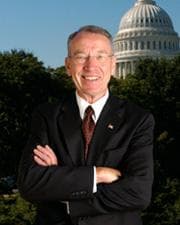
Chuck Grassley
Republican Senator
Iowa
Cosponsors (29)
Joni Ernst (Republican)Tommy Tuberville (Republican)Bill Cassidy (Republican)Roger Marshall (Republican)Dan Sullivan (Republican)Katie Boyd Britt (Republican)Thomas Tillis (Republican)Jim Banks (Republican)Cindy Hyde-Smith (Republican)Mike Lee (Republican)Cynthia M. Lummis (Republican)Eric Schmitt (Republican)Marsha Blackburn (Republican)Ashley Moody (Republican)Lindsey Graham (Republican)Tim Sheehy (Republican)Ted Cruz (Republican)Kevin Cramer (Republican)James Lankford (Republican)James C. Justice (Republican)John Kennedy (Republican)Deb Fischer (Republican)Bill Hagerty (Republican)John Barrasso (Republican)John Cornyn (Republican)Jon Husted (Republican)Bernie Moreno (Republican)Steve Daines (Republican)Ted Budd (Republican)
Judiciary Committee
- Introduced
- In Committee
- On Floor
- Passed Chamber
- Enacted
This bill aims to significantly restrict the scope of judicial remedies issued by federal courts. A central provision prohibits courts from issuing any order, including injunctions, vacaturs, stays, or temporary restraining orders, that purports to restrain enforcement against or compel action in favor of a non-party regarding statutes, regulations, or executive actions. This limitation applies unless the non-party is represented by a party acting in a representative capacity, such as in a class action, thereby targeting what are commonly known as "national injunctions." The legislation also amends provisions related to declaratory judgments and judicial review under the Administrative Procedure Act, specifying that relief should be limited to persons directly before the court. Furthermore, the bill makes certain temporary restraining orders, specifically those affecting the United States or a State, immediately appealable. These changes collectively seek to narrow the reach of federal court orders to the specific parties involved in a case, preventing broader application to individuals or entities not directly participating in the litigation.
View Full TextSuggested Questions
Get AI-generated questions to help you understand this bill better
Timeline
Introduced in Senate
Read twice and referred to the Committee on the Judiciary. (Sponsor introductory remarks on measure: CR S1925-1926: 2)
Read twice and referred to the Committee on the Judiciary. (Sponsor introductory remarks on measure: CR S1925-1926)
Law
Federal district courtsJudicial procedure and administrationJudicial review and appealsJurisdiction and venue
Judicial Relief Clarification Act of 2025
USA119th CongressS-1206| Senate
| Updated: 3/31/2025
This bill aims to significantly restrict the scope of judicial remedies issued by federal courts. A central provision prohibits courts from issuing any order, including injunctions, vacaturs, stays, or temporary restraining orders, that purports to restrain enforcement against or compel action in favor of a non-party regarding statutes, regulations, or executive actions. This limitation applies unless the non-party is represented by a party acting in a representative capacity, such as in a class action, thereby targeting what are commonly known as "national injunctions." The legislation also amends provisions related to declaratory judgments and judicial review under the Administrative Procedure Act, specifying that relief should be limited to persons directly before the court. Furthermore, the bill makes certain temporary restraining orders, specifically those affecting the United States or a State, immediately appealable. These changes collectively seek to narrow the reach of federal court orders to the specific parties involved in a case, preventing broader application to individuals or entities not directly participating in the litigation.
View Full TextSuggested Questions
Get AI-generated questions to help you understand this bill better
Timeline
Introduced in Senate
Read twice and referred to the Committee on the Judiciary. (Sponsor introductory remarks on measure: CR S1925-1926: 2)
Read twice and referred to the Committee on the Judiciary. (Sponsor introductory remarks on measure: CR S1925-1926)
Chuck Grassley
Republican Senator
Iowa
Cosponsors (29)
Joni Ernst (Republican)Tommy Tuberville (Republican)Bill Cassidy (Republican)Roger Marshall (Republican)Dan Sullivan (Republican)Katie Boyd Britt (Republican)Thomas Tillis (Republican)Jim Banks (Republican)Cindy Hyde-Smith (Republican)Mike Lee (Republican)Cynthia M. Lummis (Republican)Eric Schmitt (Republican)Marsha Blackburn (Republican)Ashley Moody (Republican)Lindsey Graham (Republican)Tim Sheehy (Republican)Ted Cruz (Republican)Kevin Cramer (Republican)James Lankford (Republican)James C. Justice (Republican)John Kennedy (Republican)Deb Fischer (Republican)Bill Hagerty (Republican)John Barrasso (Republican)John Cornyn (Republican)Jon Husted (Republican)Bernie Moreno (Republican)Steve Daines (Republican)Ted Budd (Republican)
Judiciary Committee
Law
- Introduced
- In Committee
- On Floor
- Passed Chamber
- Enacted
Federal district courtsJudicial procedure and administrationJudicial review and appealsJurisdiction and venue