Unhoused Persons Bill of Rights
USA119th CongressHRES-1249| House
| Updated: 4/30/2026
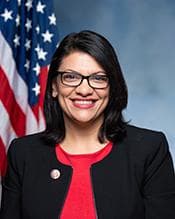
Rashida Tlaib
Democratic Representative
Michigan
Cosponsors (9)
Committees (6)
• Ways and Means Committee• Agriculture Committee• Financial Services Committee• Judiciary Committee• Energy and Commerce Committee• Education and Workforce Committee
- Introduced
- In Committee
- On Floor
- Passed Chamber
- Enacted
This resolution asserts the United States' obligation to permanently end the unhoused crisis by 2029 and to uphold, protect, and enforce the civil and human rights of unhoused individuals. It outlines a comprehensive set of rights, including decent, affordable, and accessible housing , universal health care , livable wages , education, employment, and freedom from harassment or discrimination in public spaces. The resolution also seeks to ensure rights to privacy, internet access, and the ability to vote, without prejudice based on housing status. To achieve these goals, the resolution calls for significant funding reallocations, proposing to shift not less than $168 billion from the defense budget to address the unhoused crisis. It advocates for substantial annual funding for public housing capital, the National Housing Trust Fund, and a permanent Emergency Rental Assistance Program. Additionally, it seeks robust funding for federal housing and supportive services programs, including Continuum of Care, Emergency Solutions Grants, and HUD-VASH, alongside expanded nutrition assistance programs. The resolution strives to increase the availability of low-income housing by funding new construction, fully subsidizing additional units, and proposing to repeal the Faircloth Amendment to allow for a net increase in public housing. It aims to provide universal housing choice vouchers to all eligible households and reauthorize programs for runaway and homeless youth. Furthermore, it seeks to bolster and expand Fair Housing Act protections to ban discrimination based on previous housing status, sexual orientation, gender identity, and source of income. The Department of Housing and Urban Development (HUD) would be tasked with developing policies to eradicate the unhoused crisis by 2029, remove barriers for individuals with criminal backgrounds, and combat gentrification. HUD is also expected to implement more accurate methods for counting unhoused individuals and coordinate with other agencies to designate shelters and service providers as fixed addresses for mail and voting. The resolution also urges the Department of Health and Human Services to declare the unhoused crisis a public health emergency and encourages law enforcement to track and report on the criminalization of unhoused populations.
View Full TextSuggested Questions
Get AI-generated questions to help you understand this bill better
Timeline
Submitted in House
Referred to the Committee on Financial Services, and in addition to the Committees on Energy and Commerce, Education and Workforce, the Judiciary, Agriculture, and Ways and Means, for a period to be subsequently determined by the Speaker, in each case for consideration of such provisions as fall within the jurisdiction of the committee concerned.
Housing and Community Development
Unhoused Persons Bill of Rights
USA119th CongressHRES-1249| House
| Updated: 4/30/2026
This resolution asserts the United States' obligation to permanently end the unhoused crisis by 2029 and to uphold, protect, and enforce the civil and human rights of unhoused individuals. It outlines a comprehensive set of rights, including decent, affordable, and accessible housing , universal health care , livable wages , education, employment, and freedom from harassment or discrimination in public spaces. The resolution also seeks to ensure rights to privacy, internet access, and the ability to vote, without prejudice based on housing status. To achieve these goals, the resolution calls for significant funding reallocations, proposing to shift not less than $168 billion from the defense budget to address the unhoused crisis. It advocates for substantial annual funding for public housing capital, the National Housing Trust Fund, and a permanent Emergency Rental Assistance Program. Additionally, it seeks robust funding for federal housing and supportive services programs, including Continuum of Care, Emergency Solutions Grants, and HUD-VASH, alongside expanded nutrition assistance programs. The resolution strives to increase the availability of low-income housing by funding new construction, fully subsidizing additional units, and proposing to repeal the Faircloth Amendment to allow for a net increase in public housing. It aims to provide universal housing choice vouchers to all eligible households and reauthorize programs for runaway and homeless youth. Furthermore, it seeks to bolster and expand Fair Housing Act protections to ban discrimination based on previous housing status, sexual orientation, gender identity, and source of income. The Department of Housing and Urban Development (HUD) would be tasked with developing policies to eradicate the unhoused crisis by 2029, remove barriers for individuals with criminal backgrounds, and combat gentrification. HUD is also expected to implement more accurate methods for counting unhoused individuals and coordinate with other agencies to designate shelters and service providers as fixed addresses for mail and voting. The resolution also urges the Department of Health and Human Services to declare the unhoused crisis a public health emergency and encourages law enforcement to track and report on the criminalization of unhoused populations.
View Full TextSuggested Questions
Get AI-generated questions to help you understand this bill better
Timeline
Submitted in House
Referred to the Committee on Financial Services, and in addition to the Committees on Energy and Commerce, Education and Workforce, the Judiciary, Agriculture, and Ways and Means, for a period to be subsequently determined by the Speaker, in each case for consideration of such provisions as fall within the jurisdiction of the committee concerned.
Rashida Tlaib
Democratic Representative
Michigan
Cosponsors (9)
Committees (6)
• Ways and Means Committee• Agriculture Committee• Financial Services Committee• Judiciary Committee• Energy and Commerce Committee• Education and Workforce Committee
Housing and Community Development
- Introduced
- In Committee
- On Floor
- Passed Chamber
- Enacted