GUARD Act
USA119th CongressHR-8623| House
| Updated: 4/30/2026
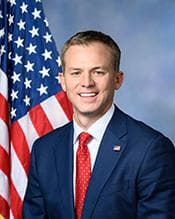
Blake D. Moore
Republican Representative
Utah
Cosponsors (7)
Judiciary Committee, Energy and Commerce Committee
- Introduced
- In Committee
- On Floor
- Passed Chamber
- Enacted
This bill, known as the GUARD Act, aims to protect minors from the potential harms of artificial intelligence chatbots by establishing strict regulations for their operation. Congress finds that these chatbots can generate harmful content, manipulate emotions, and pose safety risks like grooming and self-harm to children. The legislation defines "AI companions" as chatbots designed for emotional interaction and mandates specific requirements for any entity making AI chatbots available in the United States. Key provisions require covered entities to implement a reasonable age verification process for all users, including freezing existing accounts and verifying new ones, with periodic reviews. This process must use reliable methods like government identification, not just self-attestation, and includes strict data security measures for collected age information. Additionally, all AI chatbots must clearly and conspicuously disclose their non-human status at regular intervals and are prohibited from claiming to be licensed professionals or offering professional advice. Furthermore, the bill makes it unlawful to design or make available an AI chatbot that knowingly or recklessly solicits minors for sexually explicit conduct or promotes suicide, self-harm, or violence, with penalties up to $100,000 per offense. If a user is identified as a minor through age verification, access to AI companions must be prohibited. The Attorney General is empowered to enforce these provisions through civil actions, including injunctions and civil penalties of up to $100,000 per violation, with states also authorized to pursue injunctive relief.
View Full TextSuggested Questions
Get AI-generated questions to help you understand this bill better
Timeline
Introduced in House
Referred to the Committee on the Judiciary, and in addition to the Committee on Energy and Commerce, for a period to be subsequently determined by the Speaker, in each case for consideration of such provisions as fall within the jurisdiction of the committee concerned.
Crime and Law Enforcement
GUARD Act
USA119th CongressHR-8623| House
| Updated: 4/30/2026
This bill, known as the GUARD Act, aims to protect minors from the potential harms of artificial intelligence chatbots by establishing strict regulations for their operation. Congress finds that these chatbots can generate harmful content, manipulate emotions, and pose safety risks like grooming and self-harm to children. The legislation defines "AI companions" as chatbots designed for emotional interaction and mandates specific requirements for any entity making AI chatbots available in the United States. Key provisions require covered entities to implement a reasonable age verification process for all users, including freezing existing accounts and verifying new ones, with periodic reviews. This process must use reliable methods like government identification, not just self-attestation, and includes strict data security measures for collected age information. Additionally, all AI chatbots must clearly and conspicuously disclose their non-human status at regular intervals and are prohibited from claiming to be licensed professionals or offering professional advice. Furthermore, the bill makes it unlawful to design or make available an AI chatbot that knowingly or recklessly solicits minors for sexually explicit conduct or promotes suicide, self-harm, or violence, with penalties up to $100,000 per offense. If a user is identified as a minor through age verification, access to AI companions must be prohibited. The Attorney General is empowered to enforce these provisions through civil actions, including injunctions and civil penalties of up to $100,000 per violation, with states also authorized to pursue injunctive relief.
View Full TextSuggested Questions
Get AI-generated questions to help you understand this bill better
Timeline
Introduced in House
Referred to the Committee on the Judiciary, and in addition to the Committee on Energy and Commerce, for a period to be subsequently determined by the Speaker, in each case for consideration of such provisions as fall within the jurisdiction of the committee concerned.
Blake D. Moore
Republican Representative
Utah
Cosponsors (7)
Judiciary Committee, Energy and Commerce Committee
Crime and Law Enforcement
Related Bills
- Introduced
- In Committee
- On Floor
- Passed Chamber
- Enacted