Caja del Rio Protection Act
USA119th CongressHR-8616| House
| Updated: 4/30/2026
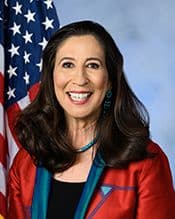
Teresa Leger Fernandez
Democratic Representative
New Mexico
Natural Resources Committee
- Introduced
- In Committee
- On Floor
- Passed Chamber
- Enacted
The Caja del Rio Protection Act establishes two new protected areas in New Mexico: the Caja del Rio Special Management Area (approximately 67,163 acres within the Santa Fe National Forest) and the Caja del Rio National Conservation Area (approximately 17,837 acres of Bureau of Land Management land). The primary purposes of these designations are to conserve and permanently protect the cultural, spiritual, religious, scenic, ecological, wildlife habitat, natural, geological, historical, and traditional values of these lands. The Act also aims to enhance opportunities for interested Indian Tribes to engage in the preservation and management of these areas. Both areas will be managed by the respective Secretaries in accordance with this Act and other applicable laws, ensuring consistency with their established purposes. Within three years, comprehensive management plans must be developed for both areas, requiring coordination with various entities including the State, local governments, land grant-mercedes, and traditional historic communities. Crucially, these plans must be developed in consultation with interested Indian Tribes, allowing them to serve as cooperating agencies and incorporate Indigenous knowledge. The bill includes specific provisions for managing the covered areas, such as prohibiting new permanent road construction unless specifically designated and requiring the decommissioning of undesignated roads within three years. Motorized vehicle use is restricted to designated roads, with exceptions for administrative, emergency, Tribal cultural, or grazing purposes. All Federal land within these areas, and any subsequently acquired land, will be withdrawn from new entry, appropriation, disposal, mining, and mineral leasing. A significant focus of the Act is the protection of Tribal rights and traditional uses. It explicitly states that nothing in the Act diminishes Tribal rights related to access for spiritual, cultural, medicinal, and traditional food gathering activities. The Secretary is mandated to ensure access for these purposes and may temporarily close specific portions of the areas to the general public to protect the privacy of Tribal activities. Furthermore, enrolled members of culturally affiliated Indian Tribes are permitted to collect plants and mineral resources for noncommercial traditional and cultural uses, with quantity limitations only applied if necessary to protect resources. The Act also directs the Secretary to attempt a land exchange with New Mexico to consolidate land within the Conservation Area. Existing livestock grazing is permitted to continue, and measures for wildfire, insect, and disease management, as well as ecological restoration, are allowed. The bill clarifies that it does not affect existing water rights or State jurisdiction over fish and wildlife, and includes provisions for the non-disclosure of sensitive Indigenous knowledge and sacred site information.
View Full TextSuggested Questions
Get AI-generated questions to help you understand this bill better
Timeline
Introduced in House
Referred to the House Committee on Natural Resources.
Latest Companion Bill Action
S 119-4458Committee on Energy and Natural Resources Subcommittee on Public Lands, Forests, and Mining. Hearings held.
Public Lands and Natural Resources
Caja del Rio Protection Act
USA119th CongressHR-8616| House
| Updated: 4/30/2026
The Caja del Rio Protection Act establishes two new protected areas in New Mexico: the Caja del Rio Special Management Area (approximately 67,163 acres within the Santa Fe National Forest) and the Caja del Rio National Conservation Area (approximately 17,837 acres of Bureau of Land Management land). The primary purposes of these designations are to conserve and permanently protect the cultural, spiritual, religious, scenic, ecological, wildlife habitat, natural, geological, historical, and traditional values of these lands. The Act also aims to enhance opportunities for interested Indian Tribes to engage in the preservation and management of these areas. Both areas will be managed by the respective Secretaries in accordance with this Act and other applicable laws, ensuring consistency with their established purposes. Within three years, comprehensive management plans must be developed for both areas, requiring coordination with various entities including the State, local governments, land grant-mercedes, and traditional historic communities. Crucially, these plans must be developed in consultation with interested Indian Tribes, allowing them to serve as cooperating agencies and incorporate Indigenous knowledge. The bill includes specific provisions for managing the covered areas, such as prohibiting new permanent road construction unless specifically designated and requiring the decommissioning of undesignated roads within three years. Motorized vehicle use is restricted to designated roads, with exceptions for administrative, emergency, Tribal cultural, or grazing purposes. All Federal land within these areas, and any subsequently acquired land, will be withdrawn from new entry, appropriation, disposal, mining, and mineral leasing. A significant focus of the Act is the protection of Tribal rights and traditional uses. It explicitly states that nothing in the Act diminishes Tribal rights related to access for spiritual, cultural, medicinal, and traditional food gathering activities. The Secretary is mandated to ensure access for these purposes and may temporarily close specific portions of the areas to the general public to protect the privacy of Tribal activities. Furthermore, enrolled members of culturally affiliated Indian Tribes are permitted to collect plants and mineral resources for noncommercial traditional and cultural uses, with quantity limitations only applied if necessary to protect resources. The Act also directs the Secretary to attempt a land exchange with New Mexico to consolidate land within the Conservation Area. Existing livestock grazing is permitted to continue, and measures for wildfire, insect, and disease management, as well as ecological restoration, are allowed. The bill clarifies that it does not affect existing water rights or State jurisdiction over fish and wildlife, and includes provisions for the non-disclosure of sensitive Indigenous knowledge and sacred site information.
View Full TextSuggested Questions
Get AI-generated questions to help you understand this bill better
Timeline
Introduced in House
Referred to the House Committee on Natural Resources.
Latest Companion Bill Action
S 119-4458Committee on Energy and Natural Resources Subcommittee on Public Lands, Forests, and Mining. Hearings held.
Teresa Leger Fernandez
Democratic Representative
New Mexico
Natural Resources Committee
Public Lands and Natural Resources
Related Bills
- Introduced
- In Committee
- On Floor
- Passed Chamber
- Enacted