Making appropriations for national security, Department of State, and related programs for the fiscal year ending September 30, 2027, and for other purposes.
USA119th CongressHR-8595| House
| Updated: 7/29/2026
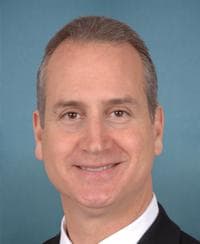
Mario Diaz-Balart
Republican Representative
Florida
Appropriations Committee
- Introduced
- In Committee
- On Floor
- Passed Chamber
- Enacted
This bill, H.R. 8595, makes appropriations for **national security**, the **Department of State**, and related programs for the **fiscal year ending September 30, 2027**. It outlines specific funding levels and conditions for various federal agencies and international initiatives. The legislation aims to support U.S. foreign policy objectives, maintain diplomatic presence, and provide assistance globally. For the **Department of State**, significant funds are allocated to diplomatic programs, including human resources, overseas operations, and security activities, with a substantial portion for Worldwide Security Protection. The bill also funds the Capital Investment Fund, educational and cultural exchange programs like Fulbright, and extraordinary protective services for foreign missions and officials. International communications activities, including broadcasting to Cuba, also receive dedicated funding. Contributions to **international organizations** are detailed, covering annual obligations and **international peacekeeping activities**. These contributions come with strict conditions, such as prior notification for new peacekeeping missions and certifications regarding the prevention of human rights abuses by UN personnel. Various international commissions, including the International Boundary and Water Commission, also receive funding for their operations and construction projects. Under **bilateral economic assistance**, substantial amounts are appropriated for **global health programs**, including initiatives for HIV/AIDS, tuberculosis, malaria, maternal and child health, and family planning, with specific prohibitions against funding coercive abortion or involuntary sterilization. Significant funds are also provided for **international humanitarian assistance** and the United States Emergency Refugee and Migration Assistance Fund to address disaster relief and refugee needs, including support for refugees resettling in Israel. The bill allocates funds for **national security investment programs** and the **Democracy Fund**, aimed at promoting democracy globally, particularly in adversarial countries. Independent agencies such as the Peace Corps and the Millennium Challenge Corporation also receive appropriations to carry out their respective development and assistance programs. The Department of the Treasury is allocated funds for international affairs technical assistance. **International security assistance** includes substantial funding for **international narcotics control and law enforcement**, nonproliferation, anti-terrorism, demining, and related programs. It also provides for **international military education and training** and the **foreign military financing program**, with specific allocations for countries like Israel and Jordan, and conditions on the use of defense articles and services. For **export and investment assistance**, the Export-Import Bank of the United States and the United States **International Development Finance Corporation** (DFC) are funded. These entities support U.S. economic interests abroad through direct loans, loan guarantees, and insurance programs, with the DFC focusing on development finance activities in various countries. General provisions establish critical **oversight mechanisms** and limitations. These include **notification requirements** for changes in programs, projects, and activities, as well as for reprogramming funds, ensuring congressional awareness and approval. Prohibitions are placed on direct funding for certain countries like Cuba, North Korea, and Iran, and on assistance to governments that have experienced military coups. Further policy directives address **financial transparency**, **anti-corruption**, and **human rights**. The bill mandates requirements for direct government-to-government assistance, fiscal transparency reports, and makes foreign officials involved in significant corruption or gross human rights violations ineligible for entry into the U.S. It also includes provisions related to the extraction of natural resources and public disclosure requirements. The legislation promotes **democracy programs** and **international religious freedom**, with dedicated funding for these initiatives, particularly in countries with significant challenges. Special provisions cover forensic assistance, support for genocide memorial sites, and strict regulations for the Exchange Visitor Program and partner vetting processes. Specific regional assistance conditions are outlined for the Middle East, including aid for Egypt, Iran, Israel, Jordan, Lebanon, Syria, and the West Bank/Gaza, with detailed limitations and certifications related to security, political stability, and counter-terrorism efforts. For Africa, conditions are set for the Great Lakes Region, Nigeria, South Africa, South Sudan, and Sudan, often tied to governance, human rights, and peace agreements. In East Asia and the Pacific, the bill addresses assistance for Burma, supports the **Indo-Pacific Strategy** and a **Countering PRC Influence Fund**, and includes provisions for North Korea, Pacific Islands countries, and the Philippines. It also allocates significant **foreign military financing** for **Taiwan** and funds for Tibetan communities, while imposing prohibitions related to the People's Republic of China. For Latin America and the Caribbean, assistance is prioritized for countries countering **fentanyl** trafficking, respecting democracy, and offsetting migration, with specific conditions for Colombia, Cuba (including prohibitions on supporting Cuban military institutions), Haiti, Mexico (regarding water deliveries and counternarcotics), Nicaragua, and the Caribbean Basin Security Initiative. Europe and Eurasia provisions include the application of the Freedom Support Act and measures to counter **Russian influence** and aggression, with prohibitions on assistance to the Russian Federation and countries supporting its annexation of Ukrainian territory. Extensive provisions govern the **United Nations** and other **international organizations**, emphasizing **transparency** and **accountability**. The bill restricts funding for organizations that do not meet specific audit and whistleblower protection standards, and explicitly prohibits contributions to the UN Human Rights Council, **UNRWA**, the International Criminal Court, and the World Health Organization, among others. It also includes measures to prevent sexual exploitation in peacekeeping operations and procurement restrictions related to the Russian Federation. Additional policy limitations include prohibitions on displaying certain flags at Department of State facilities, restrictions on programs promoting specific **DEI** or **gender ideology** concepts, and mandates against COVID-19 mask or vaccine requirements. The bill also contains provisions related to **internet freedom**, the use of funds for torture, aircraft transfers, international monetary fund policies, and extradition. Finally, the bill includes **rescissions** of unobligated balances from prior appropriations for Consular and Border Security Programs, International Disaster Assistance, and the Millennium Challenge Corporation.
Amendments (9)
HAMDT 231
On agreeing to the Diaz-Balart amendments (A001) Agreed to by voice vote.
HAMDT 232
On agreeing to the Boebert amendment (A002) Failed by recorded vote: 79 - 348 (Roll no. 241).
HAMDT 234
On agreeing to the Fine amendment (A004) Failed by recorded vote: 178 - 247 (Roll no. 242).
HAMDT 235
On agreeing to the Massie amendment (A005) Failed by recorded vote: 104 - 314, 10 Present (Roll no. 243).
HAMDT 236
On agreeing to the Massie amendment (A006) Failed by recorded vote: 6 - 421 (Roll no. 244).
HAMDT 237
On agreeing to the Roy amendment (A007) Failed by recorded vote: 136 - 291 (Roll no. 245).
Suggested Questions
Get AI-generated questions to help you understand this bill better
Timeline
Placed on the Union Calendar, Calendar No. 547.
The House Committee on Appropriations reported an original measure, H. Rept. 119-631, by Mr. Diaz-Balart.
Rules Committee Resolution H. Res. 1377 Reported to House. Rule provides for consideration of H.R. 1181, H.R. 9022, H.R. 8595 and H.R. 9237. The resolution provides for consideration of H.R. 1181 and H.R. 9237 under a closed rule and H.R. 9022 and H.R. 8595 under a structured rule. The resolution provides for one hour of general debate and one motion to recommit on each bill.
Rules Committee Resolution H. Res. 1398 Reported to House. Rule provides for consideration of H.R. 8800, H.R. 8595, H.R. 8884 and H. Res. 1383. The resolution provides for consideration of H.R. 8800 and H.R. 8595 under a structured rule, and H.R. 8884 and H. Res. 1383 under a closed rule. The resolution provides for one hour of general debate on each measure and one motion to recommit on H.R. 8800, H.R. 8595, and H.R. 8884.
Rules Committee Resolution H. Res. 1423 Reported to House. Rule provides for consideration of H.R. 139, H.R. 8595, H.R. 9237 and H.R. 1181. The resolution provides for consideration of H.R. 139, H.R. 9237, and H.R. 1181 under a closed rule, and H.R. 8595 under a structured rule with one hour of debate and one motion to reconsider on each bill.
Considered under the provisions of rule H. Res. 1423.
Considered under the provisions of rule H. Res. 1423. (consideration: CR H4480-4528)
Rule provides for consideration of H.R. 139, H.R. 8595, H.R. 9237 and H.R. 1181. The resolution provides for consideration of H.R. 139, H.R. 9237, and H.R. 1181 under a closed rule, and H.R. 8595 under a structured rule with one hour of debate and one motion to reconsider on each bill.
House resolved itself into the Committee of the Whole House on the state of the Union pursuant to H. Res. 1423 and Rule XVIII.
The Speaker designated the Honorable Jimmy Patronis to act as Chairman of the Committee.
GENERAL DEBATE - The Committee of the Whole proceeded with one hour of general debate on H.R. 8595.
DEBATE - Pursuant to the provisions of H.Res. 1423, the Committee of the Whole proceeded with 20 minutes of debate on the Diaz-Balart amendment en bloc.
DEBATE - Pursuant to the provisions of H.Res. 1423, the Committee of the Whole proceeded with 10 minutes of debate on the Boebert amendment No. 1.
POSTPONED PROCEEDINGS - At the conclusion of debate on the Boebert amendment No. 1, the Chair put the question on agreeing to the amendment and by voice vote, announced that the noes had prevailed. Ms. Boebert demanded a recorded vote and the Chair postponed further proceedings until a time to be announced.
DEBATE - Pursuant to the provisions of H.Res. 1423, the Committee of the Whole proceeded with 10 minutes of debate on the Crane amendment No. 4.
DEBATE - Pursuant to the provisions of H.Res. 1423, the Committee of the Whole proceeded with 10 minutes of debate on the Fine amendment No. 6.
POSTPONED PROCEEDINGS - At the conclusion of debate on the Fine amendment No. 6, the Chair put the question on agreeing to the amendment and by voice vote, announced that the ayes had prevailed. Ms. Lois Frankel (FL) demanded a recorded vote and the Chair postponed further proceedings until a time to be announced.
DEBATE - Pursuant to the provisions of H.Res. 1423, the Committee of the Whole proceeded with 10 minutes of debate on the Massie amendment No. 8.
POSTPONED PROCEEDINGS - At the conclusion of debate on the Massie amendment No. 8, the Chair put the question on agreeing to the amendment and by voice vote, announced that the noes had prevailed. Mr. Massie demanded a recorded vote and the Chair postponed further proceedings until a time to be announced.
DEBATE - Pursuant to the provisions of H.Res. 1423, the Committee of the Whole proceeded with 10 minutes of debate on the Massie amendment No. 9.
POSTPONED PROCEEDINGS - At the conclusion of debate on the Massie amendment No. 9, the Chair put the question on agreeing to the amendment and by voice vote, announced that the noes had prevailed. Mr. Massie demanded a recorded vote and the Chair postponed further proceedings until a time to be announced.
DEBATE - Pursuant to the provisions of H.Res. 1423, the Committee of the Whole proceeded with 10 minutes of debate on the Roy amendment No. 20.
POSTPONED PROCEEDINGS - At the conclusion of debate on the Roy amendment No. 20, the Chair put the question on agreeing to the amendment and by voice vote, announced that the ayes had prevailed. Ms. Lois Frankel (FL) demanded a recorded vote and the Chair postponed further proceedings until a time to be announced.
DEBATE - Pursuant to the provisions of H.Res. 1423, the Committee of the Whole proceeded with 10 minutes of debate on the Steube amendment No. 27.
DEBATE - Pursuant to the provisions of H.Res. 1423, the Committee of the Whole proceeded with 10 minutes of debate on the Tenney amendment No. 28.
Mr. Diaz-Balart moved that the committee rise.
On motion that the committee rise Agreed to by voice vote.
Committee of the Whole House on the state of the Union rises leaving H.R. 8595 as unfinished business.
Considered as unfinished business.
The House resolved into Committee of the Whole House on the state of the Union for further consideration.
On Agreeing to the Amendment: Failed
View VoteOn Agreeing to the Amendment: Failed
View VoteOn Agreeing to the Amendment: Failed
View VoteOn Agreeing to the Amendment: Failed
View VoteOn Agreeing to the Amendment: Failed
View VoteThe House rose from the Committee of the Whole House on the state of the Union to report H.R. 8595.
The previous question was ordered pursuant to the rule.
The House adopted the amendments en gros as agreed to by the Committee of the Whole House on the state of the Union.
Mr. Amo moved to recommit to the Committee on Appropriations.
The previous question on the motion to recommit was ordered pursuant to clause 2(b) of rule XIX.
On motion to recommit Failed by the Yeas and Nays: 209 - 216 (Roll no. 246).
View VoteOn passage Passed by the Yeas and Nays: 217 - 209 (Roll no. 247).
View VoteMotion to reconsider laid on the table Agreed to without objection.
Received in the Senate.
Economics and Public Finance
Accounting and auditingAfghanistanAfricaAfrican Development FoundationAlliancesAppropriationsArab-Israeli relationsArea studies and international educationArms control and nonproliferationAsiaAviation and airportsBroadcasting, cable, digital technologiesBurmaCanadaCaribbean areaCentral AmericaChild healthChinaCollective securityColombiaComputer security and identity theftCongressional oversightCrime preventionCrimes against childrenCrimes against womenCrime victimsCubaCurrencyCustoms enforcementDepartment of StateDepartment of the TreasuryDiplomacy, foreign officials, Americans abroadDistrict of ColumbiaDrug trafficking and controlled substancesEducation programs fundingEgyptElementary and secondary educationEl SalvadorEmergency planning and evacuationEuropeExecutive agency funding and structureExecutive Office of the PresidentExport-Import Bank of the United StatesFamily planning and birth controlFijiFood supply, safety, and labelingForeign aid and international reliefForeign and international corporationsForeign loans and debtFraud offenses and financial crimesGeorgia (Republic)Government buildings, facilities, and propertyGovernment employee pay, benefits, personnel managementGovernment ethics and transparency, public corruptionGovernment information and archivesGovernment lending and loan guaranteesGovernment studies and investigationsGovernment trust fundsGuatemalaHaitiHealth programs administration and fundingHealth promotion and preventive careHigher educationHistoric sites and heritage areasHIV/AIDSHondurasHouse of RepresentativesHuman rightsHuman traffickingImmunology and vaccinationInfectious and parasitic diseasesIntelligence activities, surveillance, classified informationInter-American FoundationInternational exchange and broadcastingInternational law and treatiesInternational monetary system and foreign exchangeInternational organizations and cooperationInternet, web applications, social mediaIranIsraelJordanKiribatiLand use and conservationLatin AmericaLaw enforcement administration and fundingLebanonMarine and coastal resources, fisheriesMarshall IslandsMexicoMicronesiaMiddle EastMilitary assistance, sales, and agreementsMilitary education and trainingMonuments and memorialsMotor vehiclesMultilateral development programsNational and community serviceNauruNicaraguaNorth AmericaNorth KoreaNutrition and dietOrganization of American StatesPalauPalestiniansPapua New GuineaPeace CorpsPhilippinesPipelinesProperty rightsProtection of officialsPublic contracts and procurementReconstruction and stabilizationRefugees, asylum, displaced personsReligionRussiaSamoaSex and reproductive healthSex offensesSmuggling and traffickingSolomon IslandsSouth AfricaSovereignty, recognition, national governance and statusStrategic materials and reservesStudent aid and college costsSudanSyriaTaiwanTerrorismTibetTongaTrade and Development AgencyTransportation costsTurkeyTuvaluUnited NationsU.S. Commission on International Religious FreedomUser charges and feesU.S. International Development Finance CorporationVanuatuVenezuelaVisas and passportsWar crimes, genocide, crimes against humanityWater qualityWater resources fundingWater use and supplyWest BankWildlife conservation and habitat protectionWomen in businessWomen's healthWomen's rightsWorld health
Making appropriations for national security, Department of State, and related programs for the fiscal year ending September 30, 2027, and for other purposes.
USA119th CongressHR-8595| House
| Updated: 7/29/2026
This bill, H.R. 8595, makes appropriations for **national security**, the **Department of State**, and related programs for the **fiscal year ending September 30, 2027**. It outlines specific funding levels and conditions for various federal agencies and international initiatives. The legislation aims to support U.S. foreign policy objectives, maintain diplomatic presence, and provide assistance globally. For the **Department of State**, significant funds are allocated to diplomatic programs, including human resources, overseas operations, and security activities, with a substantial portion for Worldwide Security Protection. The bill also funds the Capital Investment Fund, educational and cultural exchange programs like Fulbright, and extraordinary protective services for foreign missions and officials. International communications activities, including broadcasting to Cuba, also receive dedicated funding. Contributions to **international organizations** are detailed, covering annual obligations and **international peacekeeping activities**. These contributions come with strict conditions, such as prior notification for new peacekeeping missions and certifications regarding the prevention of human rights abuses by UN personnel. Various international commissions, including the International Boundary and Water Commission, also receive funding for their operations and construction projects. Under **bilateral economic assistance**, substantial amounts are appropriated for **global health programs**, including initiatives for HIV/AIDS, tuberculosis, malaria, maternal and child health, and family planning, with specific prohibitions against funding coercive abortion or involuntary sterilization. Significant funds are also provided for **international humanitarian assistance** and the United States Emergency Refugee and Migration Assistance Fund to address disaster relief and refugee needs, including support for refugees resettling in Israel. The bill allocates funds for **national security investment programs** and the **Democracy Fund**, aimed at promoting democracy globally, particularly in adversarial countries. Independent agencies such as the Peace Corps and the Millennium Challenge Corporation also receive appropriations to carry out their respective development and assistance programs. The Department of the Treasury is allocated funds for international affairs technical assistance. **International security assistance** includes substantial funding for **international narcotics control and law enforcement**, nonproliferation, anti-terrorism, demining, and related programs. It also provides for **international military education and training** and the **foreign military financing program**, with specific allocations for countries like Israel and Jordan, and conditions on the use of defense articles and services. For **export and investment assistance**, the Export-Import Bank of the United States and the United States **International Development Finance Corporation** (DFC) are funded. These entities support U.S. economic interests abroad through direct loans, loan guarantees, and insurance programs, with the DFC focusing on development finance activities in various countries. General provisions establish critical **oversight mechanisms** and limitations. These include **notification requirements** for changes in programs, projects, and activities, as well as for reprogramming funds, ensuring congressional awareness and approval. Prohibitions are placed on direct funding for certain countries like Cuba, North Korea, and Iran, and on assistance to governments that have experienced military coups. Further policy directives address **financial transparency**, **anti-corruption**, and **human rights**. The bill mandates requirements for direct government-to-government assistance, fiscal transparency reports, and makes foreign officials involved in significant corruption or gross human rights violations ineligible for entry into the U.S. It also includes provisions related to the extraction of natural resources and public disclosure requirements. The legislation promotes **democracy programs** and **international religious freedom**, with dedicated funding for these initiatives, particularly in countries with significant challenges. Special provisions cover forensic assistance, support for genocide memorial sites, and strict regulations for the Exchange Visitor Program and partner vetting processes. Specific regional assistance conditions are outlined for the Middle East, including aid for Egypt, Iran, Israel, Jordan, Lebanon, Syria, and the West Bank/Gaza, with detailed limitations and certifications related to security, political stability, and counter-terrorism efforts. For Africa, conditions are set for the Great Lakes Region, Nigeria, South Africa, South Sudan, and Sudan, often tied to governance, human rights, and peace agreements. In East Asia and the Pacific, the bill addresses assistance for Burma, supports the **Indo-Pacific Strategy** and a **Countering PRC Influence Fund**, and includes provisions for North Korea, Pacific Islands countries, and the Philippines. It also allocates significant **foreign military financing** for **Taiwan** and funds for Tibetan communities, while imposing prohibitions related to the People's Republic of China. For Latin America and the Caribbean, assistance is prioritized for countries countering **fentanyl** trafficking, respecting democracy, and offsetting migration, with specific conditions for Colombia, Cuba (including prohibitions on supporting Cuban military institutions), Haiti, Mexico (regarding water deliveries and counternarcotics), Nicaragua, and the Caribbean Basin Security Initiative. Europe and Eurasia provisions include the application of the Freedom Support Act and measures to counter **Russian influence** and aggression, with prohibitions on assistance to the Russian Federation and countries supporting its annexation of Ukrainian territory. Extensive provisions govern the **United Nations** and other **international organizations**, emphasizing **transparency** and **accountability**. The bill restricts funding for organizations that do not meet specific audit and whistleblower protection standards, and explicitly prohibits contributions to the UN Human Rights Council, **UNRWA**, the International Criminal Court, and the World Health Organization, among others. It also includes measures to prevent sexual exploitation in peacekeeping operations and procurement restrictions related to the Russian Federation. Additional policy limitations include prohibitions on displaying certain flags at Department of State facilities, restrictions on programs promoting specific **DEI** or **gender ideology** concepts, and mandates against COVID-19 mask or vaccine requirements. The bill also contains provisions related to **internet freedom**, the use of funds for torture, aircraft transfers, international monetary fund policies, and extradition. Finally, the bill includes **rescissions** of unobligated balances from prior appropriations for Consular and Border Security Programs, International Disaster Assistance, and the Millennium Challenge Corporation.
Suggested Questions
Get AI-generated questions to help you understand this bill better
Timeline
Placed on the Union Calendar, Calendar No. 547.
The House Committee on Appropriations reported an original measure, H. Rept. 119-631, by Mr. Diaz-Balart.
Rules Committee Resolution H. Res. 1377 Reported to House. Rule provides for consideration of H.R. 1181, H.R. 9022, H.R. 8595 and H.R. 9237. The resolution provides for consideration of H.R. 1181 and H.R. 9237 under a closed rule and H.R. 9022 and H.R. 8595 under a structured rule. The resolution provides for one hour of general debate and one motion to recommit on each bill.
Rules Committee Resolution H. Res. 1398 Reported to House. Rule provides for consideration of H.R. 8800, H.R. 8595, H.R. 8884 and H. Res. 1383. The resolution provides for consideration of H.R. 8800 and H.R. 8595 under a structured rule, and H.R. 8884 and H. Res. 1383 under a closed rule. The resolution provides for one hour of general debate on each measure and one motion to recommit on H.R. 8800, H.R. 8595, and H.R. 8884.
Rules Committee Resolution H. Res. 1423 Reported to House. Rule provides for consideration of H.R. 139, H.R. 8595, H.R. 9237 and H.R. 1181. The resolution provides for consideration of H.R. 139, H.R. 9237, and H.R. 1181 under a closed rule, and H.R. 8595 under a structured rule with one hour of debate and one motion to reconsider on each bill.
Considered under the provisions of rule H. Res. 1423.
Considered under the provisions of rule H. Res. 1423. (consideration: CR H4480-4528)
Rule provides for consideration of H.R. 139, H.R. 8595, H.R. 9237 and H.R. 1181. The resolution provides for consideration of H.R. 139, H.R. 9237, and H.R. 1181 under a closed rule, and H.R. 8595 under a structured rule with one hour of debate and one motion to reconsider on each bill.
House resolved itself into the Committee of the Whole House on the state of the Union pursuant to H. Res. 1423 and Rule XVIII.
The Speaker designated the Honorable Jimmy Patronis to act as Chairman of the Committee.
GENERAL DEBATE - The Committee of the Whole proceeded with one hour of general debate on H.R. 8595.
DEBATE - Pursuant to the provisions of H.Res. 1423, the Committee of the Whole proceeded with 20 minutes of debate on the Diaz-Balart amendment en bloc.
DEBATE - Pursuant to the provisions of H.Res. 1423, the Committee of the Whole proceeded with 10 minutes of debate on the Boebert amendment No. 1.
POSTPONED PROCEEDINGS - At the conclusion of debate on the Boebert amendment No. 1, the Chair put the question on agreeing to the amendment and by voice vote, announced that the noes had prevailed. Ms. Boebert demanded a recorded vote and the Chair postponed further proceedings until a time to be announced.
DEBATE - Pursuant to the provisions of H.Res. 1423, the Committee of the Whole proceeded with 10 minutes of debate on the Crane amendment No. 4.
DEBATE - Pursuant to the provisions of H.Res. 1423, the Committee of the Whole proceeded with 10 minutes of debate on the Fine amendment No. 6.
POSTPONED PROCEEDINGS - At the conclusion of debate on the Fine amendment No. 6, the Chair put the question on agreeing to the amendment and by voice vote, announced that the ayes had prevailed. Ms. Lois Frankel (FL) demanded a recorded vote and the Chair postponed further proceedings until a time to be announced.
DEBATE - Pursuant to the provisions of H.Res. 1423, the Committee of the Whole proceeded with 10 minutes of debate on the Massie amendment No. 8.
POSTPONED PROCEEDINGS - At the conclusion of debate on the Massie amendment No. 8, the Chair put the question on agreeing to the amendment and by voice vote, announced that the noes had prevailed. Mr. Massie demanded a recorded vote and the Chair postponed further proceedings until a time to be announced.
DEBATE - Pursuant to the provisions of H.Res. 1423, the Committee of the Whole proceeded with 10 minutes of debate on the Massie amendment No. 9.
POSTPONED PROCEEDINGS - At the conclusion of debate on the Massie amendment No. 9, the Chair put the question on agreeing to the amendment and by voice vote, announced that the noes had prevailed. Mr. Massie demanded a recorded vote and the Chair postponed further proceedings until a time to be announced.
DEBATE - Pursuant to the provisions of H.Res. 1423, the Committee of the Whole proceeded with 10 minutes of debate on the Roy amendment No. 20.
POSTPONED PROCEEDINGS - At the conclusion of debate on the Roy amendment No. 20, the Chair put the question on agreeing to the amendment and by voice vote, announced that the ayes had prevailed. Ms. Lois Frankel (FL) demanded a recorded vote and the Chair postponed further proceedings until a time to be announced.
DEBATE - Pursuant to the provisions of H.Res. 1423, the Committee of the Whole proceeded with 10 minutes of debate on the Steube amendment No. 27.
DEBATE - Pursuant to the provisions of H.Res. 1423, the Committee of the Whole proceeded with 10 minutes of debate on the Tenney amendment No. 28.
Mr. Diaz-Balart moved that the committee rise.
On motion that the committee rise Agreed to by voice vote.
Committee of the Whole House on the state of the Union rises leaving H.R. 8595 as unfinished business.
Considered as unfinished business.
The House resolved into Committee of the Whole House on the state of the Union for further consideration.
On Agreeing to the Amendment: Failed
View VoteOn Agreeing to the Amendment: Failed
View VoteOn Agreeing to the Amendment: Failed
View VoteOn Agreeing to the Amendment: Failed
View VoteOn Agreeing to the Amendment: Failed
View VoteThe House rose from the Committee of the Whole House on the state of the Union to report H.R. 8595.
The previous question was ordered pursuant to the rule.
The House adopted the amendments en gros as agreed to by the Committee of the Whole House on the state of the Union.
Mr. Amo moved to recommit to the Committee on Appropriations.
The previous question on the motion to recommit was ordered pursuant to clause 2(b) of rule XIX.
On motion to recommit Failed by the Yeas and Nays: 209 - 216 (Roll no. 246).
View VoteOn passage Passed by the Yeas and Nays: 217 - 209 (Roll no. 247).
View VoteMotion to reconsider laid on the table Agreed to without objection.
Received in the Senate.
Mario Diaz-Balart
Republican Representative
Florida
Appropriations Committee
Economics and Public Finance
Related Bills
- HR 119-7296: SAVE America Act
- S 119-3752: SAVE America Act
- HRES 119-1377: Providing for consideration of the bill (H.R. 1181) to prohibit payment card networks and covered entities from requiring the use of or assigning merchant category codes that distinguish a firearms retailer from general-merchandise retailer or sporting-goods retailer, and for other purposes; providing for consideration of the bill (H.R. 9022) making appropriations for energy and water development and related agencies for the fiscal year ending September 30, 2027, and for other purposes; providing for consideration of the bill (H.R. 8595) making appropriations for national security, Department of State, and related programs for the fiscal year ending September 30, 2027, and for other purposes; and providing for consideration of the bill (H.R. 9237) to amend titles 10 and 38, United States Code, and other Federal laws, to improve benefits for veterans and the administration of the Department of Veterans Affairs.
- S 119-1383: Veterans Accessibility Advisory Committee Act of 2025
- S 119-4155: A bill to require voters to provide photo identification as a condition of casting a ballot, and for other purposes.
- HR 119-22: SAVE Act
- HRES 119-1398: Providing for consideration of the bill (H.R. 8800) to authorize appropriations for fiscal year 2027 for military activities of the Department of Defense, for military construction, and for defense activities of the Department of Energy, to prescribe military personnel strengths for such fiscal year, and for other purposes; providing for consideration of the bill (H.R. 8595) making appropriations for national security, Department of State, and related programs for the fiscal year ending September 30, 2027, and for other purposes; providing for consideration of the bill (H.R. 8884) to amend title II of the Social Security Act to reauthorize demonstration authority for the disability insurance program; providing for consideration of the resolution (H. Res. 1383) commemorating the one-year anniversary of the enactment of the Working Families Tax Cuts; and for other purposes.
- HRES 119-1423: Providing for consideration of the bill (H.R. 139) to make daylight savings time permanent, and for other purposes; providing for consideration of the bill (H.R. 8595) making appropriations for national security, Department of State, and related programs for the fiscal year ending September 30, 2027, and for other purposes; providing for consideration of the bill (H.R. 9237) to amend titles 10 and 38, United States Code, and other Federal laws, to improve benefits for veterans and the administration of the Department of Veterans Affairs; providing for consideration of the bill (H.R. 1181) to prohibit payment card networks and covered entities from requiring the use of or assigning merchant category codes that distinguish a firearms retailer from general-merchandise retailer or sporting-goods retailer, and for other purposes; and for other purposes.
- S 119-128: SAVE Act
- Introduced
- In Committee
- On Floor
- Passed Chamber
- Enacted
Amendments (9)
HAMDT 231
On agreeing to the Diaz-Balart amendments (A001) Agreed to by voice vote.
HAMDT 232
On agreeing to the Boebert amendment (A002) Failed by recorded vote: 79 - 348 (Roll no. 241).
HAMDT 234
On agreeing to the Fine amendment (A004) Failed by recorded vote: 178 - 247 (Roll no. 242).
HAMDT 235
On agreeing to the Massie amendment (A005) Failed by recorded vote: 104 - 314, 10 Present (Roll no. 243).
HAMDT 236
On agreeing to the Massie amendment (A006) Failed by recorded vote: 6 - 421 (Roll no. 244).
HAMDT 237
On agreeing to the Roy amendment (A007) Failed by recorded vote: 136 - 291 (Roll no. 245).
Accounting and auditingAfghanistanAfricaAfrican Development FoundationAlliancesAppropriationsArab-Israeli relationsArea studies and international educationArms control and nonproliferationAsiaAviation and airportsBroadcasting, cable, digital technologiesBurmaCanadaCaribbean areaCentral AmericaChild healthChinaCollective securityColombiaComputer security and identity theftCongressional oversightCrime preventionCrimes against childrenCrimes against womenCrime victimsCubaCurrencyCustoms enforcementDepartment of StateDepartment of the TreasuryDiplomacy, foreign officials, Americans abroadDistrict of ColumbiaDrug trafficking and controlled substancesEducation programs fundingEgyptElementary and secondary educationEl SalvadorEmergency planning and evacuationEuropeExecutive agency funding and structureExecutive Office of the PresidentExport-Import Bank of the United StatesFamily planning and birth controlFijiFood supply, safety, and labelingForeign aid and international reliefForeign and international corporationsForeign loans and debtFraud offenses and financial crimesGeorgia (Republic)Government buildings, facilities, and propertyGovernment employee pay, benefits, personnel managementGovernment ethics and transparency, public corruptionGovernment information and archivesGovernment lending and loan guaranteesGovernment studies and investigationsGovernment trust fundsGuatemalaHaitiHealth programs administration and fundingHealth promotion and preventive careHigher educationHistoric sites and heritage areasHIV/AIDSHondurasHouse of RepresentativesHuman rightsHuman traffickingImmunology and vaccinationInfectious and parasitic diseasesIntelligence activities, surveillance, classified informationInter-American FoundationInternational exchange and broadcastingInternational law and treatiesInternational monetary system and foreign exchangeInternational organizations and cooperationInternet, web applications, social mediaIranIsraelJordanKiribatiLand use and conservationLatin AmericaLaw enforcement administration and fundingLebanonMarine and coastal resources, fisheriesMarshall IslandsMexicoMicronesiaMiddle EastMilitary assistance, sales, and agreementsMilitary education and trainingMonuments and memorialsMotor vehiclesMultilateral development programsNational and community serviceNauruNicaraguaNorth AmericaNorth KoreaNutrition and dietOrganization of American StatesPalauPalestiniansPapua New GuineaPeace CorpsPhilippinesPipelinesProperty rightsProtection of officialsPublic contracts and procurementReconstruction and stabilizationRefugees, asylum, displaced personsReligionRussiaSamoaSex and reproductive healthSex offensesSmuggling and traffickingSolomon IslandsSouth AfricaSovereignty, recognition, national governance and statusStrategic materials and reservesStudent aid and college costsSudanSyriaTaiwanTerrorismTibetTongaTrade and Development AgencyTransportation costsTurkeyTuvaluUnited NationsU.S. Commission on International Religious FreedomUser charges and feesU.S. International Development Finance CorporationVanuatuVenezuelaVisas and passportsWar crimes, genocide, crimes against humanityWater qualityWater resources fundingWater use and supplyWest BankWildlife conservation and habitat protectionWomen in businessWomen's healthWomen's rightsWorld health