Advancing Policy Priorities Act
USA119th CongressHR-7315| House
| Updated: 5/20/2026
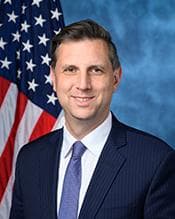
Seth Magaziner
Democratic Representative
Rhode Island
Committees (22)
• Committee on House Administration• Homeland Security Committee• Transportation and Infrastructure Committee• Small Business Committee• Ways and Means Committee• Ethics Committee• Foreign Affairs Committee• Livestock, Dairy, and Poultry Subcommittee• Agriculture Committee• Rules Committee• Financial Services Committee• Veterans' Affairs Committee• Appropriations Committee• Judiciary Committee• Armed Services Committee• Science, Space, and Technology Committee• Energy and Commerce Committee• Education and Workforce Committee• Intelligence (Permanent Select) Committee• Oversight and Government Reform Committee• Budget Committee• Natural Resources Committee
- Introduced
- In Committee
- On Floor
- Passed Chamber
- Enacted
The "Advancing Policy Priorities Act" is a comprehensive bill touching upon numerous federal policy areas. It begins by extending the Livestock Mandatory Reporting Act until 2025 and then focuses on supporting veterans by requiring education on registered apprenticeship programs for separating service members and establishing a user-friendly website to provide detailed information on these opportunities. Additionally, the bill creates the Boots to Business Program within the Small Business Administration to offer entrepreneurship training to service members, veterans, and their families, aiming to equip them with the necessary skills for business ownership. The legislation also addresses federal employee retirement and whistleblower protections. It allows certain federal employees in covered positions, such as law enforcement and firefighters, who become ill or injured on duty and are subsequently reassigned to non-covered roles within the same agency, to retain creditable service for retirement purposes. A sense of Congress emphasizes the importance of retaining these individuals' specialized knowledge. Furthermore, the bill amends the House of Representatives' Code of Official Conduct to prohibit the knowing disclosure of whistleblower identities, with specific exceptions and safeguards. A significant portion of the bill is dedicated to enhancing retirement savings. It mandates automatic enrollment for new 401(k) and 403(b) plans, with escalating contribution percentages, while providing exceptions for small businesses and existing plans. Small employers receive increased tax credits for pension plan startup costs and an additional credit for employer contributions, alongside a new tax credit for making military spouses immediately eligible for retirement plans. The bill also promotes and enhances the Saver's Credit by setting a flat 50% rate and adjusting income thresholds, and it modernizes 403(b) plans by allowing investment in group trusts and aligning hardship withdrawal rules with 401(k)s. Further retirement provisions include gradually increasing the Required Minimum Distribution (RMD) age from 72 to 75 and indexing IRA catch-up contribution limits for inflation. It introduces higher catch-up contribution limits for individuals aged 62-64 in 401(k) and SIMPLE plans. A notable change allows employers to make matching contributions based on an employee's qualified student loan payments , encouraging retirement savings while addressing student debt. Regulations for Qualifying Longevity Annuity Contracts (QLACs) are to be amended to remove the 25% premium limit, facilitate joint and survivor benefits after divorce, and permit a 90-day free look period. Plan administration and compliance are also streamlined. The bill improves retirement coverage for part-time workers by reducing the service requirement for plan participation. It modifies rules for Employee Stock Ownership Plans (ESOPs), including allowing S corporation shareholders to defer capital gains on stock sales to an ESOP and expanding the definition of publicly traded securities. New rules are established for the recovery of inadvertent retirement plan overpayments, providing fiduciaries with discretion and setting limits on recoupment from participants. The Employee Plans Compliance Resolution System (EPCRS) is expanded to allow self-correction of more inadvertent failures, including for IRAs, and a Retirement Savings Lost and Found database is to be established at the Department of Labor to help individuals locate their benefits. Other key measures include increasing the dollar limit for mandatory distributions from $5,000 to $7,000 and allowing a one-time election for qualified charitable distributions from IRAs to split-interest entities. It expands penalty-free early withdrawals for private sector firefighters and creates a new exclusion from gross income for certain disability-related retirement payments for first responders. The bill also introduces a new exception to the 10% early withdrawal penalty for distributions to domestic abuse victims , allowing up to $10,000 to be withdrawn penalty-free and repaid within three years. Beyond retirement, the bill addresses homeland security, infrastructure, and economic security. It increases penalties for human trafficking and coercion occurring in school zones or near institutions of higher education. The Department of Homeland Security is directed to implement a uniform review process for grant applications seeking to purchase non-standard equipment. The Federal Maritime Commission is tasked with conducting a study on how foreign ownership of marine terminals at major U.S. container ports affects economic security. Additionally, the SelectUSA program is directed to coordinate with state economic development organizations and report on increasing foreign direct investment in the semiconductor supply chain . Finally, the bill extends NASA's enhanced use leasing authority until December 31, 2033, and modifies the frequency of board meetings for federal credit unions based on their financial ratings. It also includes a requirement for House standing committees to hold hearings on the implementation of the Act and provides specific appropriations for various federal programs, including telehealth resources for skilled nursing facilities and the Energy Information Administration.
View Full TextSuggested Questions
Get AI-generated questions to help you understand this bill better
Timeline
Introduced in House
Referred to the Committee on Ways and Means, and in addition to the Committees on Veterans' Affairs, Armed Services, Energy and Commerce, Transportation and Infrastructure, Financial Services, Education and Workforce, Oversight and Government Reform, Foreign Affairs, Agriculture, Natural Resources, Small Business, Science, Space, and Technology, the Judiciary, Homeland Security, Intelligence (Permanent Select), House Administration, Rules, Ethics, the Budget, and Appropriations, for a period to be subsequently determined by the Speaker, in each case for consideration of such provisions as fall within the jurisdiction of the committee concerned.
Referred to the Subcommittee on Livestock, Dairy, and Poultry.
Government Operations and Politics
Advancing Policy Priorities Act
USA119th CongressHR-7315| House
| Updated: 5/20/2026
The "Advancing Policy Priorities Act" is a comprehensive bill touching upon numerous federal policy areas. It begins by extending the Livestock Mandatory Reporting Act until 2025 and then focuses on supporting veterans by requiring education on registered apprenticeship programs for separating service members and establishing a user-friendly website to provide detailed information on these opportunities. Additionally, the bill creates the Boots to Business Program within the Small Business Administration to offer entrepreneurship training to service members, veterans, and their families, aiming to equip them with the necessary skills for business ownership. The legislation also addresses federal employee retirement and whistleblower protections. It allows certain federal employees in covered positions, such as law enforcement and firefighters, who become ill or injured on duty and are subsequently reassigned to non-covered roles within the same agency, to retain creditable service for retirement purposes. A sense of Congress emphasizes the importance of retaining these individuals' specialized knowledge. Furthermore, the bill amends the House of Representatives' Code of Official Conduct to prohibit the knowing disclosure of whistleblower identities, with specific exceptions and safeguards. A significant portion of the bill is dedicated to enhancing retirement savings. It mandates automatic enrollment for new 401(k) and 403(b) plans, with escalating contribution percentages, while providing exceptions for small businesses and existing plans. Small employers receive increased tax credits for pension plan startup costs and an additional credit for employer contributions, alongside a new tax credit for making military spouses immediately eligible for retirement plans. The bill also promotes and enhances the Saver's Credit by setting a flat 50% rate and adjusting income thresholds, and it modernizes 403(b) plans by allowing investment in group trusts and aligning hardship withdrawal rules with 401(k)s. Further retirement provisions include gradually increasing the Required Minimum Distribution (RMD) age from 72 to 75 and indexing IRA catch-up contribution limits for inflation. It introduces higher catch-up contribution limits for individuals aged 62-64 in 401(k) and SIMPLE plans. A notable change allows employers to make matching contributions based on an employee's qualified student loan payments , encouraging retirement savings while addressing student debt. Regulations for Qualifying Longevity Annuity Contracts (QLACs) are to be amended to remove the 25% premium limit, facilitate joint and survivor benefits after divorce, and permit a 90-day free look period. Plan administration and compliance are also streamlined. The bill improves retirement coverage for part-time workers by reducing the service requirement for plan participation. It modifies rules for Employee Stock Ownership Plans (ESOPs), including allowing S corporation shareholders to defer capital gains on stock sales to an ESOP and expanding the definition of publicly traded securities. New rules are established for the recovery of inadvertent retirement plan overpayments, providing fiduciaries with discretion and setting limits on recoupment from participants. The Employee Plans Compliance Resolution System (EPCRS) is expanded to allow self-correction of more inadvertent failures, including for IRAs, and a Retirement Savings Lost and Found database is to be established at the Department of Labor to help individuals locate their benefits. Other key measures include increasing the dollar limit for mandatory distributions from $5,000 to $7,000 and allowing a one-time election for qualified charitable distributions from IRAs to split-interest entities. It expands penalty-free early withdrawals for private sector firefighters and creates a new exclusion from gross income for certain disability-related retirement payments for first responders. The bill also introduces a new exception to the 10% early withdrawal penalty for distributions to domestic abuse victims , allowing up to $10,000 to be withdrawn penalty-free and repaid within three years. Beyond retirement, the bill addresses homeland security, infrastructure, and economic security. It increases penalties for human trafficking and coercion occurring in school zones or near institutions of higher education. The Department of Homeland Security is directed to implement a uniform review process for grant applications seeking to purchase non-standard equipment. The Federal Maritime Commission is tasked with conducting a study on how foreign ownership of marine terminals at major U.S. container ports affects economic security. Additionally, the SelectUSA program is directed to coordinate with state economic development organizations and report on increasing foreign direct investment in the semiconductor supply chain . Finally, the bill extends NASA's enhanced use leasing authority until December 31, 2033, and modifies the frequency of board meetings for federal credit unions based on their financial ratings. It also includes a requirement for House standing committees to hold hearings on the implementation of the Act and provides specific appropriations for various federal programs, including telehealth resources for skilled nursing facilities and the Energy Information Administration.
View Full TextSuggested Questions
Get AI-generated questions to help you understand this bill better
Timeline
Introduced in House
Referred to the Committee on Ways and Means, and in addition to the Committees on Veterans' Affairs, Armed Services, Energy and Commerce, Transportation and Infrastructure, Financial Services, Education and Workforce, Oversight and Government Reform, Foreign Affairs, Agriculture, Natural Resources, Small Business, Science, Space, and Technology, the Judiciary, Homeland Security, Intelligence (Permanent Select), House Administration, Rules, Ethics, the Budget, and Appropriations, for a period to be subsequently determined by the Speaker, in each case for consideration of such provisions as fall within the jurisdiction of the committee concerned.
Referred to the Subcommittee on Livestock, Dairy, and Poultry.
Seth Magaziner
Democratic Representative
Rhode Island
Committees (22)
• Committee on House Administration• Homeland Security Committee• Transportation and Infrastructure Committee• Small Business Committee• Ways and Means Committee• Ethics Committee• Foreign Affairs Committee• Livestock, Dairy, and Poultry Subcommittee• Agriculture Committee• Rules Committee• Financial Services Committee• Veterans' Affairs Committee• Appropriations Committee• Judiciary Committee• Armed Services Committee• Science, Space, and Technology Committee• Energy and Commerce Committee• Education and Workforce Committee• Intelligence (Permanent Select) Committee• Oversight and Government Reform Committee• Budget Committee• Natural Resources Committee
Government Operations and Politics
- Introduced
- In Committee
- On Floor
- Passed Chamber
- Enacted