End the Deep State Act
USA119th CongressHR-697| House
| Updated: 1/23/2025
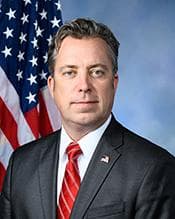
Andrew Ogles
Republican Representative
Tennessee
Cosponsors (8)
Oversight and Government Reform Committee
- Introduced
- In Committee
- On Floor
- Passed Chamber
- Enacted
This bill aims to enhance accountability within the federal workforce by establishing a new category of excepted service positions. It creates "Schedule Policy/Career," often referred to as "Schedule F," for federal employees in roles deemed confidential, policy-determining, policy-making, or policy-advocating. A key aspect is that these positions are not typically subject to change with a Presidential transition, yet their occupants are expected to align with the administration's policy goals. A significant provision of the bill is that removals from Schedule Policy/Career positions are largely exempt from the standard Civil Service Rules and Regulations, making it easier for agencies to dismiss employees. While employees in these roles are not required to offer personal or political support to the current President, they are explicitly mandated to faithfully implement administration policies . Failure to do so is grounds for dismissal, reinforcing the President's ability to ensure executive branch alignment. The legislation directs the Office of Personnel Management (OPM) to adopt regulations for this new schedule and requires executive agencies to conduct reviews to identify and reclassify appropriate positions into Schedule Policy/Career. Agencies must petition OPM to place competitive service or other excepted service positions into this new schedule if they meet the policy-related criteria. Furthermore, the bill explicitly revokes Executive Order 14003 , which had previously strengthened civil service protections for federal employees, thereby rolling back those safeguards.
View Full TextSuggested Questions
Get AI-generated questions to help you understand this bill better
Timeline
Introduced in House
Referred to the House Committee on Oversight and Government Reform.
Government Operations and Politics
Administrative law and regulatory proceduresGovernment employee pay, benefits, personnel managementGovernment information and archivesLabor-management relationsOffice of Personnel Management (OPM)
End the Deep State Act
USA119th CongressHR-697| House
| Updated: 1/23/2025
This bill aims to enhance accountability within the federal workforce by establishing a new category of excepted service positions. It creates "Schedule Policy/Career," often referred to as "Schedule F," for federal employees in roles deemed confidential, policy-determining, policy-making, or policy-advocating. A key aspect is that these positions are not typically subject to change with a Presidential transition, yet their occupants are expected to align with the administration's policy goals. A significant provision of the bill is that removals from Schedule Policy/Career positions are largely exempt from the standard Civil Service Rules and Regulations, making it easier for agencies to dismiss employees. While employees in these roles are not required to offer personal or political support to the current President, they are explicitly mandated to faithfully implement administration policies . Failure to do so is grounds for dismissal, reinforcing the President's ability to ensure executive branch alignment. The legislation directs the Office of Personnel Management (OPM) to adopt regulations for this new schedule and requires executive agencies to conduct reviews to identify and reclassify appropriate positions into Schedule Policy/Career. Agencies must petition OPM to place competitive service or other excepted service positions into this new schedule if they meet the policy-related criteria. Furthermore, the bill explicitly revokes Executive Order 14003 , which had previously strengthened civil service protections for federal employees, thereby rolling back those safeguards.
View Full TextSuggested Questions
Get AI-generated questions to help you understand this bill better
Timeline
Introduced in House
Referred to the House Committee on Oversight and Government Reform.
Andrew Ogles
Republican Representative
Tennessee
Cosponsors (8)
Oversight and Government Reform Committee
Government Operations and Politics
- Introduced
- In Committee
- On Floor
- Passed Chamber
- Enacted
Administrative law and regulatory proceduresGovernment employee pay, benefits, personnel managementGovernment information and archivesLabor-management relationsOffice of Personnel Management (OPM)