Nuclear Plant Decommissioning Act of 2025
USA119th CongressHR-6613| House
| Updated: 12/12/2025
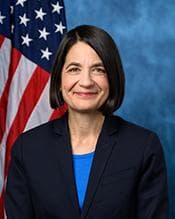
Becca Balint
Democratic Representative
Vermont
Transportation and Infrastructure Committee, Financial Services Committee, Economic Development, Public Buildings, and Emergency Management Subcommittee, Energy and Commerce Committee
- Introduced
- In Committee
- On Floor
- Passed Chamber
- Enacted
The Nuclear Plant Decommissioning Act of 2025 aims to enhance the role of State, Tribal, and local governments in the decommissioning of nuclear power plants. It amends the Atomic Energy Act of 1954 to require licensees to consult with these entities before submitting a Post-Shutdown Decommissioning Activities Report (PSDAR) or transferring a license for a covered facility. This ensures that local concerns are considered early in the decommissioning process. The bill mandates public availability of proposed PSDARs and license transfer applications, followed by a minimum 90-day public comment period and at least two public meetings in the host State. The Nuclear Regulatory Commission (NRC) must then notify the host State, allowing it to submit a statement of support, conditional support, or nonsupport for the proposed plan. The NRC's determination of adequacy for a PSDAR or license transfer must consider these inputs, along with factors like protection of human health and the environment, public safety, and financial assurance. If a host State provides conditional support, the NRC must incorporate its recommended changes into the final plan, unless there is clear and convincing evidence that the changes violate applicable law or their costs substantially outweigh their benefits. Furthermore, the bill requires that any approved PSDAR or license transfer include a provision for the licensee to comply with applicable State environmental laws that are more restrictive than Federal laws regarding air, water, soil quality, or radiological standards. This ensures a higher level of environmental protection during decommissioning. To further support community engagement, the bill establishes two grant programs for Community Advisory Boards (CABs). A short-term program provides $12.5 million for fiscal years 2026-2028 to States and Indian Tribes to fund CAB activities in areas with recently decommissioned plants. A long-term program creates a Community Advisory Board Fund, financed by a $500,000 fee paid by licensees for each nuclear power plant when submitting a PSDAR, to provide ongoing support for CABs. These grants enable CABs to hire experts, cover administrative and travel expenses, maintain websites, prepare reports, and contract for services, facilitating informed community participation. Importantly, the bill prohibits imposing cost-sharing requirements on CABs for activities benefiting small, rural, or disadvantaged communities, or when the plant itself is located in such a community. This provision aims to ensure equitable access to resources for communities most vulnerable to the impacts of decommissioning. The legislation also addresses the economic impacts on nuclear host communities. It extends funding authorization for economic development assistance under the Public Works and Economic Development Act of 1965 until 2034, expanding eligible activities to include capacity building and economic resilience. For small, rural, or disadvantaged nuclear host communities, the Federal share of project costs can be 100 percent, providing substantial support for their economic transition. A new noncompetitive grant program, administered by the Secretary of Energy, offers financial assistance to local governments with "stranded nuclear waste" at decommissioned or decommissioning plants. These grants provide $15 per kilogram of spent nuclear fuel stored, awarded annually from FY2026-2035, to offset economic and social impacts. Additionally, the bill mandates the creation of Host Community Economic Recovery Accounts, funded by licensees transferring 2% of their nuclear decommissioning trust balance (or equivalent financial assurance) annually. Funds from these economic recovery accounts are distributed as grants by the Secretary of Commerce to host communities for economic development planning and comprehensive economic development strategies. Grant processes are to begin five years before scheduled shutdown or upon certification of permanent cessation of operations, with no cost-sharing for small, rural, or disadvantaged communities. The NRC is directed to revise regulations to ensure that nuclear decommissioning trusts can adequately fund these new economic recovery accounts without compromising other legitimate decommissioning activities.
View Full TextSuggested Questions
Get AI-generated questions to help you understand this bill better
Timeline
Introduced in House
Referred to the Committee on Energy and Commerce, and in addition to the Committees on Transportation and Infrastructure, and Financial Services, for a period to be subsequently determined by the Speaker, in each case for consideration of such provisions as fall within the jurisdiction of the committee concerned.
Referred to the Subcommittee on Economic Development, Public Buildings, and Emergency Management.
Energy
Nuclear Plant Decommissioning Act of 2025
USA119th CongressHR-6613| House
| Updated: 12/12/2025
The Nuclear Plant Decommissioning Act of 2025 aims to enhance the role of State, Tribal, and local governments in the decommissioning of nuclear power plants. It amends the Atomic Energy Act of 1954 to require licensees to consult with these entities before submitting a Post-Shutdown Decommissioning Activities Report (PSDAR) or transferring a license for a covered facility. This ensures that local concerns are considered early in the decommissioning process. The bill mandates public availability of proposed PSDARs and license transfer applications, followed by a minimum 90-day public comment period and at least two public meetings in the host State. The Nuclear Regulatory Commission (NRC) must then notify the host State, allowing it to submit a statement of support, conditional support, or nonsupport for the proposed plan. The NRC's determination of adequacy for a PSDAR or license transfer must consider these inputs, along with factors like protection of human health and the environment, public safety, and financial assurance. If a host State provides conditional support, the NRC must incorporate its recommended changes into the final plan, unless there is clear and convincing evidence that the changes violate applicable law or their costs substantially outweigh their benefits. Furthermore, the bill requires that any approved PSDAR or license transfer include a provision for the licensee to comply with applicable State environmental laws that are more restrictive than Federal laws regarding air, water, soil quality, or radiological standards. This ensures a higher level of environmental protection during decommissioning. To further support community engagement, the bill establishes two grant programs for Community Advisory Boards (CABs). A short-term program provides $12.5 million for fiscal years 2026-2028 to States and Indian Tribes to fund CAB activities in areas with recently decommissioned plants. A long-term program creates a Community Advisory Board Fund, financed by a $500,000 fee paid by licensees for each nuclear power plant when submitting a PSDAR, to provide ongoing support for CABs. These grants enable CABs to hire experts, cover administrative and travel expenses, maintain websites, prepare reports, and contract for services, facilitating informed community participation. Importantly, the bill prohibits imposing cost-sharing requirements on CABs for activities benefiting small, rural, or disadvantaged communities, or when the plant itself is located in such a community. This provision aims to ensure equitable access to resources for communities most vulnerable to the impacts of decommissioning. The legislation also addresses the economic impacts on nuclear host communities. It extends funding authorization for economic development assistance under the Public Works and Economic Development Act of 1965 until 2034, expanding eligible activities to include capacity building and economic resilience. For small, rural, or disadvantaged nuclear host communities, the Federal share of project costs can be 100 percent, providing substantial support for their economic transition. A new noncompetitive grant program, administered by the Secretary of Energy, offers financial assistance to local governments with "stranded nuclear waste" at decommissioned or decommissioning plants. These grants provide $15 per kilogram of spent nuclear fuel stored, awarded annually from FY2026-2035, to offset economic and social impacts. Additionally, the bill mandates the creation of Host Community Economic Recovery Accounts, funded by licensees transferring 2% of their nuclear decommissioning trust balance (or equivalent financial assurance) annually. Funds from these economic recovery accounts are distributed as grants by the Secretary of Commerce to host communities for economic development planning and comprehensive economic development strategies. Grant processes are to begin five years before scheduled shutdown or upon certification of permanent cessation of operations, with no cost-sharing for small, rural, or disadvantaged communities. The NRC is directed to revise regulations to ensure that nuclear decommissioning trusts can adequately fund these new economic recovery accounts without compromising other legitimate decommissioning activities.
View Full TextSuggested Questions
Get AI-generated questions to help you understand this bill better
Timeline
Introduced in House
Referred to the Committee on Energy and Commerce, and in addition to the Committees on Transportation and Infrastructure, and Financial Services, for a period to be subsequently determined by the Speaker, in each case for consideration of such provisions as fall within the jurisdiction of the committee concerned.
Referred to the Subcommittee on Economic Development, Public Buildings, and Emergency Management.
Becca Balint
Democratic Representative
Vermont
Transportation and Infrastructure Committee, Financial Services Committee, Economic Development, Public Buildings, and Emergency Management Subcommittee, Energy and Commerce Committee
Energy
- Introduced
- In Committee
- On Floor
- Passed Chamber
- Enacted