Broadband for Americans through Responsible Streamlining (BARS) Act
USA119th CongressHR-6503| House
| Updated: 12/9/2025
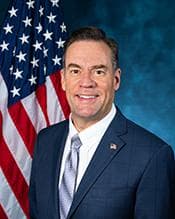
Russ Fulcher
Republican Representative
Idaho
Energy and Commerce Committee, Natural Resources Committee
- Introduced
- In Committee
- On Floor
- Passed Chamber
- Enacted
This bill streamlines the deployment of communications infrastructure by providing exemptions from certain environmental and historical preservation reviews. Specifically, it stipulates that a Federal authorization for a covered project or a covered easement will not be considered a major Federal action under the National Environmental Policy Act (NEPA) or an undertaking under the National Historic Preservation Act (NHPA). These exemptions apply to a broad range of communications facilities, including co-locations, modifications, small wireless facilities, and projects within public rights-of-way, floodplains, or brownfield sites. Exemptions for easements on federal property are granted if a previous easement existed or if the facility is located in a public right-of-way. Furthermore, modifications to existing wireless and wireline communications facilities are also explicitly exempted from these review requirements. The bill also addresses the process for tribal consultation regarding communications projects. It establishes a presumption that if an Indian Tribe receives a complete FCC Form 620 or 621 and does not act on the request within 45 days, the applicant is presumed to have made a good faith effort, and the Tribe is presumed to have disclaimed interest in the undertaking. An Indian Tribe can overcome this presumption by demonstrating that the applicant failed to follow up within a specified timeframe or that FCC regulations or forms violate a Nationwide Programmatic Agreement. Importantly, the legislation includes a rule of construction clarifying that nothing in the Act affects the Federal Communications Commission's obligation to evaluate radiofrequency exposure under NEPA.
View Full TextSuggested Questions
Get AI-generated questions to help you understand this bill better
Timeline
Introduced in House
Referred to the Committee on Energy and Commerce, and in addition to the Committee on Natural Resources, for a period to be subsequently determined by the Speaker, in each case for consideration of such provisions as fall within the jurisdiction of the committee concerned.
Broadband for Americans through Responsible Streamlining (BARS) Act
USA119th CongressHR-6503| House
| Updated: 12/9/2025
This bill streamlines the deployment of communications infrastructure by providing exemptions from certain environmental and historical preservation reviews. Specifically, it stipulates that a Federal authorization for a covered project or a covered easement will not be considered a major Federal action under the National Environmental Policy Act (NEPA) or an undertaking under the National Historic Preservation Act (NHPA). These exemptions apply to a broad range of communications facilities, including co-locations, modifications, small wireless facilities, and projects within public rights-of-way, floodplains, or brownfield sites. Exemptions for easements on federal property are granted if a previous easement existed or if the facility is located in a public right-of-way. Furthermore, modifications to existing wireless and wireline communications facilities are also explicitly exempted from these review requirements. The bill also addresses the process for tribal consultation regarding communications projects. It establishes a presumption that if an Indian Tribe receives a complete FCC Form 620 or 621 and does not act on the request within 45 days, the applicant is presumed to have made a good faith effort, and the Tribe is presumed to have disclaimed interest in the undertaking. An Indian Tribe can overcome this presumption by demonstrating that the applicant failed to follow up within a specified timeframe or that FCC regulations or forms violate a Nationwide Programmatic Agreement. Importantly, the legislation includes a rule of construction clarifying that nothing in the Act affects the Federal Communications Commission's obligation to evaluate radiofrequency exposure under NEPA.
View Full TextSuggested Questions
Get AI-generated questions to help you understand this bill better
Timeline
Introduced in House
Referred to the Committee on Energy and Commerce, and in addition to the Committee on Natural Resources, for a period to be subsequently determined by the Speaker, in each case for consideration of such provisions as fall within the jurisdiction of the committee concerned.
Russ Fulcher
Republican Representative
Idaho
Energy and Commerce Committee, Natural Resources Committee
- Introduced
- In Committee
- On Floor
- Passed Chamber
- Enacted