Go Pack Go Act of 2025
USA119th CongressHR-5165| House
| Updated: 9/4/2025
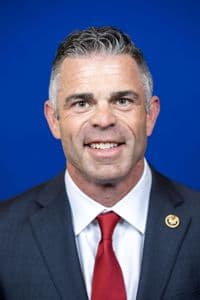
Tony Wied
Republican Representative
Wisconsin
Judiciary Committee, Energy and Commerce Committee
- Introduced
- In Committee
- On Floor
- Passed Chamber
- Enacted
This bill, known as the "Go Pack Go Act of 2025," seeks to expand access to in-State television broadcast programming for cable and satellite subscribers in specific counties. It achieves this by amending both the Communications Act of 1934 and title 17 of the United States Code, primarily focusing on how network station signals are carried. The legislation mandates that cable operators and satellite carriers in designated "covered counties" must offer subscribers a choice. Subscribers can elect to receive their existing local network station, an in-State, adjacent-market network station retransmission , or both. If a subscriber chooses only the in-State, adjacent-market retransmission, it fulfills the provider's obligation to carry a local network signal. For cable operators, these specific retransmissions are exempt from certain retransmission consent requirements and are automatically deemed significantly viewed in the covered county. Satellite carriers are also permitted to provide these retransmissions, provided it is technically feasible, and these signals will not count against existing limits on distant signal carriage. The bill defines "covered county" as one of thirteen specific counties in Wisconsin (including Ashland, Barron, and Douglas, among others) that are not within the local market of an in-state television broadcast station affiliated with the same network. This ensures that residents in these areas, who might otherwise receive out-of-state network affiliates, can access programming from their home state.
Suggested Questions
Get AI-generated questions to help you understand this bill better
Timeline
Introduced in House
Referred to the Committee on Energy and Commerce, and in addition to the Committee on the Judiciary, for a period to be subsequently determined by the Speaker, in each case for consideration of such provisions as fall within the jurisdiction of the committee concerned.
Science, Technology, Communications
Go Pack Go Act of 2025
USA119th CongressHR-5165| House
| Updated: 9/4/2025
This bill, known as the "Go Pack Go Act of 2025," seeks to expand access to in-State television broadcast programming for cable and satellite subscribers in specific counties. It achieves this by amending both the Communications Act of 1934 and title 17 of the United States Code, primarily focusing on how network station signals are carried. The legislation mandates that cable operators and satellite carriers in designated "covered counties" must offer subscribers a choice. Subscribers can elect to receive their existing local network station, an in-State, adjacent-market network station retransmission , or both. If a subscriber chooses only the in-State, adjacent-market retransmission, it fulfills the provider's obligation to carry a local network signal. For cable operators, these specific retransmissions are exempt from certain retransmission consent requirements and are automatically deemed significantly viewed in the covered county. Satellite carriers are also permitted to provide these retransmissions, provided it is technically feasible, and these signals will not count against existing limits on distant signal carriage. The bill defines "covered county" as one of thirteen specific counties in Wisconsin (including Ashland, Barron, and Douglas, among others) that are not within the local market of an in-state television broadcast station affiliated with the same network. This ensures that residents in these areas, who might otherwise receive out-of-state network affiliates, can access programming from their home state.
Suggested Questions
Get AI-generated questions to help you understand this bill better
Timeline
Introduced in House
Referred to the Committee on Energy and Commerce, and in addition to the Committee on the Judiciary, for a period to be subsequently determined by the Speaker, in each case for consideration of such provisions as fall within the jurisdiction of the committee concerned.
Tony Wied
Republican Representative
Wisconsin
Judiciary Committee, Energy and Commerce Committee
Science, Technology, Communications
Related Bills
- Introduced
- In Committee
- On Floor
- Passed Chamber
- Enacted