INNOVATE Act
USA119th CongressHR-4777| House
| Updated: 7/25/2025
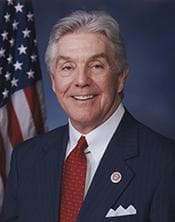
Roger Williams
Republican Representative
Texas
Cosponsors (1)
Small Business Committee, Science, Space, and Technology Committee
- Introduced
- In Committee
- On Floor
- Passed Chamber
- Enacted
The "Investing in National Next-Generation Opportunities for Venture Acceleration and Technological Excellence" or INNOVATE Act aims to significantly improve the Small Business Innovation Research (SBIR) and Small Business Technology Transfer (STTR) programs. This legislation focuses on accelerating the transition of innovative technologies, broadening participation across the United States, and enhancing the security and efficiency of these critical programs. It also extends the authorization for both the SBIR and STTR programs until fiscal year 2028 . A major component of the bill is the establishment of Phase II strategic breakthrough funding , allowing agencies with large SBIR budgets to award up to $30 million for projects without a waiver. These awards are designated for small businesses that have previously received a Phase II award, demonstrate 100% matching funds, and whose technology meets high-priority agency needs with a commitment for inclusion in acquisition programs. Eligible activities include design for manufacturing, establishing facilities, and supply chain development, with selection criteria emphasizing national security and new technologies. The bill also mandates that most SBIR and STTR contracts be firm fixed-price contracts unless a different structure is formally determined. To encourage new entrants, the bill introduces a new Phase 1A program specifically for small businesses that have never received an SBIR or STTR award, allocating 1.5% to 3% of SBIR funds for this purpose. Phase 1A proposals are streamlined, limited to five pages, and awards are capped at $40,000, with awardees becoming eligible for Phase II. The legislation also caps total Phase I and Phase II awards to a single concern at $75 million, with a national security waiver option, and limits principal investigators to one proposal per solicitation. Additionally, it shifts focus in certain program considerations to "individuals who reside in rural areas" and "new entrants," while explicitly prohibiting agencies from considering race, gender, or ethnicity in award decisions or requiring diversity statements. A new provision also requires applicants to disclose, and prohibits awards to concerns with, agreements with certain entities involved in content moderation or "fact-checking" of lawful speech. A significant focus is placed on protecting American innovation from adversarial influence by defining "foreign risk" to include various foreign affiliations with entities in "foreign countries of concern." The bill mandates that agencies evaluate national security risks and prohibits awards to small businesses with foreign risks connected to specific government watchlists. It also strengthens agency recovery authority for award amounts if intellectual property developed with SBIR/STTR funds is transferred to certain foreign entities. Additionally, the Administrator must develop best practices on investor informational rights to safeguard proprietary technology from unintentional sharing with foreign individuals or entities. The bill streamlines program administration by expanding the "Program on Innovation Open Topics" to all participating agencies and defining "open topic announcement" for broader applicability. It also aims to reduce administrative burden by limiting the number of proposals a small business can submit per solicitation and per agency annually. To improve transparency and oversight, the legislation requires enhanced data collection for SBIR and STTR awards, including tracking specific award types like Phase 1A and strategic breakthrough awards, and linking Phase III contracts to prior SBIR/STTR work.
View Full TextSuggested Questions
Get AI-generated questions to help you understand this bill better
Timeline
Latest Companion Bill Action
S 119-853Committee on Small Business and Entrepreneurship. Hearings held.
Introduced in House
Referred to the Committee on Small Business, and in addition to the Committee on Science, Space, and Technology, for a period to be subsequently determined by the Speaker, in each case for consideration of such provisions as fall within the jurisdiction of the committee concerned.
Commerce
INNOVATE Act
USA119th CongressHR-4777| House
| Updated: 7/25/2025
The "Investing in National Next-Generation Opportunities for Venture Acceleration and Technological Excellence" or INNOVATE Act aims to significantly improve the Small Business Innovation Research (SBIR) and Small Business Technology Transfer (STTR) programs. This legislation focuses on accelerating the transition of innovative technologies, broadening participation across the United States, and enhancing the security and efficiency of these critical programs. It also extends the authorization for both the SBIR and STTR programs until fiscal year 2028 . A major component of the bill is the establishment of Phase II strategic breakthrough funding , allowing agencies with large SBIR budgets to award up to $30 million for projects without a waiver. These awards are designated for small businesses that have previously received a Phase II award, demonstrate 100% matching funds, and whose technology meets high-priority agency needs with a commitment for inclusion in acquisition programs. Eligible activities include design for manufacturing, establishing facilities, and supply chain development, with selection criteria emphasizing national security and new technologies. The bill also mandates that most SBIR and STTR contracts be firm fixed-price contracts unless a different structure is formally determined. To encourage new entrants, the bill introduces a new Phase 1A program specifically for small businesses that have never received an SBIR or STTR award, allocating 1.5% to 3% of SBIR funds for this purpose. Phase 1A proposals are streamlined, limited to five pages, and awards are capped at $40,000, with awardees becoming eligible for Phase II. The legislation also caps total Phase I and Phase II awards to a single concern at $75 million, with a national security waiver option, and limits principal investigators to one proposal per solicitation. Additionally, it shifts focus in certain program considerations to "individuals who reside in rural areas" and "new entrants," while explicitly prohibiting agencies from considering race, gender, or ethnicity in award decisions or requiring diversity statements. A new provision also requires applicants to disclose, and prohibits awards to concerns with, agreements with certain entities involved in content moderation or "fact-checking" of lawful speech. A significant focus is placed on protecting American innovation from adversarial influence by defining "foreign risk" to include various foreign affiliations with entities in "foreign countries of concern." The bill mandates that agencies evaluate national security risks and prohibits awards to small businesses with foreign risks connected to specific government watchlists. It also strengthens agency recovery authority for award amounts if intellectual property developed with SBIR/STTR funds is transferred to certain foreign entities. Additionally, the Administrator must develop best practices on investor informational rights to safeguard proprietary technology from unintentional sharing with foreign individuals or entities. The bill streamlines program administration by expanding the "Program on Innovation Open Topics" to all participating agencies and defining "open topic announcement" for broader applicability. It also aims to reduce administrative burden by limiting the number of proposals a small business can submit per solicitation and per agency annually. To improve transparency and oversight, the legislation requires enhanced data collection for SBIR and STTR awards, including tracking specific award types like Phase 1A and strategic breakthrough awards, and linking Phase III contracts to prior SBIR/STTR work.
View Full TextSuggested Questions
Get AI-generated questions to help you understand this bill better
Timeline
Latest Companion Bill Action
S 119-853Committee on Small Business and Entrepreneurship. Hearings held.
Introduced in House
Referred to the Committee on Small Business, and in addition to the Committee on Science, Space, and Technology, for a period to be subsequently determined by the Speaker, in each case for consideration of such provisions as fall within the jurisdiction of the committee concerned.
Roger Williams
Republican Representative
Texas
Cosponsors (1)
Small Business Committee, Science, Space, and Technology Committee
Commerce
- Introduced
- In Committee
- On Floor
- Passed Chamber
- Enacted