Helping More Families Save Act
USA119th CongressHR-4385| House
| Updated: 7/14/2025
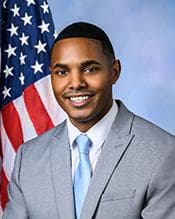
Ritchie Torres
Democratic Representative
New York
Cosponsors (8)
Financial Services Committee
- Introduced
- In Committee
- On Floor
- Passed Chamber
- Enacted
The "Helping More Families Save Act" establishes the Family Self-Sufficiency Escrow Expansion Pilot Program, designed to assist low-income families in achieving economic independence. The Secretary of Housing and Urban Development will select up to 25 eligible entities to manage interest-bearing escrow accounts for a maximum of 5,000 families receiving housing assistance. This pilot aims to improve the existing family self-sufficiency framework by directly incentivizing earned income growth without requiring a standard contract or training plan. Under the program, eligible entities will deposit into these escrow accounts an amount equal to any increase in a family's rent attributable to their increased earned income. Families can withdraw these funds, including earned interest, after ceasing welfare assistance, typically between five and seven years after the account's establishment, or earlier for approved self-sufficiency goals . Importantly, increased earned income during the pilot will not negatively impact eligibility for other HUD benefits. Participation is voluntary, with entities required to notify families, explain the program's impact, and provide clear opt-out options. The Secretary is mandated to conduct a study eight years after entity selection to evaluate the program's effectiveness in fostering economic independence. The pilot program is authorized for ten years, with $5,000,000 appropriated for technical assistance and evaluation in fiscal year 2026.
View Full TextSuggested Questions
Get AI-generated questions to help you understand this bill better
Timeline
Introduced in House
Referred to the House Committee on Financial Services.
Housing and Community Development
Helping More Families Save Act
USA119th CongressHR-4385| House
| Updated: 7/14/2025
The "Helping More Families Save Act" establishes the Family Self-Sufficiency Escrow Expansion Pilot Program, designed to assist low-income families in achieving economic independence. The Secretary of Housing and Urban Development will select up to 25 eligible entities to manage interest-bearing escrow accounts for a maximum of 5,000 families receiving housing assistance. This pilot aims to improve the existing family self-sufficiency framework by directly incentivizing earned income growth without requiring a standard contract or training plan. Under the program, eligible entities will deposit into these escrow accounts an amount equal to any increase in a family's rent attributable to their increased earned income. Families can withdraw these funds, including earned interest, after ceasing welfare assistance, typically between five and seven years after the account's establishment, or earlier for approved self-sufficiency goals . Importantly, increased earned income during the pilot will not negatively impact eligibility for other HUD benefits. Participation is voluntary, with entities required to notify families, explain the program's impact, and provide clear opt-out options. The Secretary is mandated to conduct a study eight years after entity selection to evaluate the program's effectiveness in fostering economic independence. The pilot program is authorized for ten years, with $5,000,000 appropriated for technical assistance and evaluation in fiscal year 2026.
View Full TextSuggested Questions
Get AI-generated questions to help you understand this bill better
Timeline
Introduced in House
Referred to the House Committee on Financial Services.
Ritchie Torres
Democratic Representative
New York
Cosponsors (8)
Financial Services Committee
Housing and Community Development
- Introduced
- In Committee
- On Floor
- Passed Chamber
- Enacted