Remittance Expense Minimization and Integrity for Transfers Act
USA119th CongressHR-4274| House
| Updated: 7/2/2025
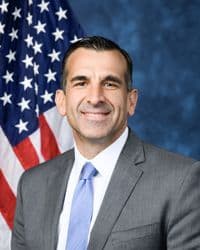
Sam T. Liccardo
Democratic Representative
California
Cosponsors (8)
Ways and Means Committee, Financial Services Committee
- Introduced
- In Committee
- On Floor
- Passed Chamber
- Enacted
This legislation seeks to regulate the imposition of federal excise taxes and fees on money transmitting businesses . It prohibits the federal government from requiring such payments unless the Secretary of the Treasury provides a specific certification to Congress. This certification must affirm that the proposed tax or fee will not exacerbate the potential for money laundering or other financial crimes. Furthermore, the Secretary must certify that the excise tax or fee will not impose an undue burden on any money transmitting business. The bill broadly defines a "money transmitting business" to include licensed senders of money, as well as those operating informal money transfer systems or networks outside conventional financial institutions. The underlying findings highlight concerns that excessive fees on legitimate remittances can drive transactions into unregulated channels, potentially increasing illicit financial activities like money laundering and terrorist financing.
View Full TextSuggested Questions
Get AI-generated questions to help you understand this bill better
Timeline
Introduced in House
Referred to the Committee on Ways and Means, and in addition to the Committee on Financial Services, for a period to be subsequently determined by the Speaker, in each case for consideration of such provisions as fall within the jurisdiction of the committee concerned.
Finance and Financial Sector
Remittance Expense Minimization and Integrity for Transfers Act
USA119th CongressHR-4274| House
| Updated: 7/2/2025
This legislation seeks to regulate the imposition of federal excise taxes and fees on money transmitting businesses . It prohibits the federal government from requiring such payments unless the Secretary of the Treasury provides a specific certification to Congress. This certification must affirm that the proposed tax or fee will not exacerbate the potential for money laundering or other financial crimes. Furthermore, the Secretary must certify that the excise tax or fee will not impose an undue burden on any money transmitting business. The bill broadly defines a "money transmitting business" to include licensed senders of money, as well as those operating informal money transfer systems or networks outside conventional financial institutions. The underlying findings highlight concerns that excessive fees on legitimate remittances can drive transactions into unregulated channels, potentially increasing illicit financial activities like money laundering and terrorist financing.
View Full TextSuggested Questions
Get AI-generated questions to help you understand this bill better
Timeline
Introduced in House
Referred to the Committee on Ways and Means, and in addition to the Committee on Financial Services, for a period to be subsequently determined by the Speaker, in each case for consideration of such provisions as fall within the jurisdiction of the committee concerned.
Sam T. Liccardo
Democratic Representative
California
Cosponsors (8)
Ways and Means Committee, Financial Services Committee
Finance and Financial Sector
- Introduced
- In Committee
- On Floor
- Passed Chamber
- Enacted