Constitutional Concealed Carry Reciprocity Act of 2025
USA119th CongressHR-38| House
| Updated: 10/3/2025
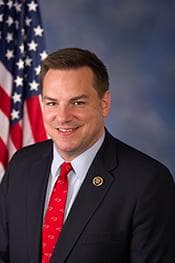
Richard Hudson
Republican Representative
North Carolina
Cosponsors (189)
Sheri Biggs (Republican)Dusty Johnson (Republican)Doug LaMalfa (Republican)Diana Harshbarger (Republican)Paul A. Gosar (Republican)Barry Moore (Republican)Adrian Smith (Republican)David Kustoff (Republican)Clay Higgins (Republican)Ryan K. Zinke (Republican)Tom Cole (Republican)Frank D. Lucas (Republican)Elise M. Stefanik (Republican)Jared F. Golden (Democratic)Trent Kelly (Republican)John R. Carter (Republican)Marjorie Taylor Greene (Republican)Tim Burchett (Republican)Guy Reschenthaler (Republican)Richard McCormick (Republican)Ashley Hinson (Republican)Jeff Crank (Republican)Brett Guthrie (Republican)Andy Harris (Republican)Steve Womack (Republican)Gregory F. Murphy (Republican)Warren Davidson (Republican)Jefferson Van Drew (Republican)David J. Taylor (Republican)Scott Franklin (Republican)Robert F. Onder (Republican)Rick W. Allen (Republican)Neal P. Dunn (Republican)Elijah Crane (Republican)Mark Alford (Republican)Thomas P. Tiffany (Republican)Robert J. Wittman (Republican)Darin LaHood (Republican)Lance Gooden (Republican)Mike Collins (Republican)Vince Fong (Republican)Keith Self (Republican)Mike Ezell (Republican)Glenn Thompson (Republican)Michael Baumgartner (Republican)Mike Carey (Republican)Stephanie I. Bice (Republican)Claudia Tenney (Republican)Mariannette Miller-Meeks (Republican)Beth Van Duyne (Republican)Aaron Bean (Republican)Andrew Ogles (Republican)Derek Schmidt (Republican)William R. Timmons (Republican)Tom McClintock (Republican)Pete Sessions (Republican)David Rouzer (Republican)Andy Biggs (Republican)Brandon Gill (Republican)Tim Walberg (Republican)Brad Knott (Republican)John James (Republican)Earl L. "Buddy" Carter (Republican)Jeff Hurd (Republican)Nathaniel Moran (Republican)Ken Calvert (Republican)Michael A. Rulli (Republican)Brian Jack (Republican)J. French Hill (Republican)Scott Perry (Republican)Rudy Yakym (Republican)Jason Smith (Republican)Dan Newhouse (Republican)Lloyd Smucker (Republican)Morgan Luttrell (Republican)Barry Loudermilk (Republican)Gus M. Bilirakis (Republican)Anna Paulina Luna (Republican)Ronny Jackson (Republican)Daniel Meuser (Republican)Don Bacon (Republican)Andy Barr (Republican)James R. Baird (Republican)Darrell Issa (Republican)Mike Flood (Republican)Jefferson Shreve (Republican)Carol D. Miller (Republican)Jodey C. Arrington (Republican)Joe Wilson (Republican)Pat Fallon (Republican)Jake Ellzey (Republican)Ann Wagner (Republican)Mike Kelly (Republican)Nancy Mace (Republican)Mike D. Rogers (Republican)Roger Williams (Republican)Mike Kennedy (Republican)Kat Cammack (Republican)John Joyce (Republican)Brad Finstad (Republican)Cliff Bentz (Republican)Tony Wied (Republican)Glenn Grothman (Republican)Nicholas A. Langworthy (Republican)Ron Estes (Republican)Troy E. Nehls (Republican)W. Gregory Steube (Republican)Blake D. Moore (Republican)John R. Moolenaar (Republican)Bruce Westerman (Republican)John H. Rutherford (Republican)Mark B. Messmer (Republican)Laurel M. Lee (Republican)Charles J. "Chuck" Fleischmann (Republican)Austin Scott (Republican)James Comer (Republican)Scott Fitzgerald (Republican)Daniel Webster (Republican)Harriet M. Hageman (Republican)Michael Cloud (Republican)Mark E. Green (Republican)August Pfluger (Republican)Mike Haridopolos (Republican)Nicholas J. Begich (Republican)Byron Donalds (Republican)Pat Harrigan (Republican)Gary J. Palmer (Republican)Julia Letlow (Republican)Mark E. Amodei (Republican)Troy Downing (Republican)Mary E. Miller (Republican)Tony Gonzales (Republican)Gabe Evans (Republican)Abraham J. Hamadeh (Republican)Sam Graves (Republican)Mike Bost (Republican)Russell Fry (Republican)Scott DesJarlais (Republican)Michael K. Simpson (Republican)Pete Stauber (Republican)David G. Valadao (Republican)Randy Fine (Republican)Dale W. Strong (Republican)Addison P. McDowell (Republican)Riley M. Moore (Republican)Wesley Hunt (Republican)John W. Rose (Republican)Derrick Van Orden (Republican)Dan Crenshaw (Republican)Bill Huizenga (Republican)Max L. Miller (Republican)Jay Obernolte (Republican)Randy Feenstra (Republican)Juan Ciscomani (Republican)Robert E. Latta (Republican)Marlin A. Stutzman (Republican)John J. McGuire (Republican)Kevin Hern (Republican)Tom Barrett (Republican)Burgess Owens (Republican)Randy K. Sr. Weber (Republican)Monica De La Cruz (Republican)Ben Cline (Republican)Chuck Edwards (Republican)Russ Fulcher (Republican)Mark Harris (Republican)Virginia Foxx (Republican)Ralph Norman (Republican)Robert P. Bresnahan (Republican)Erin Houchin (Republican)Harold Rogers (Republican)Andrew S. Clyde (Republican)Jimmy Patronis (Republican)Josh Brecheen (Republican)Jack Bergman (Republican)Tracey Mann (Republican)Julie Fedorchak (Republican)Michelle Fischbach (Republican)Robert B. Aderholt (Republican)Troy Balderson (Republican)Jennifer A. Kiggans (Republican)Brian Babin (Republican)Tim Moore (Republican)Cory Mills (Republican)Bryan Steil (Republican)Michael Guest (Republican)Craig A. Goldman (Republican)Vern Buchanan (Republican)Eric Burlison (Republican)
Judiciary Committee
- Introduced
- In Committee
- On Floor
- Passed Chamber
- Enacted
Constitutional Concealed Carry Reciprocity Act of 2025 amends Title 18 of the U.S. Code to grant nonresidents of a state that allows concealed carry the right to possess or carry a concealed handgun in that state. The provision requires the individual to hold a valid state license or permit that authorizes concealed carry, a photo identification document issued by the U.S. government or a state, and no federal prohibition on firearm possession. It applies only to states that either allow residents to apply for a concealed‑carry license or do not prohibit concealed carry for residents. The act explicitly preserves state authority to prohibit or restrict firearms on private property or on state and local government property, and it does not override existing state laws that allow such restrictions. A carrier who complies with the federal requirements may not be arrested or detained for violating state law unless probable cause exists that the carrier is acting outside the scope of the federal provision. In criminal proceedings, the prosecution bears the burden of proving beyond a reasonable doubt that the carrier did not meet the federal conditions, and a successful defense may award the defendant reasonable attorney’s fees. Individuals deprived of the rights granted by this section may file civil actions against any person or governmental entity that causes such deprivation, with the court awarding damages and attorney’s fees. The bill defines a handgun to include the firearm, its magazine, and loaded ammunition, and exempts carriers from the prohibitions of 18 U.S.C. § 922(q). Carriers may also carry concealed handguns on certain public lands, including: units of the National Park System units of the National Wildlife Refuge System public land under the jurisdiction of the Bureau of Land Management land administered by the Army Corps of Engineers land administered by the Bureau of Reclamation land administered by the Forest Service The amendments take effect 90 days after enactment.
Suggested Questions
Get AI-generated questions to help you understand this bill better
Timeline
Introduced in House
Referred to the House Committee on the Judiciary.
Ordered to be Reported (Amended) by the Yeas and Nays: 18 - 9.
Committee Consideration and Mark-up Session Held
Placed on the Union Calendar, Calendar No. 289.
Reported (Amended) by the Committee on Judiciary. H. Rept. 119-337.
Crime and Law Enforcement
Civil actions and liabilityFirearms and explosivesForests, forestry, treesIntergovernmental relationsJudicial procedure and administrationLand use and conservationLegal fees and court costsParks, recreation areas, trailsState and local government operationsWilderness and natural areas, wildlife refuges, wild rivers, habitats
Constitutional Concealed Carry Reciprocity Act of 2025
USA119th CongressHR-38| House
| Updated: 10/3/2025
Constitutional Concealed Carry Reciprocity Act of 2025 amends Title 18 of the U.S. Code to grant nonresidents of a state that allows concealed carry the right to possess or carry a concealed handgun in that state. The provision requires the individual to hold a valid state license or permit that authorizes concealed carry, a photo identification document issued by the U.S. government or a state, and no federal prohibition on firearm possession. It applies only to states that either allow residents to apply for a concealed‑carry license or do not prohibit concealed carry for residents. The act explicitly preserves state authority to prohibit or restrict firearms on private property or on state and local government property, and it does not override existing state laws that allow such restrictions. A carrier who complies with the federal requirements may not be arrested or detained for violating state law unless probable cause exists that the carrier is acting outside the scope of the federal provision. In criminal proceedings, the prosecution bears the burden of proving beyond a reasonable doubt that the carrier did not meet the federal conditions, and a successful defense may award the defendant reasonable attorney’s fees. Individuals deprived of the rights granted by this section may file civil actions against any person or governmental entity that causes such deprivation, with the court awarding damages and attorney’s fees. The bill defines a handgun to include the firearm, its magazine, and loaded ammunition, and exempts carriers from the prohibitions of 18 U.S.C. § 922(q). Carriers may also carry concealed handguns on certain public lands, including: units of the National Park System units of the National Wildlife Refuge System public land under the jurisdiction of the Bureau of Land Management land administered by the Army Corps of Engineers land administered by the Bureau of Reclamation land administered by the Forest Service The amendments take effect 90 days after enactment.
Suggested Questions
Get AI-generated questions to help you understand this bill better
Timeline
Introduced in House
Referred to the House Committee on the Judiciary.
Ordered to be Reported (Amended) by the Yeas and Nays: 18 - 9.
Committee Consideration and Mark-up Session Held
Placed on the Union Calendar, Calendar No. 289.
Reported (Amended) by the Committee on Judiciary. H. Rept. 119-337.
Richard Hudson
Republican Representative
North Carolina
Cosponsors (189)
Sheri Biggs (Republican)Dusty Johnson (Republican)Doug LaMalfa (Republican)Diana Harshbarger (Republican)Paul A. Gosar (Republican)Barry Moore (Republican)Adrian Smith (Republican)David Kustoff (Republican)Clay Higgins (Republican)Ryan K. Zinke (Republican)Tom Cole (Republican)Frank D. Lucas (Republican)Elise M. Stefanik (Republican)Jared F. Golden (Democratic)Trent Kelly (Republican)John R. Carter (Republican)Marjorie Taylor Greene (Republican)Tim Burchett (Republican)Guy Reschenthaler (Republican)Richard McCormick (Republican)Ashley Hinson (Republican)Jeff Crank (Republican)Brett Guthrie (Republican)Andy Harris (Republican)Steve Womack (Republican)Gregory F. Murphy (Republican)Warren Davidson (Republican)Jefferson Van Drew (Republican)David J. Taylor (Republican)Scott Franklin (Republican)Robert F. Onder (Republican)Rick W. Allen (Republican)Neal P. Dunn (Republican)Elijah Crane (Republican)Mark Alford (Republican)Thomas P. Tiffany (Republican)Robert J. Wittman (Republican)Darin LaHood (Republican)Lance Gooden (Republican)Mike Collins (Republican)Vince Fong (Republican)Keith Self (Republican)Mike Ezell (Republican)Glenn Thompson (Republican)Michael Baumgartner (Republican)Mike Carey (Republican)Stephanie I. Bice (Republican)Claudia Tenney (Republican)Mariannette Miller-Meeks (Republican)Beth Van Duyne (Republican)Aaron Bean (Republican)Andrew Ogles (Republican)Derek Schmidt (Republican)William R. Timmons (Republican)Tom McClintock (Republican)Pete Sessions (Republican)David Rouzer (Republican)Andy Biggs (Republican)Brandon Gill (Republican)Tim Walberg (Republican)Brad Knott (Republican)John James (Republican)Earl L. "Buddy" Carter (Republican)Jeff Hurd (Republican)Nathaniel Moran (Republican)Ken Calvert (Republican)Michael A. Rulli (Republican)Brian Jack (Republican)J. French Hill (Republican)Scott Perry (Republican)Rudy Yakym (Republican)Jason Smith (Republican)Dan Newhouse (Republican)Lloyd Smucker (Republican)Morgan Luttrell (Republican)Barry Loudermilk (Republican)Gus M. Bilirakis (Republican)Anna Paulina Luna (Republican)Ronny Jackson (Republican)Daniel Meuser (Republican)Don Bacon (Republican)Andy Barr (Republican)James R. Baird (Republican)Darrell Issa (Republican)Mike Flood (Republican)Jefferson Shreve (Republican)Carol D. Miller (Republican)Jodey C. Arrington (Republican)Joe Wilson (Republican)Pat Fallon (Republican)Jake Ellzey (Republican)Ann Wagner (Republican)Mike Kelly (Republican)Nancy Mace (Republican)Mike D. Rogers (Republican)Roger Williams (Republican)Mike Kennedy (Republican)Kat Cammack (Republican)John Joyce (Republican)Brad Finstad (Republican)Cliff Bentz (Republican)Tony Wied (Republican)Glenn Grothman (Republican)Nicholas A. Langworthy (Republican)Ron Estes (Republican)Troy E. Nehls (Republican)W. Gregory Steube (Republican)Blake D. Moore (Republican)John R. Moolenaar (Republican)Bruce Westerman (Republican)John H. Rutherford (Republican)Mark B. Messmer (Republican)Laurel M. Lee (Republican)Charles J. "Chuck" Fleischmann (Republican)Austin Scott (Republican)James Comer (Republican)Scott Fitzgerald (Republican)Daniel Webster (Republican)Harriet M. Hageman (Republican)Michael Cloud (Republican)Mark E. Green (Republican)August Pfluger (Republican)Mike Haridopolos (Republican)Nicholas J. Begich (Republican)Byron Donalds (Republican)Pat Harrigan (Republican)Gary J. Palmer (Republican)Julia Letlow (Republican)Mark E. Amodei (Republican)Troy Downing (Republican)Mary E. Miller (Republican)Tony Gonzales (Republican)Gabe Evans (Republican)Abraham J. Hamadeh (Republican)Sam Graves (Republican)Mike Bost (Republican)Russell Fry (Republican)Scott DesJarlais (Republican)Michael K. Simpson (Republican)Pete Stauber (Republican)David G. Valadao (Republican)Randy Fine (Republican)Dale W. Strong (Republican)Addison P. McDowell (Republican)Riley M. Moore (Republican)Wesley Hunt (Republican)John W. Rose (Republican)Derrick Van Orden (Republican)Dan Crenshaw (Republican)Bill Huizenga (Republican)Max L. Miller (Republican)Jay Obernolte (Republican)Randy Feenstra (Republican)Juan Ciscomani (Republican)Robert E. Latta (Republican)Marlin A. Stutzman (Republican)John J. McGuire (Republican)Kevin Hern (Republican)Tom Barrett (Republican)Burgess Owens (Republican)Randy K. Sr. Weber (Republican)Monica De La Cruz (Republican)Ben Cline (Republican)Chuck Edwards (Republican)Russ Fulcher (Republican)Mark Harris (Republican)Virginia Foxx (Republican)Ralph Norman (Republican)Robert P. Bresnahan (Republican)Erin Houchin (Republican)Harold Rogers (Republican)Andrew S. Clyde (Republican)Jimmy Patronis (Republican)Josh Brecheen (Republican)Jack Bergman (Republican)Tracey Mann (Republican)Julie Fedorchak (Republican)Michelle Fischbach (Republican)Robert B. Aderholt (Republican)Troy Balderson (Republican)Jennifer A. Kiggans (Republican)Brian Babin (Republican)Tim Moore (Republican)Cory Mills (Republican)Bryan Steil (Republican)Michael Guest (Republican)Craig A. Goldman (Republican)Vern Buchanan (Republican)Eric Burlison (Republican)
Judiciary Committee
Crime and Law Enforcement
- Introduced
- In Committee
- On Floor
- Passed Chamber
- Enacted
Civil actions and liabilityFirearms and explosivesForests, forestry, treesIntergovernmental relationsJudicial procedure and administrationLand use and conservationLegal fees and court costsParks, recreation areas, trailsState and local government operationsWilderness and natural areas, wildlife refuges, wild rivers, habitats