Closing Bribery Loopholes Act
USA119th CongressHR-3741| House
| Updated: 6/4/2025
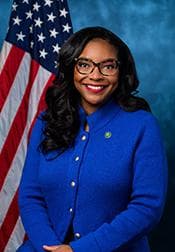
Emilia Strong Sykes
Democratic Representative
Ohio
Cosponsors (1)
Judiciary Committee
- Introduced
- In Committee
- On Floor
- Passed Chamber
- Enacted
This legislation, known as the Closing Bribery Loopholes Act, seeks to amend title 18 of the United States Code to clarify the definition of an "official act" within federal bribery statutes. The primary goal is to strengthen the legal framework against corruption involving public officials and witnesses. The bill specifically revises Section 201(a)(3) to broaden the understanding of an "official act." It explicitly states that such an act may comprise a single action, multiple actions, or a "course of conduct" intended to achieve an official outcome. Crucially, the amendment clarifies that an "official act" is still considered to have occurred for bribery purposes, "whether or not it successfully achieves a desired outcome," thereby addressing potential ambiguities in prosecuting corrupt behavior.
View Full TextSuggested Questions
Get AI-generated questions to help you understand this bill better
Timeline
Introduced in House
Referred to the House Committee on the Judiciary.
Crime and Law Enforcement
Closing Bribery Loopholes Act
USA119th CongressHR-3741| House
| Updated: 6/4/2025
This legislation, known as the Closing Bribery Loopholes Act, seeks to amend title 18 of the United States Code to clarify the definition of an "official act" within federal bribery statutes. The primary goal is to strengthen the legal framework against corruption involving public officials and witnesses. The bill specifically revises Section 201(a)(3) to broaden the understanding of an "official act." It explicitly states that such an act may comprise a single action, multiple actions, or a "course of conduct" intended to achieve an official outcome. Crucially, the amendment clarifies that an "official act" is still considered to have occurred for bribery purposes, "whether or not it successfully achieves a desired outcome," thereby addressing potential ambiguities in prosecuting corrupt behavior.
View Full TextSuggested Questions
Get AI-generated questions to help you understand this bill better
Timeline
Introduced in House
Referred to the House Committee on the Judiciary.
Emilia Strong Sykes
Democratic Representative
Ohio
Cosponsors (1)
Judiciary Committee
Crime and Law Enforcement
- Introduced
- In Committee
- On Floor
- Passed Chamber
- Enacted