Locally Led Restoration Act of 2025
USA119th CongressHR-3637| House
| Updated: 5/29/2025
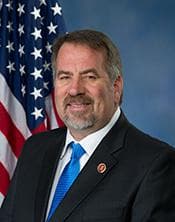
Doug LaMalfa
Republican Representative
California
Agriculture Committee, Natural Resources Committee
- Introduced
- In Committee
- On Floor
- Passed Chamber
- Enacted
The "Locally Led Restoration Act of 2025" aims to enhance forest health and wildfire mitigation by amending two key pieces of legislation. It modifies the Healthy Forests Restoration Act of 2003 to expand opportunities for private entities to engage in wildfire hazard fuel removal through stewardship contracting projects. This includes allowing private entities to propose such projects directly to federal agencies. Under these new provisions, proposed stewardship projects must include vegetation removal, with at least 10 percent of the removed vegetation being salvage material , defined as wildfire kill, beetle kill, or dead/dying organic material. Federal agencies are required to publicly notice opportunities for proposals annually and provide a response to submitted proposals within 120 days . If a proposal is denied, the response must explain the reasons and suggest potential courses of action for improvement. The bill also sets specific conditions for these contracts, prohibiting them in areas like the National Wilderness Preservation System or inventoried roadless areas, and ensuring they align with existing forest management plans. Furthermore, it amends the National Forest Management Act of 1976 by significantly increasing the threshold for timber sales that do not require advertising from $10,000 to $55,000 . This new threshold will be subject to annual adjustments based on the Consumer Price Index to account for inflation.
View Full TextSuggested Questions
Get AI-generated questions to help you understand this bill better
Timeline
Introduced in House
Referred to the Committee on Agriculture, and in addition to the Committee on Natural Resources, for a period to be subsequently determined by the Speaker, in each case for consideration of such provisions as fall within the jurisdiction of the committee concerned.
Public Lands and Natural Resources
Locally Led Restoration Act of 2025
USA119th CongressHR-3637| House
| Updated: 5/29/2025
The "Locally Led Restoration Act of 2025" aims to enhance forest health and wildfire mitigation by amending two key pieces of legislation. It modifies the Healthy Forests Restoration Act of 2003 to expand opportunities for private entities to engage in wildfire hazard fuel removal through stewardship contracting projects. This includes allowing private entities to propose such projects directly to federal agencies. Under these new provisions, proposed stewardship projects must include vegetation removal, with at least 10 percent of the removed vegetation being salvage material , defined as wildfire kill, beetle kill, or dead/dying organic material. Federal agencies are required to publicly notice opportunities for proposals annually and provide a response to submitted proposals within 120 days . If a proposal is denied, the response must explain the reasons and suggest potential courses of action for improvement. The bill also sets specific conditions for these contracts, prohibiting them in areas like the National Wilderness Preservation System or inventoried roadless areas, and ensuring they align with existing forest management plans. Furthermore, it amends the National Forest Management Act of 1976 by significantly increasing the threshold for timber sales that do not require advertising from $10,000 to $55,000 . This new threshold will be subject to annual adjustments based on the Consumer Price Index to account for inflation.
View Full TextSuggested Questions
Get AI-generated questions to help you understand this bill better
Timeline
Introduced in House
Referred to the Committee on Agriculture, and in addition to the Committee on Natural Resources, for a period to be subsequently determined by the Speaker, in each case for consideration of such provisions as fall within the jurisdiction of the committee concerned.
Doug LaMalfa
Republican Representative
California
Agriculture Committee, Natural Resources Committee
Public Lands and Natural Resources
- Introduced
- In Committee
- On Floor
- Passed Chamber
- Enacted