Counseling Not Criminalization in Schools Act
USA119th CongressHR-2739| House
| Updated: 4/8/2025
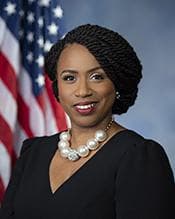
Ayanna Pressley
Democratic Representative
Massachusetts
Cosponsors (11)
Mark Pocan (Democratic)Ilhan Omar (Democratic)Delia C. Ramirez (Democratic)Greg Casar (Democratic)Shri Thanedar (Democratic)Eleanor Holmes Norton (Democratic)Bonnie Watson Coleman (Democratic)Alexandria Ocasio-Cortez (Democratic)Summer L. Lee (Democratic)Suzanne Bonamici (Democratic)Rashida Tlaib (Democratic)
Judiciary Committee, Education and Workforce Committee
- Introduced
- In Committee
- On Floor
- Passed Chamber
- Enacted
This legislation, titled the Counseling Not Criminalization in Schools Act, seeks to fundamentally shift how federal resources are allocated for school safety. Its primary purpose is to eliminate federal funding for maintaining police in schools and instead invest in a continuum of care and positive schoolwide systems that are evidence-based, inclusive, racially and gender responsive, and trauma-informed. The bill's findings highlight that police presence in schools has led to increased criminalization and surveillance, particularly for marginalized students including Black, Native American, Latino, students with disabilities, and LGBTQI+ youth, without evidence of making schools safer. The bill explicitly prohibits the use of any federal funds for hiring, maintaining, or training covered law enforcement officers in schools, including those from programs like the Edward Byrne Memorial Justice Assistance Grant Program and the "Cops on the Beat" grant program. To facilitate this transition, the Secretary of Education is mandated to establish a competitive grant program. Local educational agencies (LEAs) applying for these grants must assure they will not have law enforcement officers stationed on school campuses, either by terminating existing contracts or dissolving school district-based police departments, and will not establish new ones for the grant's duration. Priority for these grants will be given to LEAs that have already removed police from schools and those serving a larger share of economically disadvantaged students, with an emphasis on community engagement in determining fund uses. Grant funds are required to be used for hiring and training school counselors, psychologists, nurses, social workers, credible messengers, and staff specializing in de-escalation and anti-bias practices. Permitted uses include implementing positive behavioral interventions, restorative justice programs, social-emotional learning, and professional development on trauma-informed care. The bill strictly prohibits the use of funds for punitive discipline policies, surveillance equipment like metal detectors or facial recognition technology, and arming school personnel. LEAs receiving grants must submit annual reports detailing how funds were used, student arrest and referral data (disaggregated by demographics), and information on surveillance technology use. This reporting aims to track the impact of the transition away from police presence. The bill authorizes an appropriation of $5,000,000,000 to carry out the grant program, ensuring that federal funds supplement, rather than supplant, existing state and local resources for these critical services.
View Full TextSuggested Questions
Get AI-generated questions to help you understand this bill better
Timeline
Introduced in House
Referred to the Committee on Education and Workforce, and in addition to the Committee on the Judiciary, for a period to be subsequently determined by the Speaker, in each case for consideration of such provisions as fall within the jurisdiction of the committee concerned.
Education
Counseling Not Criminalization in Schools Act
USA119th CongressHR-2739| House
| Updated: 4/8/2025
This legislation, titled the Counseling Not Criminalization in Schools Act, seeks to fundamentally shift how federal resources are allocated for school safety. Its primary purpose is to eliminate federal funding for maintaining police in schools and instead invest in a continuum of care and positive schoolwide systems that are evidence-based, inclusive, racially and gender responsive, and trauma-informed. The bill's findings highlight that police presence in schools has led to increased criminalization and surveillance, particularly for marginalized students including Black, Native American, Latino, students with disabilities, and LGBTQI+ youth, without evidence of making schools safer. The bill explicitly prohibits the use of any federal funds for hiring, maintaining, or training covered law enforcement officers in schools, including those from programs like the Edward Byrne Memorial Justice Assistance Grant Program and the "Cops on the Beat" grant program. To facilitate this transition, the Secretary of Education is mandated to establish a competitive grant program. Local educational agencies (LEAs) applying for these grants must assure they will not have law enforcement officers stationed on school campuses, either by terminating existing contracts or dissolving school district-based police departments, and will not establish new ones for the grant's duration. Priority for these grants will be given to LEAs that have already removed police from schools and those serving a larger share of economically disadvantaged students, with an emphasis on community engagement in determining fund uses. Grant funds are required to be used for hiring and training school counselors, psychologists, nurses, social workers, credible messengers, and staff specializing in de-escalation and anti-bias practices. Permitted uses include implementing positive behavioral interventions, restorative justice programs, social-emotional learning, and professional development on trauma-informed care. The bill strictly prohibits the use of funds for punitive discipline policies, surveillance equipment like metal detectors or facial recognition technology, and arming school personnel. LEAs receiving grants must submit annual reports detailing how funds were used, student arrest and referral data (disaggregated by demographics), and information on surveillance technology use. This reporting aims to track the impact of the transition away from police presence. The bill authorizes an appropriation of $5,000,000,000 to carry out the grant program, ensuring that federal funds supplement, rather than supplant, existing state and local resources for these critical services.
View Full TextSuggested Questions
Get AI-generated questions to help you understand this bill better
Timeline
Introduced in House
Referred to the Committee on Education and Workforce, and in addition to the Committee on the Judiciary, for a period to be subsequently determined by the Speaker, in each case for consideration of such provisions as fall within the jurisdiction of the committee concerned.
Ayanna Pressley
Democratic Representative
Massachusetts
Cosponsors (11)
Mark Pocan (Democratic)Ilhan Omar (Democratic)Delia C. Ramirez (Democratic)Greg Casar (Democratic)Shri Thanedar (Democratic)Eleanor Holmes Norton (Democratic)Bonnie Watson Coleman (Democratic)Alexandria Ocasio-Cortez (Democratic)Summer L. Lee (Democratic)Suzanne Bonamici (Democratic)Rashida Tlaib (Democratic)
Judiciary Committee, Education and Workforce Committee
Education
- Introduced
- In Committee
- On Floor
- Passed Chamber
- Enacted