PROOF Act
USA118th CongressS-3087| Senate
| Updated: 10/19/2023
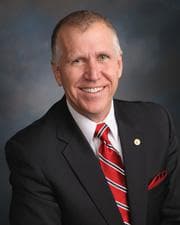
Thomas Tillis
Republican Senator
North Carolina
Cosponsors (1)
Banking, Housing, and Urban Affairs Committee
- Introduced
- In Committee
- On Floor
- Passed Chamber
- Enacted
Proving Reserves Of Others’ Funds Act or the PROOF Act This bill requires digital exchanges to protect customer funds and provide proof of reserves. Specifically, digital exchanges must minimize (1) customer risk of asset loss, and (2) delays experienced by a customer when accessing assets. With some exceptions, a customer’s assets must be separated from any other assets and may not be used to margin, secure, or guarantee a trade or account of a person other than the customer. Further, digital exchanges and digital custodians must report on their proof of reserves through an attestation from an independent auditing firm or a disinterested third party. The Office of Domestic Finance in the Department of the Treasury must make these attestations publicly available. The bill also provides for the creation of an industry standard for the attestations. Violations are subject to civil penalties.
View Full TextSuggested Questions
Get AI-generated questions to help you understand this bill better
Timeline
Introduced in Senate
Read twice and referred to the Committee on Banking, Housing, and Urban Affairs.
Finance and Financial Sector
PROOF Act
USA118th CongressS-3087| Senate
| Updated: 10/19/2023
Proving Reserves Of Others’ Funds Act or the PROOF Act This bill requires digital exchanges to protect customer funds and provide proof of reserves. Specifically, digital exchanges must minimize (1) customer risk of asset loss, and (2) delays experienced by a customer when accessing assets. With some exceptions, a customer’s assets must be separated from any other assets and may not be used to margin, secure, or guarantee a trade or account of a person other than the customer. Further, digital exchanges and digital custodians must report on their proof of reserves through an attestation from an independent auditing firm or a disinterested third party. The Office of Domestic Finance in the Department of the Treasury must make these attestations publicly available. The bill also provides for the creation of an industry standard for the attestations. Violations are subject to civil penalties.
View Full TextSuggested Questions
Get AI-generated questions to help you understand this bill better
Timeline
Introduced in Senate
Read twice and referred to the Committee on Banking, Housing, and Urban Affairs.
Thomas Tillis
Republican Senator
North Carolina
Cosponsors (1)
Banking, Housing, and Urban Affairs Committee
Finance and Financial Sector
- Introduced
- In Committee
- On Floor
- Passed Chamber
- Enacted