Latonya Reeves Freedom Act of 2022
USA117th CongressHR-6860| House
| Updated: 11/1/2022
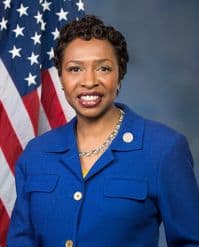
Yvette D. Clarke
Democratic Representative
New York
Cosponsors (202)
Brenda L. Lawrence (Democratic)Dwight Evans (Democratic)Al Lawson (Democratic)Donald Norcross (Democratic)Tim Ryan (Democratic)Val Butler Demings (Democratic)Nikema Williams (Democratic)Marcy Kaptur (Democratic)Tom O'Halleran (Democratic)John Katko (Republican)John Garamendi (Democratic)Sylvia R. Garcia (Democratic)Ruben Gallego (Democratic)Chris Pappas (Democratic)Jared Huffman (Democratic)Marc A. Veasey (Democratic)Adam B. Schiff (Democratic)Barbara Lee (Democratic)Mikie Sherrill (Democratic)Robin L. Kelly (Democratic)Raúl M. Grijalva (Democratic)Tom Malinowski (Democratic)Ritchie Torres (Democratic)Mark Pocan (Democratic)Abigail Davis Spanberger (Democratic)Karen Bass (Democratic)James R. Langevin (Democratic)Joyce Beatty (Democratic)Lisa Blunt Rochester (Democratic)David N. Cicilline (Democratic)David J. Trone (Democratic)Ed Case (Democratic)Emanuel Cleaver (Democratic)Brian Higgins (Democratic)Chrissy Houlahan (Democratic)Jackie Speier (Democratic)Darren Soto (Democratic)Raul Ruiz (Democratic)Sheila Jackson Lee (Democratic)Derek Kilmer (Democratic)John A. Yarmuth (Democratic)Carolyn B. Maloney (Democratic)Bill Foster (Democratic)Patrick Ryan (Democratic)Joe Courtney (Democratic)Mondaire Jones (Democratic)Sanford D. Bishop (Democratic)C. A. Dutch Ruppersberger (Democratic)Ilhan Omar (Democratic)Pete Aguilar (Democratic)Shontel M. Brown (Democratic)David Scott (Democratic)Frederica S. Wilson (Democratic)Juan Vargas (Democratic)Terri A. Sewell (Democratic)Bobby L. Rush (Democratic)Troy A. Carter (Democratic)Steven Horsford (Democratic)Andy Levin (Democratic)Ken Buck (Republican)Jimmy Panetta (Democratic)J. Luis Correa (Democratic)Eric Swalwell (Democratic)Dina Titus (Democratic)Michael F. Doyle (Democratic)Debbie Dingell (Democratic)Madeleine Dean (Democratic)Katherine M. Clark (Democratic)Steve Cohen (Democratic)Tony Cárdenas (Democratic)Suzan K. DelBene (Democratic)Jennifer Wexton (Democratic)Scott H. Peters (Democratic)Paul Tonko (Democratic)Angie Craig (Democratic)Donald M. Payne (Democratic)Thomas R. Suozzi (Democratic)John P. Sarbanes (Democratic)Rosa L. DeLauro (Democratic)Haley M. Stevens (Democratic)Anthony G. Brown (Democratic)Adriano Espaillat (Democratic)Ann Kirkpatrick (Democratic)Frank J. Mrvan (Democratic)Danny K. Davis (Democratic)Lucille Roybal-Allard (Democratic)Peter A. DeFazio (Democratic)Daniel T. Kildee (Democratic)Vicente Gonzalez (Democratic)Jake Auchincloss (Democratic)Ted Lieu (Democratic)Ro Khanna (Democratic)A. Donald McEachin (Democratic)Greg Stanton (Democratic)Kaiali'i Kahele (Democratic)Alan S. Lowenthal (Democratic)Ann M. Kuster (Democratic)Sean Patrick Maloney (Democratic)Henry C. "Hank" Johnson (Democratic)Sheila Cherfilus-McCormick (Democratic)Al Green (Democratic)André Carson (Democratic)Brendan F. Boyle (Democratic)Matt Cartwright (Democratic)John B. Larson (Democratic)Joaquin Castro (Democratic)Stephen F. Lynch (Democratic)Mark DeSaulnier (Democratic)Joseph D. Morelle (Democratic)Elaine G. Luria (Democratic)Doris O. Matsui (Democratic)Sara Jacobs (Democratic)Marilyn Strickland (Democratic)Gregory W. Meeks (Democratic)Dean Phillips (Democratic)Jahana Hayes (Democratic)David E. Price (Democratic)Hakeem S. Jeffries (Democratic)Raja Krishnamoorthi (Democratic)James A. Himes (Democratic)Jerrold Nadler (Democratic)Theodore E. Deutch (Democratic)Alma S. Adams (Democratic)Ami Bera (Democratic)Mark Takano (Democratic)Lucy McBath (Democratic)Pramila Jayapal (Democratic)Kathy Castor (Democratic)Betty McCollum (Democratic)Eleanor Holmes Norton (Democratic)Sharice Davids (Democratic)Brad Sherman (Democratic)Bonnie Watson Coleman (Democratic)Mary Gay Scanlon (Democratic)Richard E. Neal (Democratic)Henry Cuellar (Democratic)Antonio Delgado (Democratic)Conor Lamb (Democratic)Salud O. Carbajal (Democratic)Jamie Raskin (Democratic)Joe Neguse (Democratic)Mike Quigley (Democratic)Cynthia Axne (Democratic)Lois Frankel (Democratic)Sean Casten (Democratic)Diana DeGette (Democratic)Janice D. Schakowsky (Democratic)Andy Kim (Democratic)James P. McGovern (Democratic)Alexandria Ocasio-Cortez (Democratic)Maxine Waters (Democratic)Adam Smith (Democratic)Ron Kind (Democratic)Nydia M. Velázquez (Democratic)James E. Clyburn (Democratic)Julia Brownley (Democratic)William R. Keating (Democratic)Jerry McNerney (Democratic)Eddie Bernice Johnson (Democratic)Marie Newman (Democratic)Peter Welch (Democratic)Brian K. Fitzpatrick (Republican)Colin Z. Allred (Democratic)Bennie G. Thompson (Democratic)Earl Blumenauer (Democratic)Deborah K. Ross (Democratic)Lori Trahan (Democratic)Charlie Crist (Democratic)Seth Moulton (Democratic)Mike Thompson (Democratic)Suzanne Bonamici (Democratic)Lizzie Fletcher (Democratic)Josh Gottheimer (Democratic)Linda T. Sánchez (Democratic)Ed Perlmutter (Democratic)Zoe Lofgren (Democratic)Nanette Diaz Barragán (Democratic)Jesús G. "Chuy" García (Democratic)Jason Crow (Democratic)Gwen Moore (Democratic)Jimmy Gomez (Democratic)Susie Lee (Democratic)Grace Meng (Democratic)Cheri Bustos (Democratic)Rashida Tlaib (Democratic)Bradley Scott Schneider (Democratic)Kweisi Mfume (Democratic)Ayanna Pressley (Democratic)Jamaal Bowman (Democratic)Veronica Escobar (Democratic)Lloyd Doggett (Democratic)Debbie Wasserman Schultz (Democratic)Gerald E. Connolly (Democratic)Lauren Underwood (Democratic)Chellie Pingree (Democratic)Bill Pascrell (Democratic)Grace F. Napolitano (Democratic)Katie Porter (Democratic)Susan Wild (Democratic)Mike Levin (Democratic)Cori Bush (Democratic)Judy Chu (Democratic)
Health Subcommittee, Judiciary Committee, Constitution and Limited Government Subcommittee, Energy and Commerce Committee
- Introduced
- In Committee
- On Floor
- Passed Chamber
- Enacted
Latonya Reeves Freedom Act of 2022 This bill prohibits government entities and insurance providers from denying community-based services to individuals with disabilities that require long-term service or support that would enable such individuals to live in the community and lead an independent life. Specifically, these entities may not discriminate against such individuals in the provision of community-based services by such actions as imposing prohibited eligibility criteria, cost caps, or waiting lists or failing to provide a specific community-based service. Additionally, community-based services must be offered to individuals with such disabilities prior to institutionalization. Institutionalized individuals must be notified regularly of community-based alternatives. The bill requires the Department of Justice to issue regulations requiring government entities and insurance providers to offer community-based long-term services to individuals with such disabilities who would otherwise qualify for institutional placement. Government entities must ensure sufficient availability of affordable, accessible, and integrated housing that is not a disability-specific residential setting or a setting where services are tied to tenancy. Regulations shall also (1) require government entities and insurance providers to perform self-evaluation on current services, policies, and practices and concerning compliance with requirements of this bill; and (2) require government entities to submit a transition plan. The bill provides funds for FY2022 for the Department of Health and Human Services to provide technical assistance with respect to transition plans. The bill allows civil actions by individuals subjected to, or about to be subjected to, a violation of its requirements.
View Full TextSuggested Questions
Get AI-generated questions to help you understand this bill better
Timeline
Introduced in House
Referred to the Subcommittee on Health.
Referred to the Committee on Energy and Commerce, and in addition to the Committee on the Judiciary, for a period to be subsequently determined by the Speaker, in each case for consideration of such provisions as fall within the jurisdiction of the committee concerned.
Referred to the Subcommittee on the Constitution, Civil Rights, and Civil Liberties.
Civil Rights and Liberties, Minority Issues
Administrative law and regulatory proceduresAppropriationsCivil actions and liabilityCommunity life and organizationDepartment of Health and Human ServicesDepartment of JusticeDisability and health-based discriminationDisability and paralysisDisability assistanceEmployment and training programsExecutive agency funding and structureHealth care costs and insuranceHealth care coverage and accessHealth programs administration and fundingHome and outpatient careHousing for the elderly and disabledHousing supply and affordabilityIntergovernmental relationsLong-term, rehabilitative, and terminal careLow- and moderate-income housingMedicaidState and local government operations
Latonya Reeves Freedom Act of 2022
USA117th CongressHR-6860| House
| Updated: 11/1/2022
Latonya Reeves Freedom Act of 2022 This bill prohibits government entities and insurance providers from denying community-based services to individuals with disabilities that require long-term service or support that would enable such individuals to live in the community and lead an independent life. Specifically, these entities may not discriminate against such individuals in the provision of community-based services by such actions as imposing prohibited eligibility criteria, cost caps, or waiting lists or failing to provide a specific community-based service. Additionally, community-based services must be offered to individuals with such disabilities prior to institutionalization. Institutionalized individuals must be notified regularly of community-based alternatives. The bill requires the Department of Justice to issue regulations requiring government entities and insurance providers to offer community-based long-term services to individuals with such disabilities who would otherwise qualify for institutional placement. Government entities must ensure sufficient availability of affordable, accessible, and integrated housing that is not a disability-specific residential setting or a setting where services are tied to tenancy. Regulations shall also (1) require government entities and insurance providers to perform self-evaluation on current services, policies, and practices and concerning compliance with requirements of this bill; and (2) require government entities to submit a transition plan. The bill provides funds for FY2022 for the Department of Health and Human Services to provide technical assistance with respect to transition plans. The bill allows civil actions by individuals subjected to, or about to be subjected to, a violation of its requirements.
View Full TextSuggested Questions
Get AI-generated questions to help you understand this bill better
Timeline
Introduced in House
Referred to the Subcommittee on Health.
Referred to the Committee on Energy and Commerce, and in addition to the Committee on the Judiciary, for a period to be subsequently determined by the Speaker, in each case for consideration of such provisions as fall within the jurisdiction of the committee concerned.
Referred to the Subcommittee on the Constitution, Civil Rights, and Civil Liberties.
Yvette D. Clarke
Democratic Representative
New York
Cosponsors (202)
Brenda L. Lawrence (Democratic)Dwight Evans (Democratic)Al Lawson (Democratic)Donald Norcross (Democratic)Tim Ryan (Democratic)Val Butler Demings (Democratic)Nikema Williams (Democratic)Marcy Kaptur (Democratic)Tom O'Halleran (Democratic)John Katko (Republican)John Garamendi (Democratic)Sylvia R. Garcia (Democratic)Ruben Gallego (Democratic)Chris Pappas (Democratic)Jared Huffman (Democratic)Marc A. Veasey (Democratic)Adam B. Schiff (Democratic)Barbara Lee (Democratic)Mikie Sherrill (Democratic)Robin L. Kelly (Democratic)Raúl M. Grijalva (Democratic)Tom Malinowski (Democratic)Ritchie Torres (Democratic)Mark Pocan (Democratic)Abigail Davis Spanberger (Democratic)Karen Bass (Democratic)James R. Langevin (Democratic)Joyce Beatty (Democratic)Lisa Blunt Rochester (Democratic)David N. Cicilline (Democratic)David J. Trone (Democratic)Ed Case (Democratic)Emanuel Cleaver (Democratic)Brian Higgins (Democratic)Chrissy Houlahan (Democratic)Jackie Speier (Democratic)Darren Soto (Democratic)Raul Ruiz (Democratic)Sheila Jackson Lee (Democratic)Derek Kilmer (Democratic)John A. Yarmuth (Democratic)Carolyn B. Maloney (Democratic)Bill Foster (Democratic)Patrick Ryan (Democratic)Joe Courtney (Democratic)Mondaire Jones (Democratic)Sanford D. Bishop (Democratic)C. A. Dutch Ruppersberger (Democratic)Ilhan Omar (Democratic)Pete Aguilar (Democratic)Shontel M. Brown (Democratic)David Scott (Democratic)Frederica S. Wilson (Democratic)Juan Vargas (Democratic)Terri A. Sewell (Democratic)Bobby L. Rush (Democratic)Troy A. Carter (Democratic)Steven Horsford (Democratic)Andy Levin (Democratic)Ken Buck (Republican)Jimmy Panetta (Democratic)J. Luis Correa (Democratic)Eric Swalwell (Democratic)Dina Titus (Democratic)Michael F. Doyle (Democratic)Debbie Dingell (Democratic)Madeleine Dean (Democratic)Katherine M. Clark (Democratic)Steve Cohen (Democratic)Tony Cárdenas (Democratic)Suzan K. DelBene (Democratic)Jennifer Wexton (Democratic)Scott H. Peters (Democratic)Paul Tonko (Democratic)Angie Craig (Democratic)Donald M. Payne (Democratic)Thomas R. Suozzi (Democratic)John P. Sarbanes (Democratic)Rosa L. DeLauro (Democratic)Haley M. Stevens (Democratic)Anthony G. Brown (Democratic)Adriano Espaillat (Democratic)Ann Kirkpatrick (Democratic)Frank J. Mrvan (Democratic)Danny K. Davis (Democratic)Lucille Roybal-Allard (Democratic)Peter A. DeFazio (Democratic)Daniel T. Kildee (Democratic)Vicente Gonzalez (Democratic)Jake Auchincloss (Democratic)Ted Lieu (Democratic)Ro Khanna (Democratic)A. Donald McEachin (Democratic)Greg Stanton (Democratic)Kaiali'i Kahele (Democratic)Alan S. Lowenthal (Democratic)Ann M. Kuster (Democratic)Sean Patrick Maloney (Democratic)Henry C. "Hank" Johnson (Democratic)Sheila Cherfilus-McCormick (Democratic)Al Green (Democratic)André Carson (Democratic)Brendan F. Boyle (Democratic)Matt Cartwright (Democratic)John B. Larson (Democratic)Joaquin Castro (Democratic)Stephen F. Lynch (Democratic)Mark DeSaulnier (Democratic)Joseph D. Morelle (Democratic)Elaine G. Luria (Democratic)Doris O. Matsui (Democratic)Sara Jacobs (Democratic)Marilyn Strickland (Democratic)Gregory W. Meeks (Democratic)Dean Phillips (Democratic)Jahana Hayes (Democratic)David E. Price (Democratic)Hakeem S. Jeffries (Democratic)Raja Krishnamoorthi (Democratic)James A. Himes (Democratic)Jerrold Nadler (Democratic)Theodore E. Deutch (Democratic)Alma S. Adams (Democratic)Ami Bera (Democratic)Mark Takano (Democratic)Lucy McBath (Democratic)Pramila Jayapal (Democratic)Kathy Castor (Democratic)Betty McCollum (Democratic)Eleanor Holmes Norton (Democratic)Sharice Davids (Democratic)Brad Sherman (Democratic)Bonnie Watson Coleman (Democratic)Mary Gay Scanlon (Democratic)Richard E. Neal (Democratic)Henry Cuellar (Democratic)Antonio Delgado (Democratic)Conor Lamb (Democratic)Salud O. Carbajal (Democratic)Jamie Raskin (Democratic)Joe Neguse (Democratic)Mike Quigley (Democratic)Cynthia Axne (Democratic)Lois Frankel (Democratic)Sean Casten (Democratic)Diana DeGette (Democratic)Janice D. Schakowsky (Democratic)Andy Kim (Democratic)James P. McGovern (Democratic)Alexandria Ocasio-Cortez (Democratic)Maxine Waters (Democratic)Adam Smith (Democratic)Ron Kind (Democratic)Nydia M. Velázquez (Democratic)James E. Clyburn (Democratic)Julia Brownley (Democratic)William R. Keating (Democratic)Jerry McNerney (Democratic)Eddie Bernice Johnson (Democratic)Marie Newman (Democratic)Peter Welch (Democratic)Brian K. Fitzpatrick (Republican)Colin Z. Allred (Democratic)Bennie G. Thompson (Democratic)Earl Blumenauer (Democratic)Deborah K. Ross (Democratic)Lori Trahan (Democratic)Charlie Crist (Democratic)Seth Moulton (Democratic)Mike Thompson (Democratic)Suzanne Bonamici (Democratic)Lizzie Fletcher (Democratic)Josh Gottheimer (Democratic)Linda T. Sánchez (Democratic)Ed Perlmutter (Democratic)Zoe Lofgren (Democratic)Nanette Diaz Barragán (Democratic)Jesús G. "Chuy" García (Democratic)Jason Crow (Democratic)Gwen Moore (Democratic)Jimmy Gomez (Democratic)Susie Lee (Democratic)Grace Meng (Democratic)Cheri Bustos (Democratic)Rashida Tlaib (Democratic)Bradley Scott Schneider (Democratic)Kweisi Mfume (Democratic)Ayanna Pressley (Democratic)Jamaal Bowman (Democratic)Veronica Escobar (Democratic)Lloyd Doggett (Democratic)Debbie Wasserman Schultz (Democratic)Gerald E. Connolly (Democratic)Lauren Underwood (Democratic)Chellie Pingree (Democratic)Bill Pascrell (Democratic)Grace F. Napolitano (Democratic)Katie Porter (Democratic)Susan Wild (Democratic)Mike Levin (Democratic)Cori Bush (Democratic)Judy Chu (Democratic)
Health Subcommittee, Judiciary Committee, Constitution and Limited Government Subcommittee, Energy and Commerce Committee
Civil Rights and Liberties, Minority Issues
Related Bills
- Introduced
- In Committee
- On Floor
- Passed Chamber
- Enacted
Administrative law and regulatory proceduresAppropriationsCivil actions and liabilityCommunity life and organizationDepartment of Health and Human ServicesDepartment of JusticeDisability and health-based discriminationDisability and paralysisDisability assistanceEmployment and training programsExecutive agency funding and structureHealth care costs and insuranceHealth care coverage and accessHealth programs administration and fundingHome and outpatient careHousing for the elderly and disabledHousing supply and affordabilityIntergovernmental relationsLong-term, rehabilitative, and terminal careLow- and moderate-income housingMedicaidState and local government operations