Stop Corporate Capture Act
USA117th CongressHR-6107| House
| Updated: 11/1/2022
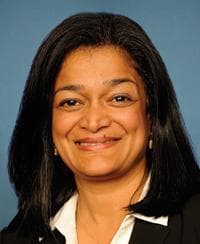
Pramila Jayapal
Democratic Representative
Washington
Cosponsors (12)
Barbara Lee (Democratic)David N. Cicilline (Democratic)Mondaire Jones (Democratic)Ilhan Omar (Democratic)Henry C. "Hank" Johnson (Democratic)André Carson (Democratic)Mark Takano (Democratic)Mary Gay Scanlon (Democratic)Joe Neguse (Democratic)Alexandria Ocasio-Cortez (Democratic)Jesús G. "Chuy" García (Democratic)Katie Porter (Democratic)
Administrative State, Regulatory Reform, and Antitrust Subcommittee, Judiciary Committee, Oversight and Government Reform Committee
- Introduced
- In Committee
- On Floor
- Passed Chamber
- Enacted
Stop Corporate Capture Act This bill modifies the process for federal agency rulemaking. Specifically, it (1) requires interested parties who submit a study or research as part of a comment to a proposed rule to disclose the source of the funding for the study or research, (2) limits the use of the negotiated rulemaking process to government agencies, (3) provides statutory authority for the judicial principle that requires courts to defer to an agency's reasonable or permissible interpretation of a federal law when the law is silent or ambiguous (i.e., the Chevron doctrine), and (4) establishes an Office of the Public Advocate to support public participation in the rulemaking process.
View Full TextSuggested Questions
Get AI-generated questions to help you understand this bill better
Timeline
Introduced in House
Referred to the Committee on the Judiciary, and in addition to the Committee on Oversight and Reform, for a period to be subsequently determined by the Speaker, in each case for consideration of such provisions as fall within the jurisdiction of the committee concerned.
Referred to the Subcommittee on Antitrust, Commercial, and Administrative Law.
Government Operations and Politics
Stop Corporate Capture Act
USA117th CongressHR-6107| House
| Updated: 11/1/2022
Stop Corporate Capture Act This bill modifies the process for federal agency rulemaking. Specifically, it (1) requires interested parties who submit a study or research as part of a comment to a proposed rule to disclose the source of the funding for the study or research, (2) limits the use of the negotiated rulemaking process to government agencies, (3) provides statutory authority for the judicial principle that requires courts to defer to an agency's reasonable or permissible interpretation of a federal law when the law is silent or ambiguous (i.e., the Chevron doctrine), and (4) establishes an Office of the Public Advocate to support public participation in the rulemaking process.
View Full TextSuggested Questions
Get AI-generated questions to help you understand this bill better
Timeline
Introduced in House
Referred to the Committee on the Judiciary, and in addition to the Committee on Oversight and Reform, for a period to be subsequently determined by the Speaker, in each case for consideration of such provisions as fall within the jurisdiction of the committee concerned.
Referred to the Subcommittee on Antitrust, Commercial, and Administrative Law.
Pramila Jayapal
Democratic Representative
Washington
Cosponsors (12)
Barbara Lee (Democratic)David N. Cicilline (Democratic)Mondaire Jones (Democratic)Ilhan Omar (Democratic)Henry C. "Hank" Johnson (Democratic)André Carson (Democratic)Mark Takano (Democratic)Mary Gay Scanlon (Democratic)Joe Neguse (Democratic)Alexandria Ocasio-Cortez (Democratic)Jesús G. "Chuy" García (Democratic)Katie Porter (Democratic)
Administrative State, Regulatory Reform, and Antitrust Subcommittee, Judiciary Committee, Oversight and Government Reform Committee
Government Operations and Politics
Related Bills
- Introduced
- In Committee
- On Floor
- Passed Chamber
- Enacted